


How Can You Lower Your Monthly Electricity Bill Without Giving Up Your Appliances?
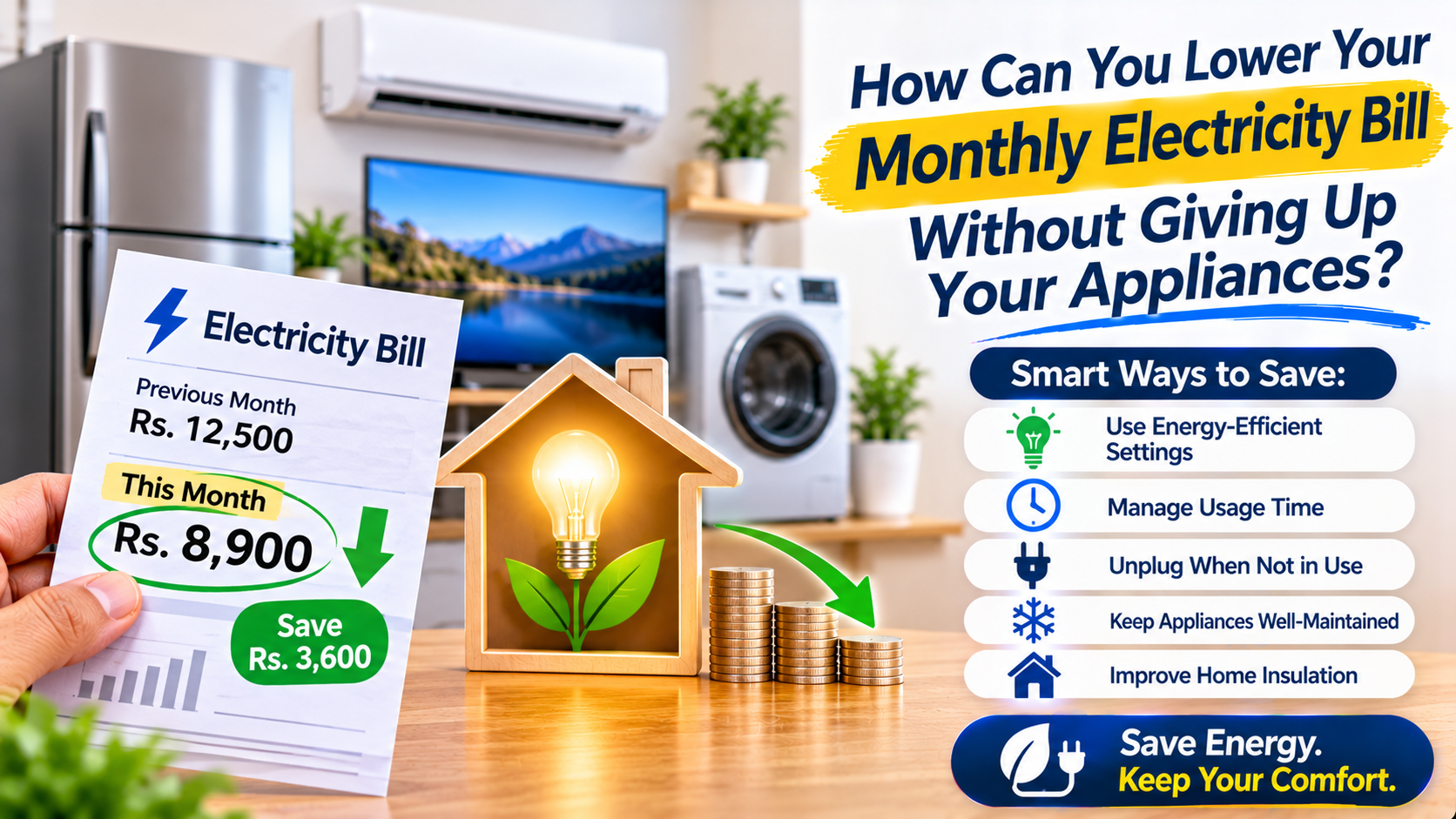
Electricity bills have become one of the biggest worries for households across Pakistan, particularly in summer when cooling appliances run for long hours. The common advice to simply use less is not always practical, since a refrigerator cannot be switched off and a washing machine is needed every week. The more useful approach is to understand where electricity actually goes and to adjust how each appliance is chosen and used. Anyone comparing the gree refrigerator price in pakistan or any other model will benefit from knowing which specifications affect running costs, because a slightly higher purchase price can sometimes pay for itself. This guide shows how to estimate appliance costs and reduce them with simple habits.
How to Estimate What an Appliance Costs to Run
Electricity is billed in units, and one unit equals one kilowatt-hour. The basic calculation is simple: multiply the appliance's power in watts by the hours it runs, then divide by 1,000. For example, a television drawing 100 watts and running five hours a day uses about half a unit daily, which is roughly fifteen units a month. A heater drawing 1,500 watts for four hours uses six units in a day. The wattage is printed on the appliance's label or listed in the manual. Multiplying monthly units by your tariff rate gives a realistic estimate, and since tariffs rise in higher consumption slabs, reducing use near a slab boundary can save more than the unit count suggests.
The Refrigerator: Always On, So Efficiency Matters
A refrigerator runs around the clock, which makes it one of the most important appliances to get right. Several factors affect how much electricity it draws:
- Compressor type: Inverter models adjust speed to demand instead of switching on and off at full power, which usually lowers average consumption.
- Placement: A refrigerator next to a stove or in direct sunlight works harder to stay cold.
- Door seals: A worn gasket leaks cold air, so check it with a paper strip closed in the door.
- Coil cleanliness: Dust on the condenser coils reduces heat release and increases running time.
- Temperature settings: About 3 to 5°C for the fridge and minus 18°C for the freezer is enough, and colder settings only waste power.
Leaving a few inches of space behind the unit and letting hot food cool before storing it also reduces the compressor's workload.
The Washing Machine: Load Size and Water Temperature
Washing machines use less electricity than people assume, because most of the energy goes into heating water, which many Pakistani households do not do. That makes motor efficiency and habits the main factors. Anyone checking the super asia washing machine price in pakistan will find twin tub models, which generally use simple motors and no heating element. A few habits keep consumption low:
1. Wash full loads. Two half-loads use more power and water than one full load.
2. Do not overload. An overloaded motor draws more current and wears out faster.
3. Use a suitable wash time. Lightly soiled clothes rarely need the maximum timer setting.
4. Use the spinner well. Clothes that are spun properly dry faster on the line, which saves time and, indoors, saves energy.
5. Soak heavily soiled items. Soaking helps remove stains without longer wash cycles.
The Television: Small Habits Add Up
Televisions are not the largest electricity users, but they run for many hours, and a few settings make a measurable difference. Lowering the backlight or choosing an eco or energy-saving picture mode reduces power draw noticeably, especially on larger screens. Screen size matters too: a larger panel uses more electricity, so choose the size that suits the room rather than the biggest available. When comparing models from any brand, check the power consumption rating on the specification sheet, since two televisions of similar size can differ in wattage depending on panel type and brightness.
Standby Power: The Hidden Drain
Many appliances draw a small amount of power even when switched off with a remote: televisions, set-top boxes, microwaves with digital clocks, chargers, and water dispensers. Individually these draws are tiny, but together, across a whole house and over a month, they add up. Plugging several devices into one switched power strip lets you turn them all off at once at night or when leaving the house. Unplug chargers when they are not in use, and consider switching off water dispenser heating when it is not needed.
Cooling and Heating: The Biggest Bill Items
Air conditioners, water heaters, and room heaters usually make up the largest share of a household's electricity use. A few steps help:
- Set an air conditioner around 24 to 26°C instead of the lowest setting, since each degree lower raises consumption.
- Clean filters regularly so airflow is not restricted.
- Close doors and windows when cooling or heating a room, and use curtains to reduce heat gain from sunlight.
- Switch off water heaters when not needed, and consider using only as much hot water as required.
Voltage Fluctuations and Appliance Efficiency
Unstable voltage forces motors and compressors to work harder and shortens their life. A voltage protector or stabilizer for refrigerators and washing machines protects them from damaging spikes, and an appliance that avoids early failure is cheaper to own than one that must be replaced sooner. It is also wise to avoid running several high-wattage appliances on the same circuit at once.
Frequently Asked Questions
1. Does an inverter refrigerator really cost less to run?
Generally yes, because the compressor adjusts its speed instead of repeatedly switching fully on and off, reducing average power use.
2. How do I find the wattage of my appliance?
Check the label on the back or underside of the appliance, or the specification section of its manual.
3. Is it worth unplugging devices to save electricity?
For items with significant standby draw, yes. A power strip with a switch makes this easy without unplugging each device.
4. Does a bigger television always use more electricity?
Usually, since larger panels need more backlight power, though panel technology and brightness settings also affect consumption.
5. Can a voltage stabilizer reduce my electricity bill?
It does not directly cut units, but by protecting motors and compressors, it can prevent breakdowns and extend appliance life.
Final Thought
Lowering an electricity bill rarely requires giving up comfort. It comes from understanding where power is used, choosing efficient models when buying, and building a few steady habits around loading, settings, and standby power. When your next purchase is a television, comparing the tcl led tv price in pakistan together with each model's power consumption and warranty will help you keep both the purchase price and the running cost under control.

 English
 Arabic
 French
 Portuguese
 Deutsch
 Turkish
 Dutch
 Italiano
 Russian
 Romaian
 Portuguese (Brazil)
 Greek