


Trusted Mold Removal Experts and the Difference Between Surface Cleaning and Remediation
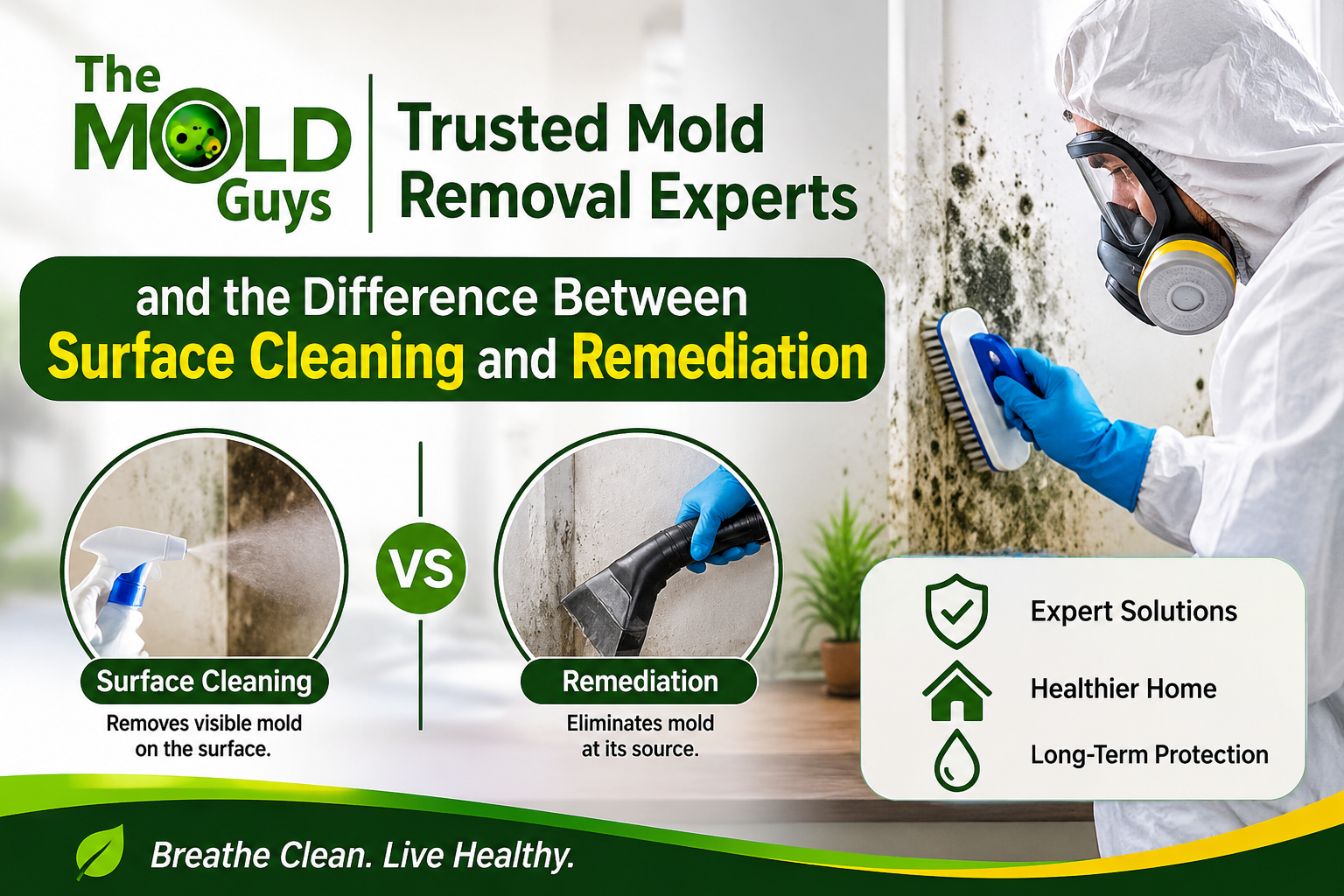
Two companies can both say they remove mold and still do very different work. One may wipe the visible spots and leave. The other may seal the area, find the water source, remove damaged materials, clean the air, and rebuild what was taken out. The price difference between those two jobs is easy to see. The difference in results shows up months later. This guide explains how trusted mold removal experts separate surface cleaning from true remediation, what each one can and cannot do, and how to tell which one your home needs.
The Quick Answer
Surface cleaning removes mold you can see on hard, sealed surfaces. It works for small spots when the moisture problem is already fixed. Remediation is a full process that deals with the cause and the damage. It includes containment, removal of contaminated materials, air filtration, drying, and repair.
If the mold is small, on tile or another hard surface, and has a clear cause that is already solved, cleaning may be enough. If it covers a larger area, sits on soft materials, keeps returning, or comes with a musty smell and no visible source, you are looking at remediation. The sections below explain how to tell the difference.
What Surface Cleaning Actually Does
Cleaning has a real place in mold care. It is quick, inexpensive, and often the right first response to a small spot. The trouble starts when people expect it to do more than it can.
What Cleaning Can Do
On a hard, sealed surface such as glazed tile, a bathtub, or a window frame, detergent and water can lift visible growth and the film it feeds on. Done properly with a respirator, gloves, and goggles, it leaves the surface clean. The EPA draws a general line at about 10 square feet for do it yourself cleanup of this kind.
What It Cannot Reach
Cleaning treats what the cleaner touches. It cannot reach growth that has moved into porous materials such as drywall, grout, ceiling tiles, or wood. It does not stop a leak or lower the humidity in a room. It also does nothing about spores that settled in the air or in a wall cavity. That is why a freshly cleaned spot can look perfect for two weeks and then darken again.
What Remediation Means
Remediation is the professional process of controlling and removing mold and fixing the conditions behind it. The Mold Guys describe a four step approach on their mold removal page. Industry standards such as IICRC S520 describe similar principles. The details vary by job but the logic stays the same.
Find and Fix the Moisture Source
Everything starts with the water. A technician inspects the home, takes moisture readings, and looks at plumbing, the roof, windows, and the air conditioning system. If the source is not found and corrected, the best removal work in the world will not last.
Containment and Removal
The crew seals the work area with plastic barriers and sets up negative air pressure so air flows out of the contained space and not into the rest of the house. Fans and the HVAC may be shut off during the work. Soaked drywall, insulation, and carpeting are removed and bagged. Surfaces that can be saved are cleaned and treated with antifungal products.
Filtration and Drying
HEPA vacuums and air scrubbers capture airborne spores and fine dust. The structure is then dried so the moisture that supported the growth is gone. Drying is the part people underestimate, and rushing it is one of the most common reasons mold returns.
Repair and Verification
Taking out damaged material leaves holes in walls and ceilings. Mold and water damage repair rebuilds what was removed once the cavity is dry. A good company walks you through the finished work and stays until the property is confirmed safe and clean. Some jobs also end with testing to confirm the result, which a technician can recommend when it adds value.
Cleaning and Remediation Compared
The two approaches differ in scope, time, and results.
Scope
Cleaning looks at the visible patch. Remediation looks at the whole area including the hidden spaces around it. A small stain on a ceiling may be cleaned in minutes. The same stain may be the visible edge of a larger problem above the drywall.
Cost and Time
Cleaning costs less in the short run and takes hours. Remediation takes days or longer and costs more because it involves labor, equipment, disposal, and repair. The cost question is more complicated over time. Repeated cleaning that never fixes the cause can add up, and hidden moisture that damages framing and drywall makes the final repair larger.
Results
Cleaning gives a clean look for as long as conditions stay dry. Remediation aims to remove the problem and the reason for it. Neither is better in every case. The right choice depends on what you are dealing with.
Examples Around the Home
Real situations make the difference easier to see.
Grout and Caulk in a Bathroom
Many homeowners spend months scrubbing grout lines and then wonder why the dark color comes back. Cleaning mold in grout works when the growth is on the surface and the shower dries well afterward. Grout is porous, so growth can sit below the surface. If caulk is stained all the way through or the wall near the shower feels soft, moisture is probably behind the tile and the job moves from cleaning to remediation.
Clothes and Fabric
Soft items absorb spores and odor from a damp room. A mould stain on clothes often appears as small gray or green spots near seams and hems. This is a cleaning problem and you can handle it at home. Wash the items in the hottest water the care label allows and dry them fully in sunlight or on high heat. Send delicate pieces to a dry cleaner. If stains keep appearing on clothes stored in the same closet, the wall behind them is the real issue and it needs remediation.
Window Sills and Hard Surfaces
Condensation on windows can leave dark spots on sills and frames. Wiping them with detergent, drying the area, and improving airflow is usually enough. Repeated growth in the same place suggests a humidity problem that cleaning alone will not solve.
Signs You Need Remediation Instead
Some signs point clearly toward the full process. Mold that covers more than about 10 square feet is one. Growth on drywall, ceiling tiles, insulation, or carpet is another because those materials are porous. A musty smell with no visible source suggests hidden growth. Mold that returns within days or weeks after cleaning points to an unresolved moisture problem. Water damage from flooding, a roof leak, or a pipe failure should also be treated as a remediation situation, especially if the materials stayed wet for more than a day or two.
Health matters too. If someone in the home has asthma, allergies, or a weakened immune system, do not take chances with disturbed spores. Let a professional contain the work.
Why Florida Homes Often Need More Than Cleaning
Climate changes the math. Gulf Coast humidity stays high for most of the year, so a wall that gets damp rarely dries on its own. Air conditioners produce condensation that can leak into ceilings and closets. Storms push water into roofs, window frames, and wall cavities. Many homes sit on slabs where moisture rises through flooring and baseboards. In these conditions a cleaned surface can be wet again within days. That is why companies that work in the area focus so much on finding the source and drying the structure and not only on the visible patch.
What a Written Remediation Plan Should Include
A real remediation bid reads like a plan. It names the affected rooms and describes the containment method. It lists the materials to be removed and the surfaces to be cleaned. It explains how the structure will be dried and who handles rebuilding. It also states what is not included and what might change the price if more damage appears when walls are opened. If a bid is a single line with a total, ask for more detail. A clear plan makes it easy to compare companies and hard to hide missing steps.
How to Choose a Company for the Full Process
Not every company that advertises mold removal does remediation. Some only clean. When you compare trusted mold removal services ask each one to describe its steps from containment to repair. Ask whether the technician will inspect before quoting and how the company finds the moisture source. Ask for a written bid that lists the work and the materials involved.
Ask for proof of licensing and insurance and about certifications such as IICRC. Read recent reviews on sources you can verify such as Google and HomeAdvisor. A company that explains the process clearly and stays until the area is confirmed safe is more likely to do the work properly.
Common Mistakes to Avoid
The first mistake is treating every case as a cleaning job. The second is cleaning a large or soft area yourself without protection. The third is painting over a stain before the wall is dry. The fourth is comparing bids that cover different work, because a lower price may leave out containment or drying.
Another common mistake is treating mold and water damage repair as optional once the visible mold is gone. If the structure is not dried and rebuilt correctly the same problem can return.
Working With The Mold Guys
The Mold Guys are a Florida mold assessment and remediation company based in Venice. They have served Southwest and Central Florida for more than 25 years from Tampa to Naples. Their team handles mold inspection and testing, mold removal, and water damage restoration for homes and businesses. A technician inspects the site, looks for the moisture source, and provides a bid. The crew uses containment, negative air pressure, and HEPA filtration. They are available around the clock for emergencies.
If you are not sure whether your situation calls for cleaning or remediation, call (941) 416 4113 or send a message through the contact page. Bring photos and note when you first noticed the problem.
Final Thoughts
Surface cleaning and remediation solve different problems. Cleaning handles small visible spots on hard surfaces when the moisture is already under control. Remediation handles the cause, the damage, and the air. Choosing between them starts with knowing what you are dealing with. Trusted mold removal experts will tell you honestly which one fits your home, and they will explain why before they ask you to sign.
Frequently Asked Questions
Q: What is the difference between mold cleaning and mold remediation?
A: Cleaning removes visible mold from hard surfaces. Remediation includes finding the moisture source, containing the area, removing damaged materials, filtering the air, drying the structure, and repairing what was removed. It addresses the cause as well as the visible growth.
Q: Is cleaning mold in grout enough?
A: It can be when the growth is on the surface and the shower dries well afterward. If dark lines return within days, caulk is stained through, or the wall feels soft, moisture is likely inside the wall and a professional should inspect it.
Q: How do I get a mould stain on clothes out after a damp closet?
A: Wash the items in the hottest water the care label allows and dry them fully in sunlight or on high heat. Send delicate pieces to a dry cleaner. Check the closet wall because a damp wall will stain the next batch.
Q: Do trusted mold removal services only clean visible mold?
A: Reputable companies do more. They inspect first, find the moisture source, contain the work, remove damaged materials, and handle drying and repair. Ask each company to describe its steps in writing before you choose.
Q: Can mold come back after remediation?
A: It can if moisture returns or the structure was not fully dried. Fixing the source, drying completely, and controlling humidity lower the risk. Keep indoor humidity between 30 and 50 percent and repair leaks quickly.

 English
 Arabic
 French
 Spanish
 Portuguese
 Turkish
 Dutch
 Italiano
 Russian
 Romaian
 Portuguese (Brazil)
 Greek