


Can Skin Glue for Dogs Be Used After Tumor Removal Surgery?
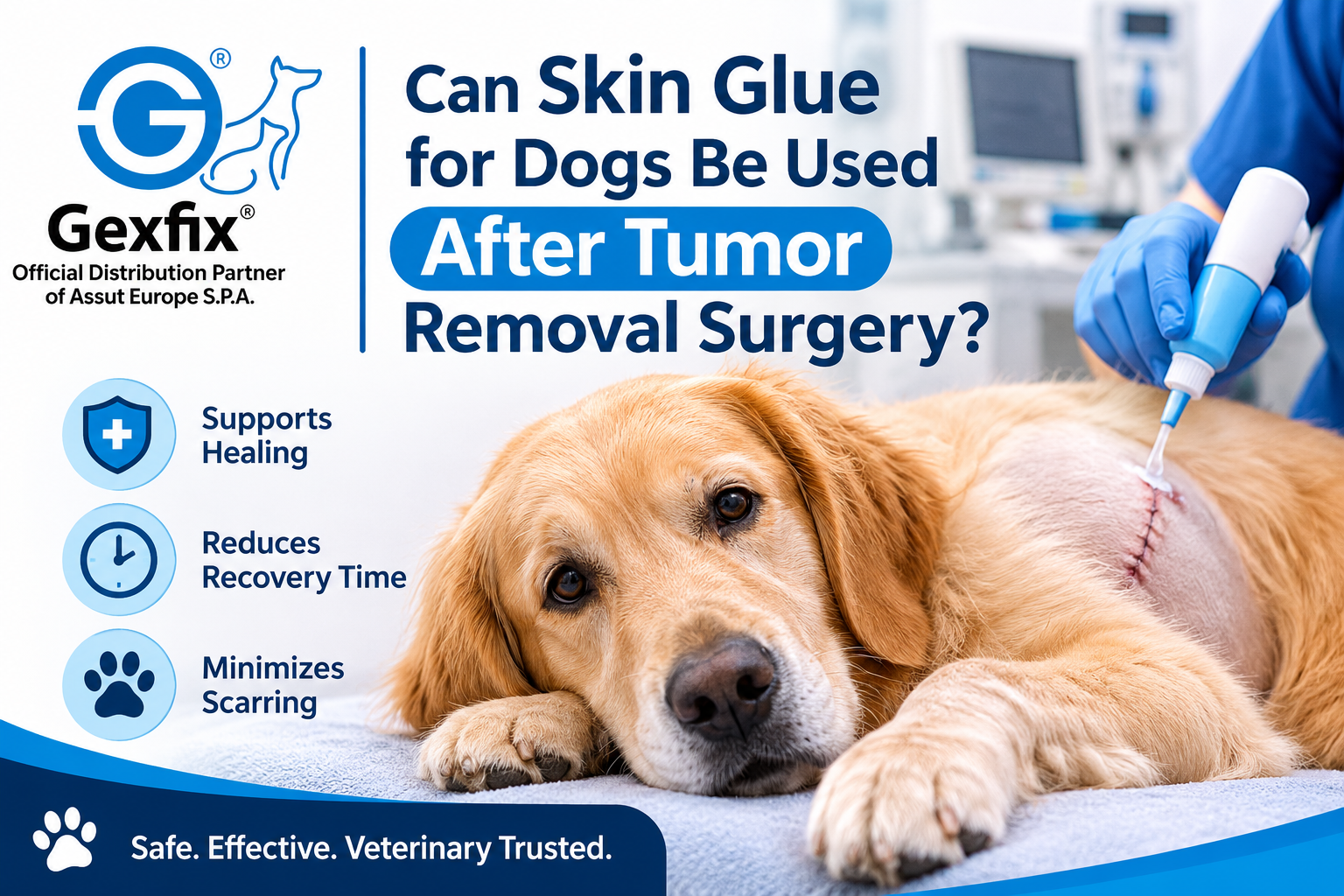
Finding a lump on your dog is stressful and the surgery that follows raises new questions. One of them is how the incision will be closed. Some dogs go home with stitches and some with staples and some with only a thin layer of adhesive over the skin. Skin glue for dogs can be part of a tumor removal closure but only in the right situation. This guide explains where it fits and where it does not. It also covers recovery at home and the warning signs to report. It is general educational information and the attending veterinarian chooses the closure for each dog.
The Quick Answer
Sometimes yes. Adhesive can close the skin on a small clean incision where the edges meet easily and little tension pulls on the wound. It can also reinforce a closure that already has stitches or staples. It is a poor choice for large defects and areas that move and sites that need drainage. The deeper layers after a tumor removal almost always need thread.
What Happens When a Tumor Is Removed
Dead Space
Removing a mass leaves a pocket under the skin. When the tumor is large the pocket left behind may also be large and prone to seroma formation. Surgeons manage that space in several ways. A veterinary suture can close the layers beneath the skin so fluid has less room to collect. In a study of large skin defects after mammary tumor removal in dogs the surgeons placed a drain to remove tissue fluid and prevent seroma and closed the subcutaneous tissue with a continuous pattern. Adhesive on the skin does nothing for this space.
Skin Tension
Tension decides a great deal. A veterinary surgeon writing for a congress notes that tension on the wound edges is the most common reason skin reconstructions fail and occurs when there is not enough skin to close the defect. Location matters too. A surgeon who studies skin closure advises assessing tension with the dog standing. A closure over the hind limb may look fine on the table and then face much greater tension once the dog is walking. Wounds in those areas are prone to opening.
Margins and Pathology
The removed tissue is usually sent for analysis. Complications listed by a university soft tissue service include delayed or poor wound healing and incomplete margins where tumor cells are seen at the edges of the removed tissue. That is a reason closure plans are made case by case. The tumor type and the margins needed can change how much skin is removed and how tight the closure will be.
Where Skin Glue Can Help
Small Low Tension Incisions
A small mass on the trunk can leave a short incision with plenty of loose skin. Closure type depends on the size of the defect and the amount of movable skin and the location. One veterinary label describes the adhesive as indicated for closure of animal skin in clean fresh wounds with easily apposed edges and applied by trained veterinary staff. A small lump removal that fits that description is a reasonable candidate once the deeper layers are closed.
Reinforcing a Closure
A pet care guide explains that surgical adhesive is used to close small incisions or to help reinforce larger ones that may also have stitches or staples and it naturally sloughs off the skin so no removal visit is needed. In that role the adhesive is a surface layer. A vet suture or staples still hold the tissue.
Where It Falls Short
Tension and Large Defects
Labels set clear limits. One distributor lists infected wounds and deep puncture wounds and high tension wounds as contraindications unless the adhesive supports sutures. Large defects after tumor removal often fall into that group. They may need tension relief or flaps or other reconstruction and adhesive alone cannot hold them.
Seroma and Drainage
Adhesive seals the surface and that can be a drawback when fluid needs somewhere to go. Large pockets may need a drain or a pressure bandage and the surgeon decides which. A sealed surface over trapped fluid can slow recovery.
Infected or Open Wounds
Labels advise against use on infected or chronic wounds. A tumor that has ulcerated or a site that is already infected usually needs to be managed before it is closed. Adhesive should not go over pooled blood or fluid and it should not enter the wound.
How Veterinarians Decide
A university soft tissue service explains that the type of closure depends on how big the defect is and how much movable skin surrounds it and where it is. Ideally wounds are fully closed but sometimes part of the wound is left to heal on its own. Surgeons weigh those factors with the tumor type and the dog's size and activity. A small incision on a calm older dog may be a good fit for adhesive. A large defect on a young active dog will probably need sutures plus tension relief.
Other Closure Options
Some surgeons choose staples for the skin. A scalp stapler or skin stapler closes a long straight incision quickly and the staples come out after healing. In the canine study that compared staples and n-butyl cyanoacrylate glue with an intradermal suture pattern the authors concluded that the intradermal pattern was much better than glue for skin closure in dogs and not significantly better than staples and that staples should be preferred when time is important. That was a small study on healthy dogs and it does not cover every tumor site.
Safe Use of Adhesive
Technique matters for adhesive just as it does for thread. Labels give practical rules. Keep it out of the wound. One label warns that adhesive dripping into the cavity can cause a foreign body reaction and that hair should not be glued into the site and says to hold the skin edges together for 5 to 10 seconds.
A closer look at technique appears in the post on surgical glue for dogs and its common mistakes. Owners should never apply adhesive to a surgical site at home. Products labeled for veterinary use are meant for trained staff and a wound that needs closing after surgery needs a veterinarian.
Recovery at Home
Home care shapes how any incision heals. Keep the dog calm and limit running and jumping as directed. Keep the area clean and dry. Use an e-collar to stop licking or chewing. A veterinary teaching text on mass removal advises minimizing motion for the first days and then limiting activity until stitches are out. That text was written for large animals but the principle applies to dogs.
If your dog has adhesive on the incision do not pick at it. It flakes away on its own as the skin heals. Do not apply ointments or bandages over it unless the veterinarian says so.
Warning Signs to Report
Call the clinic if you see gaping edges or discharge or a bad smell. Increasing redness or swelling or heat at the site should also be reported. So should a soft swelling that grows under the skin because it can be a seroma. The same teaching text notes that dehiscence usually happens around day 3 but problems can show up later. Contact the clinic any time the incision looks different from the day before.
Questions to Ask Your Veterinarian
Ask why this closure was chosen for your dog and whether the deeper layers were closed with suture. Ask whether a drain or bandage is needed. Find out how long the incision should stay covered or protected and when the recheck is due. Ask when you will hear back about the pathology results and whether more treatment may be needed.
Final Thoughts
Skin glue for dogs can work after tumor removal when the incision is small and clean and under little tension and when the deeper layers are closed with suture. It can also reinforce a sutured closure. It does not suit large defects or high tension sites or wounds that need drainage. Your veterinarian chooses the closure based on the tumor and the location and your dog. Follow the recovery plan closely and report any change in the incision right away.
Frequently Asked Questions
Q: Is skin glue strong enough to close a lump removal incision?
A: Only for small low tension incisions with the deeper layers already closed. Adhesive holds the skin surface and does not support deeper tissue.
Q: Why did my dog get stitches when a friend's dog got glue?
A: Closure depends on the size and location of the wound and how much loose skin is available. A larger defect or a spot that moves a lot usually needs stitches or staples.
Q: Can I put skin glue on my dog's incision at home?
A: No. Veterinary adhesives are meant for trained staff to apply to fresh clean wounds. If an incision opens call the clinic right away.
Q: How long will the glue stay on?
A: It wears away as the skin heals which usually takes days to a couple of weeks. Do not pick at it and ask your veterinarian what to expect.
Q: Does glue prevent seroma after tumor removal?
A: No. Seroma relates to the space left under the skin and is managed with layered closure or drains or bandages. Adhesive only seals the skin surface.

 Arabic
 French
 Spanish
 Portuguese
 Deutsch
 Turkish
 Dutch
 Italiano
 Russian
 Romaian
 Portuguese (Brazil)
 Greek