


How to Compare Milgard Retrofit Windows With Full Frame Window Replacement
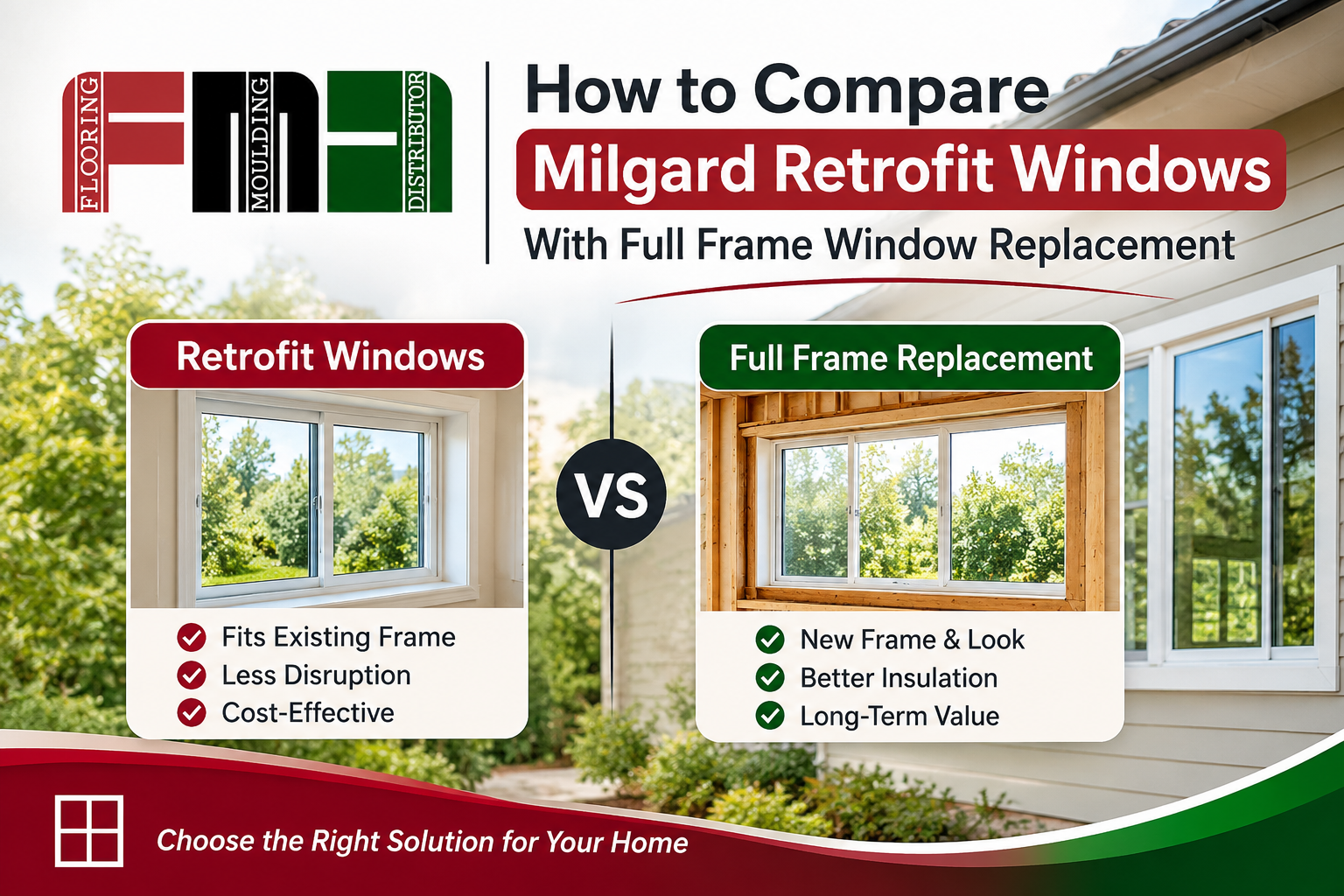
Two contractors can look at the same house and quote two very different jobs. One suggests sliding new units into the existing openings, and the other wants to pull everything out down to the studs. Both can be right, and the gap between them is what this guide helps you sort out when you weigh Milgard retrofit windows against a full frame replacement.
The decision is not really about the window. It is about the opening around it: the frame, the flashing, the wall and what has happened inside them over the years. A strong product in a weak opening disappoints, and a modest product in a sound opening can perform for decades.
Below you will find a plain comparison of both approaches, a way to judge your own openings, and questions to put to anyone bidding on the work. The aim is a choice you can explain, not one you made because a quote looked cheaper.
The Quick Answer
Choose a retrofit when the existing frame is solid, square and dry, and you want to keep your trim, siding or stucco. Choose a full frame replacement when the frame is damaged, when water has been getting in, or when you want to rebuild the flashing and sealing from scratch. Fine Homebuilding describes the difference this way: an insert replaces only the sash and balance system and leaves the frame and trim, while a full frame replacement swaps the entire window, frame and all. The condition of your openings should make the call.
What Each Approach Actually Involves
Understanding what the crew does on each job makes the quotes easier to read.
A retrofit, sometimes called an insert or replacement installation, places a new window inside the opening that already exists. The old sash and glass come out, the opening is cleaned and checked, and the new unit is fastened and sealed in place. The wall finish, trim and frame stay put, which is why it is usually faster and neater.
A full frame replacement removes the whole window assembly, including the frame, so the installer can see and work on the rough opening. New flashing, sealing and insulation go in as part of the job, and the exterior and interior finishes around the opening are repaired or rebuilt afterward. It is a bigger project in every sense.
Shoppers who are looking at Milgard vinyl windows will find that the manufacturer offers frame styles for both routes, so the product is rarely the limiting factor. Your walls and openings are.
Comparing the Two Approaches
Cost and Project Scope
A retrofit generally costs less overall because there is less demolition, less patching and less finishing. A full frame job adds labor for removing the frame, repairing the wall, flashing the opening and refinishing inside and out. Exact prices vary widely by house, so ask for itemized quotes instead of comparing a single total.
Cost also depends on what you find. A retrofit that uncovers a rotted sill can turn into a repair job on the spot. A full frame job that is planned from the start usually prices that work in, which can make the final bill easier to predict even if the starting number is higher.
Condition of the Opening
This is the deciding factor. Remodeling guidance advises considering the condition of the existing flashing, the frame and the surrounding wall before choosing how much of the window assembly to replace. If all three are sound, a retrofit makes sense. If one is failing, the choice shifts.
The most important warning concerns water. If the existing flashing or surrounding materials leak, they will continue to leak after a retrofit window goes in, and that problem is solved only with a new full frame window. A stain below a sill, soft wood or a musty smell near a window all deserve a closer look before anything gets ordered.
Frame shape matters too. If the old frame is rotted or significantly out of square, you will most likely have to replace the entire window. A new window can only be as square and plumb as the opening that holds it.
Glass Area and Appearance
A retrofit unit sits inside the old frame, so the visible glass area shrinks slightly. On a small window the loss is hard to notice, while on a large picture window it can be visible. A full frame replacement uses the whole rough opening, so you can gain back that glass and even choose a different size.
Appearance changes in the other direction. A retrofit keeps your existing trim lines, so the house looks much as it did. A full frame job lets you reset the trim, the exterior casing and the proportions, but it also means you must match or redo those finishes.
Air Sealing and Energy Performance
A window is only one part of how a wall performs. Heat moving through windows is a large share of household energy use, and the Department of Energy says heat gain and heat loss through windows account for 25% to 30% of residential heating and cooling energy use. The glass package matters, but so does the seal around it.
A full frame job gives an installer the best chance to insulate and flash the opening correctly, since everything is exposed. One trade article describes full frame replacement as a chance to reset the system correctly, and as the right choice when you need to fix water and air paths and start fresh. A careful retrofit can still seal well, but it works within what the old opening allows.
Time and Disruption
Retrofits are usually the shorter job, often finished for a whole house in a few days once the windows arrive. Full frame replacements take longer because each opening needs more work before and after the unit goes in. Inside, expect more dust and more repair work around the opening.
Weather plays a part in both. Open walls need protection from rain, so scheduling in a dry season helps. Ask any bidder how they handle an opening that cannot be closed up by the end of the day.
How Your Wall Type Changes the Answer
Wall material affects the choice almost as much as frame condition.
On stucco, a full frame replacement is more complicated, because the installer has to cut back the stucco, tie into the lath and weather barrier, and patch afterward. That extra effort is one reason retrofits with a flange are popular on stucco homes. Milgard says the flush fin, also called Z bar, is typically used in California and similar markets where aluminum windows are in place and the exterior is stucco or masonry. The large flange covers the old frame and avoids most of the cutting.
On brick, a full frame job often means removing brick or working around it, which is delicate. Retrofits that leave the brick undisturbed are a natural fit when the old frames are sound. When water is the problem, though, brick homes can hide damage behind the masonry, so a proper inspection matters.
On siding, both routes are workable. A full frame replacement often involves cutting back siding and reinstalling it, which adds cost but gives access. A retrofit leaves the siding alone and keeps the project tidy.
Older wood windows are a special case. Their frames are often part of the home's character, and keeping them can be a reason to choose a block frame insert, as long as the wood is healthy.
Frame Styles Within the V400 Tuscany Series
The product line supports both approaches. Milgard describes the block style as commonly used for replacement projects, inserting into your existing frame and leaving trim undisturbed, and the nail fin as attached directly to the house frame in new construction and in replacement projects where studs are exposed. The Z bar option sits between them, with a flange that covers the old frame.
If you are comparing V400 Tuscany windows for a mixed house, you may end up with different frame styles on different walls. A stucco side might call for a Z bar unit, while a wood trimmed side suits a block frame. That is normal, and a good installer will explain why each opening gets what it gets.
Confirm the exact frame code for every opening on the quote. Availability can vary by window style and by location, so do not assume that a style offered for one window type is offered for another.
A Simple Way to Decide
You can reach a sensible answer with a short, honest inspection of each opening. Walk the house with a flashlight and a screwdriver.
Start inside. Press gently on the sill and lower trim. Soft or spongy wood suggests moisture. Check the corners for stains or peeling paint, and look for gaps where the frame meets the wall.
Move outside. Look at caulk lines, cracks in stucco or siding, and any rust or staining below the opening. Check whether the window is visibly out of square by looking at the gaps around the sash.
Sort each opening into one of three groups. Sound and dry openings are retrofit candidates. Openings with minor cosmetic wear can usually take a retrofit with some repair. Openings with soft wood, stains or leaks should be planned as full frame jobs.
Homeowners comparing Milgard Tuscany windows San Jose options sometimes find that the south and west sides, which take the most sun and weather, are the ones that need more than a retrofit. Treat that as a pattern to check, not a rule.
If the sorting produces a mix, consider a hybrid plan. Retrofit the sound openings and do full frame work only where the inspection calls for it. That often balances cost and risk better than treating the whole house the same way.
What the Installation Should Include
Whichever route you choose, installation quality determines the result. As one installer put it in a trade article, it is all about the installation. Milgard backs this up by publishing recommendations that installers are expected to follow. The recommendations for flange and finless windows are written for a typical wood framed building less than three stories in height, and direct installers to follow the Milgard fastener schedule.
A careful crew checks the opening, repairs damage, fastens the unit as specified, seals the perimeter and tests every sash. Ask to see the process described in writing, and confirm that the quote lists sealing, sill work and cleanup rather than leaving them out.
The warranty also depends on doing this correctly. Milgard's Full Lifetime Warranty covers the original owner, including glass breakage, but it excludes problems caused by improper installation. A shortcut at the opening can cost you coverage later.
Questions to Ask Before You Decide
A short list keeps every bid on equal footing, whether you are weighing Milgard vinyl windows against another brand or two installation methods from the same supplier.
What did you find when you inspected each opening, and what did you base it on?
Which openings do you recommend for retrofit, and which for full frame work?
How will you flash and seal each opening?
Who repairs stucco, siding, drywall and paint afterward?
How do you handle damage that turns up once the old window is out?
What does the warranty cover, and what installation conditions affect it?
Common Mistakes to Avoid
The first mistake is deciding on price before inspecting the openings. A low retrofit quote on a rotted frame becomes an expensive repair.
The second is assuming a retrofit stops a leak. It will not, because the new window sits in the same opening with the same flashing.
The third is treating every window the same. Different walls and different exposures often call for different methods, even within one house.
The fourth is ignoring the finish work. Stucco patching, siding repair and interior paint can change the real cost, so make sure the quote says who handles them.
Working With a Local Supplier in San Jose
A local supplier can explain which frame styles are offered for each window type, confirm lead times and help you match methods to your walls. When you search for Milgard windows San Jose options, ask the supplier to review your opening photos and explain which approach they would expect for each.
Bring photos of your windows from inside and out, notes on any stains or drafts, and details about your wall materials. Mention any homeowners association rules about exterior changes. Confirm the frame style, glass, color and installation approach in writing before ordering.
Final Thoughts
The best choice is the one that fits your openings. Retrofits keep your trim and walls intact and move faster when the frames are sound, while full frame replacement gives you access to fix water, air and structural problems that a retrofit cannot reach. A quick inspection, a clear list of questions and a careful installer will do more for your result than any single product feature. If you are still weighing Milgard retrofit windows against a full rebuild, let the condition of each opening guide the decision.
Anyone browsing Milgard windows San Jose listings online should pair the product research with an honest look at their own walls. And if V400 Tuscany windows are on your shortlist, ask how each frame style would work for your exact openings, including when you review Milgard Tuscany windows San Jose choices with a supplier. A little time spent on the opening can save a lot of trouble later.
Frequently Asked Questions
Q: When is a retrofit the better choice?
A: A retrofit is usually better when the existing frame is solid, square and dry, and you want to keep your trim, siding or stucco. It is faster and less disruptive, as long as the opening has no hidden damage.
Q: When should I choose full frame replacement?
A: Choose it when the frame is rotted or out of square, when water has been getting in, or when you want to rebuild the flashing and sealing. It costs more, but it lets the installer fix problems properly.
Q: Will a retrofit window stop a leak?
A: No. If the existing flashing or surrounding materials leak, they keep leaking after a retrofit window goes in. Fix the cause first, or plan a full frame replacement so the installer can repair the opening correctly.
Q: Does a retrofit reduce the glass area?
A: Slightly. The new unit sits inside the old frame, so the visible glass shrinks a little. On small windows it is hard to notice, but on large picture windows the difference can be easier to see.
Q: Can I mix both approaches in one house?
A: Yes. Many homes have some sound openings and some damaged ones, so a hybrid plan often makes sense. Retrofit the good openings and use full frame replacement only where the inspection shows damage, leaks or soft wood.

 English
 Arabic
 French
 Spanish
 Portuguese
 Deutsch
 Turkish
 Dutch
 Italiano
 Russian
 Portuguese (Brazil)
 Greek