


What Is Ovarian Remnant Syndrome After Spaying a Dog?
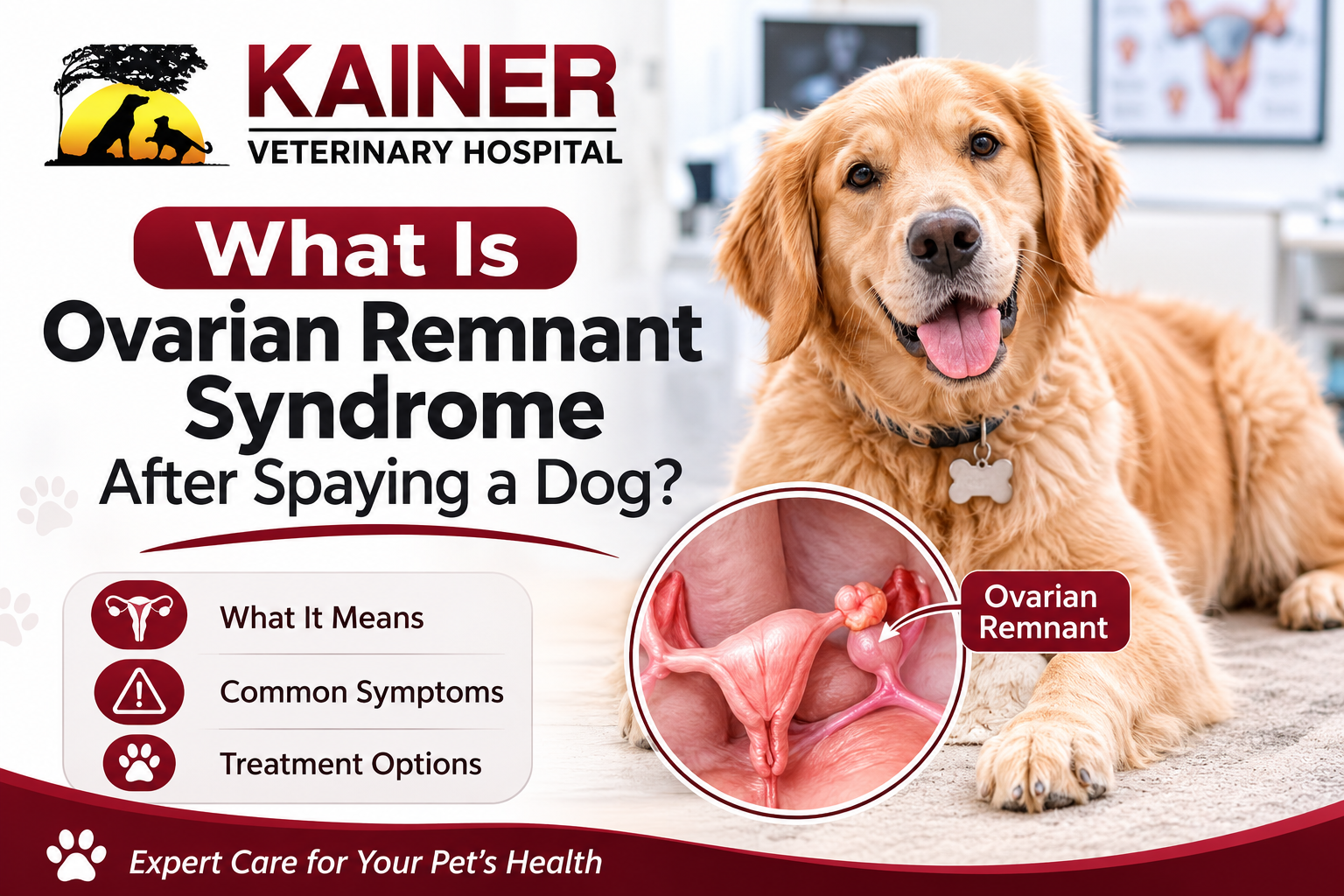
Spaying dog surgery is meant to end heat cycles for good, so signs of heat months or years later can be confusing and worrying. The operation removes the ovaries, and without ovaries a female shouldn't make the hormones that drive heat. In rare cases a small piece of ovarian tissue stays behind and keeps working. That condition is called ovarian remnant syndrome.
This article explains what ovarian remnant syndrome is, how it happens and which signs to watch for. It also covers how veterinarians confirm it, which other conditions look similar and what treatment usually involves. The aim is to give you calm and practical information so you know when to call your veterinarian.
What Ovarian Remnant Syndrome Means
Ovarian remnant syndrome describes a spayed female whose body still has working ovarian tissue. That tissue makes estrogen and sometimes progesterone, so the dog can show signs of heat even though she had surgery. The tissue may be a tiny fragment, often no bigger than a grain of rice, which is one reason it can be hard to find.
The condition is considered uncommon, and it isn't a sign that you did anything wrong. It doesn't mean your dog is pregnant either, because the uterus is usually gone and a remnant can't carry a litter. What it does mean is that her hormones are still cycling, and that deserves a closer look from a veterinarian.
How Ovarian Remnant Syndrome Happens
There are a few ways ovarian tissue can be left behind. The ovaries sit deep in the belly near the kidneys, and the right ovary is often harder to reach. A small piece can stay attached to the tissue that supports the ovary if the surgeon doesn't remove the whole structure. Rarely a fragment breaks loose during surgery, lands somewhere else in the belly and gets a new blood supply. Some dogs may also carry extra ovarian tissue from birth in an unusual spot.
Because a spay is a form of pet abdominal surgery done through a fairly small incision, the surgeon works in a limited space and has to identify tissue by sight and touch. Even skilled and careful surgeons can occasionally leave a fragment behind. That doesn't make the original spay a failure. It makes the condition a rare complication that veterinarians learn to recognize and manage.
Signs Owners May Notice
The most common sign is a return of heat. You may see a swollen vulva, bloody or straw colored discharge and a change in behavior such as restlessness or clinginess. Intact male dogs may suddenly pay attention to her, which is often the first clue. Some dogs lift the tail to one side when touched near the hindquarters, and some lick the vulva more than usual.
The signs often follow a pattern that repeats every several months, much like a normal heat cycle. They can be mild, so an owner may miss them without close observation. Noting the dates and taking a photo each time helps your veterinarian see whether the changes line up with a hormone cycle. One quiet episode doesn't prove anything, but a repeating pattern is worth reporting.
When the Signs Show Up
Timing varies a lot. Some dogs show signs within a few weeks or months after surgery, and others don't show anything until years later. Part of the reason is that a remnant may start slowly, then become more active as it gets a better blood supply. Because the gap can be so long, owners sometimes assume the cause is something else.
If you see heat signs soon after a spay, call your veterinarian rather than waiting to see if they pass. If you see them years later, don't assume she has aged out of the problem. Either way, an exam is the right first step, since several other conditions can look much the same.
Conditions That Look Similar
Not every swollen vulva or bit of discharge points to ovarian remnant syndrome. A urinary tract infection, vaginitis or a problem with the uterine stump can cause discharge and licking. Exposure to human estrogen creams or patches in the home can also cause swelling in a spayed female. Rarely a tumor in the urinary or reproductive tract is the cause.
Skin trouble is another common lookalike. Urine scalding, fleas and allergies can leave the area red, itchy and swollen, and a dog that licks constantly may look as though she is in heat. Good dog skin irritation treatment starts with finding the cause, so a veterinarian should examine the area before you try any cream at home. Kainer's pet allergy page lists scratching, hair loss and inflamed skin among the signs of allergy. A hormone cause still needs its own testing if the pattern keeps returning.
How Veterinarians Diagnose It
Diagnosis starts with a history and a physical exam. Your veterinarian will ask when your dog was spayed, when the signs began and whether they come and go. The surgical record can help, so request a copy from the clinic that did the spay if you don't have one.
A vaginal cytology test looks at cells under the microscope, and the cell type shows whether estrogen is active. Hormone tests such as progesterone or anti Mullerian hormone can also help show whether ovarian tissue is present. Timing matters, because some tests work best during signs of heat or in the weeks that follow. An ultrasound may help, but a remnant can be so small that imaging misses it, so a normal scan doesn't rule it out. Whether you choose a vet in Woodlands or another clinic, ask what testing plan they recommend and when to repeat it if the first results are unclear.
How It Is Treated
The standard treatment is a second surgery to find and remove the remaining tissue. The surgeon explores the belly and checks the spots where the ovaries sat, since that is where fragments are most often found. Surgery works best during heat or in the weeks right after, because active ovarian tissue is easier to see. Many surgeons send the removed tissue to a laboratory to confirm what it is.
Because this means another round of pet abdominal surgery, the usual preparation applies. Kainer's surgery page says bloodwork is done before surgery to confirm a pet is ready, and your veterinarian will likely want an exam and tests before anesthesia. Recovery looks much like recovery after a regular spay, with limited activity, a cone to stop licking and a recheck. Medicines that change hormone levels are sometimes discussed, but they don't remove the tissue and shouldn't be seen as a cure.
What Happens After the Remnant Is Removed
Once the tissue is removed, hormone driven signs usually fade over the following weeks as hormone levels settle. Your veterinarian may recheck the incision and ask you to report any new swelling, discharge or behavior changes. If the lab report confirms ovarian tissue, that result helps explain why the signs appeared in the first place.
If signs return or never settle, tell your team so they can look again. A second remnant is uncommon but possible, and sometimes another condition is behind the symptoms. Keep notes on her appetite, energy and any discharge, and attend every recheck so small problems get caught early.
Why Treatment Matters
Leaving a remnant alone has real downsides. A dog that keeps cycling stays exposed to hormones, and that is linked with a higher chance of mammary tumors over time. If some uterine tissue remains, hormones can trigger an infection in the stump, which is a serious emergency. Remnant tissue can also, though rarely, develop growths of its own.
There are practical reasons too. Repeated heat signs mean bleeding, behavior changes and unwanted attention from male dogs. Sorting out the cause early is easier on your dog than waiting until a complication appears.
Can It Be Prevented
It can't be prevented entirely, because some causes lie outside anyone's control. What helps is careful technique, good lighting and exposure, and a surgeon who checks that the full ovary and its attached tissue have been removed. Ask your veterinarian how the team handles surgery, what monitoring and pain control they use and how they document the procedure.
You can help as well. Keep the surgical record, mark the spay date on your calendar and note any heat signs that appear afterward. A clear history makes the diagnosis faster and the plan simpler, and that's valuable no matter where your dog was spayed.
What to Do If You Suspect It
Start by writing down the dates, the signs and anything else that seems different. Take photos of the vulva and note any discharge. Keep her away from intact male dogs until you know the cause, and don't use human hormone products or home remedies. Call your veterinarian and describe what you see.
Bring the surgical record and a list of any medicines or supplements she takes. Expect questions about her appetite, thirst and behavior, since those details help rule out infection. If she seems unwell, with a fever, vomiting, low energy or heavy discharge, seek care right away instead of waiting for a scheduled visit.
Kainer Veterinary Hospital at a Glance
Kainer Veterinary Hospital has cared for dogs and cats in The Woodlands and surrounding communities since 2005. The hospital serves Conroe, Magnolia, Montgomery, Spring and Oak Ridge as well. If you're still deciding on a vet in Woodlands, the team can listen to what you're seeing and talk through next steps for your dog.
Kainer's spay page describes tailored care before and after surgery, and its endocrinology page covers hormone related conditions such as diabetes, thyroid disorders and Cushing's disease. The clinic doesn't have a page about ovarian remnant syndrome, so contact the team to ask how they would approach your dog's case. Visits are Monday through Friday from 7 a.m. to 5 p.m., and the hospital is closed on weekends, and they are by appointment only.
Final Thoughts
For nearly every female, spaying dog surgery ends heat cycles for good, and ovarian remnant syndrome is the rare exception. When heat signs return after a spay, a veterinarian can sort out whether leftover ovarian tissue, an infection or a skin problem is behind them. Diagnosis uses a mix of history, cell tests, hormone tests and sometimes imaging, and treatment usually means a second surgery.
If you notice repeated heat signs in a spayed dog, record the dates and call your veterinarian. Contact Kainer Veterinary Hospital to schedule an appointment and bring the surgical record, your notes and any photos. Early answers make the plan easier for you and more comfortable for your dog.
FAQs
Q: What is ovarian remnant syndrome in dogs?
A: It's a condition in which a small piece of ovarian tissue remains after a spay and keeps making hormones. The dog can show heat signs such as a swollen vulva, discharge and attention from male dogs even though she was spayed.
Q: How long after a spay can the signs appear?
A: Anywhere from a few weeks to several years. Some dogs show signs within months, while others stay quiet for a long time. Any heat signs in a spayed dog deserve an exam, no matter how long ago surgery took place.
Q: How is ovarian remnant syndrome diagnosed?
A: Veterinarians review the history and exam findings, then use tests such as vaginal cytology and hormone levels. Ultrasound can help but may miss tiny tissue. Testing is often timed to heat signs, and repeat tests are sometimes needed.
Q: Can vulvar redness after a spay need dog skin irritation treatment instead?
A: Yes. Licking, urine scalding, allergies or infection can irritate the skin around the vulva without any hormone cause. A veterinarian should examine the area, because treatment depends on the cause and repeating heat signs need separate testing.
Q: How is it treated?
A: Treatment is usually surgery to find and remove the remaining tissue, ideally during heat or soon after. Hormone medicines don't remove the tissue. Your veterinarian will explain preparation, recovery and what the lab results mean.

 English
 French
 Spanish
 Portuguese
 Deutsch
 Turkish
 Dutch
 Italiano
 Russian
 Romaian
 Portuguese (Brazil)
 Greek