


Which Production Needs Can zjgycnc Machine Solutions Address?
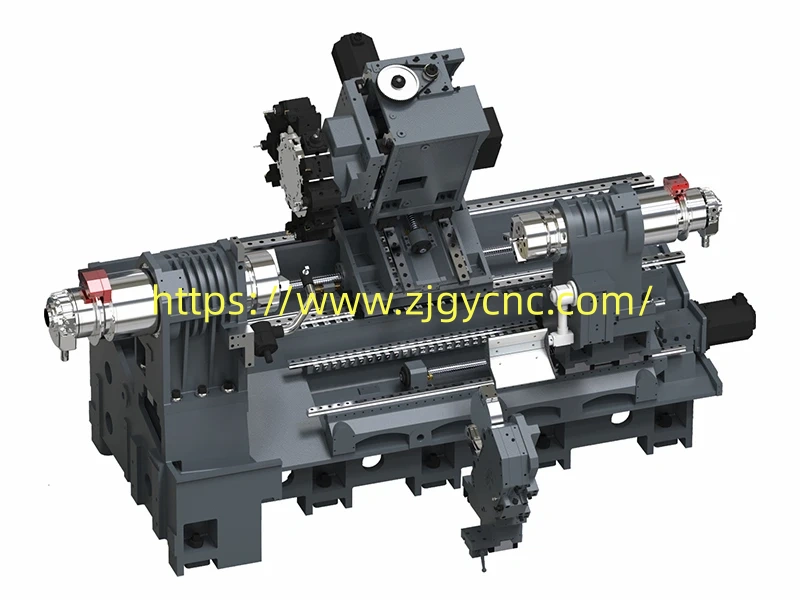
Slant-Bed CNC Lathe selection requires careful consideration of machining accuracy, structural rigidity, spindle performance, tooling arrangements, and production capacity. Buyers should begin by identifying the components they plan to manufacture, the materials involved, and their expected output. These details help determine which configuration is suitable for daily operations. Rather than comparing equipment by price alone, manufacturers should review technical specifications and communicate their actual processing requirements to the supplier.
Examine Structural Rigidity and Construction
Structural stability is an important factor in turning operations. During cutting, the equipment must withstand different forces while maintaining consistent positioning. A rigid, integrated casting can provide a stable foundation for machining tasks and help reduce unwanted vibration.
Buyers should review the construction material, casting quality, assembly process, and overall design. They can also ask about inspection procedures and testing arrangements before delivery. These details provide a clearer understanding of how the equipment is prepared for regular industrial use.
Chip removal deserves attention as well. An inclined structure allows metal chips to move away from the cutting area more naturally. This can reduce accumulation near the workpiece and make cleaning more convenient, especially during extended production runs.
Review Spindle Performance
The spindle directly influences cutting stability, surface finish, and processing efficiency. Buyers should compare rotational speed, motor power, torque output, and bearing arrangements according to their intended applications.
Different materials require different cutting conditions. Small components may need higher rotational speeds, while larger workpieces can require stronger torque at lower speeds. A spindle system with stepless speed adjustment gives operators more flexibility when handling different production tasks.
It is also worth checking the start-stop response and operating smoothness. Stable rotation can support consistent machining results and help reduce unnecessary interruptions during repetitive work.
Compare Guideway and Tooling Options
Guideway configuration affects axis movement, positioning, and cutting performance. Linear roller guideways are often considered for applications requiring smooth travel and responsive positioning. Other arrangements may be appropriate for operations involving different cutting loads.
The right configuration depends on the workpiece material, machining process, and expected workload. Buyers should provide drawings or sample dimensions so the supplier can recommend an appropriate setup.
Tooling arrangements are equally important. A multi-station turret can accommodate different tools and reduce manual changes between operations. When comparing available configurations, review the number of stations, indexing speed, toolholder dimensions, and compatibility with the required cutting tools.
For more complicated components, additional options such as driven tooling, Y-axis movement, hydraulic clamping, and tailstock support may help combine several operations within one setup.
Match Processing Capacity to Workpiece Requirements
Before selecting a model, buyers should confirm the maximum turning diameter, processing length, spindle bore, bar capacity, and chuck dimensions. These specifications determine whether the equipment can handle the components planned for production.
For example, manufacturers producing shafts, sleeves, bushings, threaded components, and hydraulic fittings may have different requirements for clamping methods and machining space.
Future production plans should also be considered. If a business expects to introduce new component types or increase order volumes, it may be worthwhile to discuss additional capacity and optional configurations before placing an order. A suitable selection should meet current requirements without unnecessarily restricting future manufacturing plans.
Consider Automation and Daily Operation
Automation options can help reduce repetitive manual tasks and support consistent output. Depending on the production process, buyers may consider automatic loading systems, chip conveyors, hydraulic chucks, and other auxiliary equipment.
The control interface also deserves attention. Operators should be able to set parameters, edit programs, and monitor production without unnecessary complexity. Training materials and technical guidance can make equipment commissioning and daily operation more manageable.
Maintenance access is another practical concern. Ask about lubrication schedules, inspection points, replacement components, and troubleshooting procedures. Understanding these requirements in advance helps workshops prepare for routine servicing.
Evaluate the Manufacturer and After-Sales Support
Equipment selection also depends on the supplier's technical knowledge and communication. A reliable manufacturer should be able to explain configuration differences and recommend suitable options according to actual component requirements.
Before confirming an order, buyers should request a detailed quotation, technical specifications, configuration list, delivery schedule, and warranty information. It is also useful to clarify installation guidance, operator training, spare parts availability, and after-sales service arrangements.
zjgycnc offers different turning equipment configurations for manufacturers handling a range of metalworking applications. Buyers can discuss component dimensions, material types, machining processes, and production targets with the team to identify a suitable solution.
Make Your Equipment Selection with Clear Requirements
A practical purchasing decision should be based on real production needs. Structural stability, spindle capability, guideway arrangements, tooling flexibility, processing capacity, and supplier support all deserve careful evaluation.Buyers can prepare component drawings and expected output figures before requesting a quotation. This makes technical discussions more specific and helps avoid unsuitable configurations. By comparing these factors systematically, manufacturers can select equipment that supports current operations and future production development. To explore available models and discuss your requirements, visit https://www.zjgycnc.com/ and contact the zjgycnc team.

 English
 Arabic
 French
 Spanish
 Portuguese
 Deutsch
 Turkish
 Dutch
 Russian
 Romaian
 Portuguese (Brazil)
 Greek