


What Should Buyers Check Before a China Spot Welder Order?
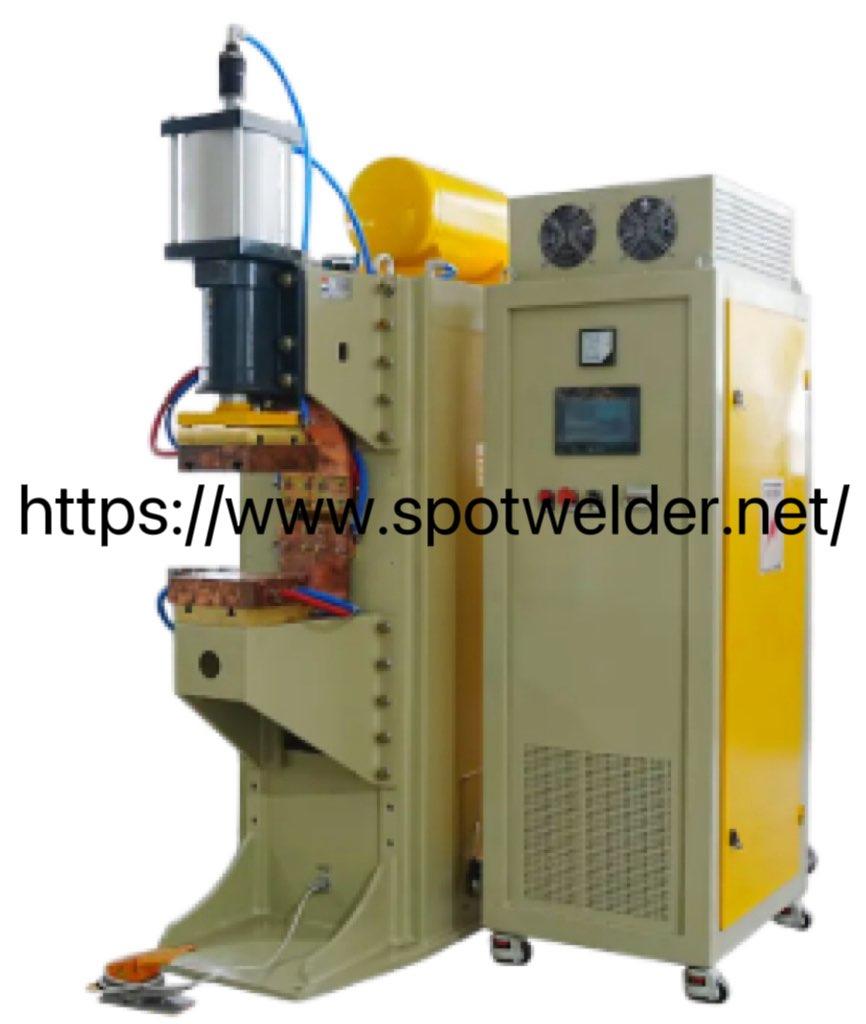
China Spot Welder selection should begin with a detailed review of the metal components your production line needs to join. Buyers should consider material types, sheet thickness, joint positions, daily output, and operating conditions before comparing equipment quotations. For importers and manufacturing companies, a suitable resistance welding solution depends on how well its configuration matches the actual work rather than its rated capacity alone.
Identify the Materials and Workpiece Thickness
Material compatibility is an important starting point when evaluating welding equipment. Carbon steel, stainless steel, aluminum, and copper have different electrical and thermal characteristics, which can influence the joining process.
Prepare a list of the materials used in your production. Include their grades, thickness ranges, dimensions, and surface conditions. If your products contain several material combinations, provide those details to the supplier instead of requesting a quotation based on a general description.
Thickness also deserves careful attention. Two metal sheets with different thicknesses may require different current levels, pressure settings, and welding durations. Buyers should confirm the applicable processing range for the proposed model and arrange sample testing when the application involves unusual material combinations.
Compare Power Supply and Control Options
Resistance welding relies on electrical current, contact resistance, and applied pressure to generate heat at the joining area. The power supply and control system therefore influence how the process is managed.
Industrial models may use different power technologies, including power-frequency AC, medium-frequency DC, and capacitor discharge configurations. Each option has its own operating characteristics and application considerations.
For example, the power-frequency series offered by spotwelder includes several rated-capacity options, while its product range also covers medium-frequency and capacitor discharge equipment. Buyers should compare these alternatives according to material characteristics, production rhythm, available electrical supply, and process requirements.
Ask the manufacturer which control functions are available. Adjustable current, welding time, pressure coordination, and stored process settings may be relevant depending on the selected configuration.
Examine Electrode Design and Workpiece Access
Electrodes transfer current and apply pressure to the joining area. Their shape, contact surface, alignment, and material condition can affect the welding result.
Buyers should examine whether standard electrodes can reach the required joining positions. Components with narrow spaces, curved surfaces, or irregular structures may need specially designed tooling.
Consider the following details when discussing electrode arrangements:
Contact shape and dimensions
Access to the intended welding points
Electrode alignment and replacement
Cooling requirements
Fixture compatibility
Space available around the workpiece
The manufacturer's 35KVA AC model with special electrodes is designed for irregular parts, confined welding positions, and specialized metal components. This type of configuration may be worth discussing when standard tooling cannot accommodate the component geometry.
Review Fixtures and Production Handling
A suitable fixture helps position components consistently before each welding cycle. Without proper positioning, operators may encounter alignment difficulties or variation between workpieces.
Before ordering, provide drawings that show the component dimensions, joining locations, and loading direction. Ask whether the proposed fixture can hold the workpiece securely while allowing operators to load and remove it conveniently.
For recurring production, consider whether the tooling can support the required working sequence. Manufacturers handling several component designs may need interchangeable fixtures or adjustments for different product specifications.
It is also useful to evaluate the available working space. Electrode arm length, throat depth, worktable dimensions, and access around the joining area should correspond to the size and shape of your components.
Request Sample Testing Before Confirming Specifications
A product description cannot fully demonstrate how a configuration will perform on your actual workpieces. Sample testing gives buyers an opportunity to examine the proposed process using representative materials.
Prepare samples that reflect your normal production conditions. Check the appearance of the weld points, joint consistency, indentation, deformation, and other criteria relevant to your application.
Discuss the testing conditions with the supplier, including material thickness, electrode selection, current settings, pressure, and welding duration. Keeping a record of the approved sample and its process settings can provide a reference for later production checks.
If your project involves several material combinations, ask whether each combination can be evaluated separately. This makes the purchasing decision more closely connected to the actual application.
Consider Maintenance and Workshop Requirements
Before installation, buyers should confirm the required power supply, cooling water, compressed air, floor space, and operator access. These conditions vary according to the equipment model and should be checked against its technical documentation.
Routine maintenance also deserves attention. Electrodes may need cleaning, dressing, or replacement depending on their working conditions. Cooling circuits, electrical connections, pneumatic components, and control systems should be inspected according to the manufacturer's instructions.
Ask about spare-part availability, maintenance guidance, operator training, and technical assistance. These arrangements can influence how easily the production team manages daily operation after delivery.
Evaluate the Supplier's Manufacturing and Service Process
A purchasing project involves several stages, from technical communication and configuration confirmation to production, inspection, packaging, and shipment.
Buyers should clarify the quotation scope, delivery schedule, acceptance criteria, warranty terms, and responsibilities during installation. For customized projects, drawings and agreed specifications should be documented before manufacturing begins.spotwelder provides resistance welding equipment, specialized welding solutions, and automated production equipment for different metalworking applications. Buyers can compare product categories, review available configurations, and discuss their material samples or production requirements through https://www.spotwelder.net/product/

 English
 Arabic
 French
 Spanish
 Portuguese
 Deutsch
 Turkish
 Dutch
 Italiano
 Romaian
 Portuguese (Brazil)
 Greek