


Which Tool Details Should carbidebursfactory Help You Check?
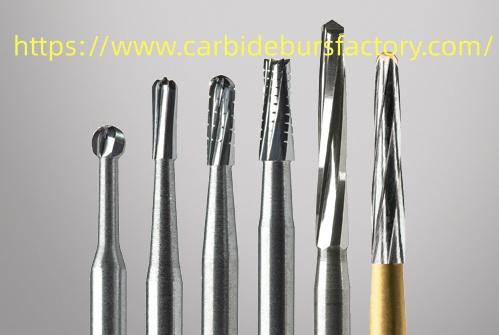
Carbide Rotary Burs are used in metalworking operations such as deburring, edge preparation, surface shaping, and material removal. For overseas buyers, selecting suitable products involves more than checking the head diameter or unit price. Tool geometry, raw material specifications, cutting configuration, shank dimensions, and manufacturing consistency can all influence how a tool performs in a particular application. Before requesting a quotation, purchasing teams should identify their machining requirements and prepare the technical information needed for a detailed supplier discussion.
Match the Head Shape to the Workpiece
The shape of the cutting head determines how the tool approaches a workpiece and which areas it can process. Different profiles are designed for different contact conditions, so buyers should consider the component geometry before choosing a model.
Common options include cylindrical, ball, oval, tree, flame, and conical profiles. Cylindrical designs can be considered for flat surfaces and edge work, while ball-shaped heads may suit curved areas and rounded transitions. Tree and pointed profiles can provide access to selected corners or narrow sections. Conical designs are relevant when working on angled surfaces.
When comparing options, provide photographs or drawings of the target area. This helps the manufacturer discuss suitable profiles instead of recommending a tool based only on a general product description.
Compare Cutting Patterns and Flute Geometry
Cutting pattern is another important factor in tool selection. Single-cut, double-cut, and other tooth configurations can produce different cutting behavior, chip formation, and surface conditions.
A single-cut design may be considered for applications requiring directional material removal, while a double-cut arrangement is commonly selected for general shaping and finishing tasks. The actual choice should depend on the workpiece material, machining method, operator experience, and desired surface condition.
Buyers should ask for clear product photographs and technical details showing the flute arrangement. If the tools will be used on several materials, explain the material range and expected processing conditions. This allows the supplier to discuss whether different cutting configurations are needed for different jobs.
Confirm Head Diameter and Shank Dimensions
A tool must fit the equipment used in the workshop. Buyers should check the head diameter, head length, overall length, and shank diameter before placing an order.
Shank compatibility is particularly important because the tool must fit the collet or holder securely. An incorrect dimension can create installation problems and affect operation. For applications involving recessed areas, long-reach designs may also be considered, but buyers should evaluate the working depth and access angle before choosing an extended version.
Prepare a dimensional list for each required model. Drawings with tolerances can help clarify measurement expectations and reduce misunderstandings during production.
Ask About Materials and Manufacturing Processes
Raw material selection and manufacturing methods influence the physical characteristics of a cutting tool. Buyers should ask about material specifications, grinding processes, and joining methods where applicable.
For products with a welded head and shank structure, the joining process and strength inspection deserve particular attention. The supplier should be able to explain how the connection is produced and how it is checked during manufacturing.
It is also useful to understand the production equipment involved. Five-axis CNC grinding can support the formation of defined head profiles and flute geometry. Buyers with special requirements can provide samples or technical drawings for a discussion about production feasibility.
Review Quality Inspection and Batch Consistency
A sample can help buyers assess whether a product matches the intended application, but repeat orders also require a clear inspection process. Ask how the manufacturer checks head dimensions, shank measurements, concentricity, cutting geometry, and joint strength where relevant.
Microscopes, image measuring instruments, tool measuring equipment, and laser runout meters may be used for different inspection tasks. Buyers should clarify which characteristics are measured and whether inspection records can be provided for the order.
For distributors and industrial purchasing teams, batch consistency matters because products may be supplied to several customers or production sites. Agreeing on drawings, tolerances, and acceptance criteria before mass production can make later order comparisons more straightforward.
Consider Customization and Order Communication
Some machining projects require dimensions or profiles that differ from standard catalog options. Custom production may involve adjustments to head shape, cutting length, shank size, or overall tool dimensions.
To discuss a custom order, buyers should prepare drawings, samples, expected quantities, application details, and specific inspection requirements. It is also helpful to clarify packaging, labeling, delivery schedules, and the availability of repeat orders.
A useful quotation should identify the agreed specifications rather than relying on product names alone. If several models are involved, request a separate specification list for each item so that purchasing, production, and inspection teams can work from the same information.
Evaluate the Manufacturer Before Confirming an Order
The supplier evaluation process should include production capability, technical communication, inspection arrangements, and customization support. Buyers can ask how drawings are reviewed, how samples are approved, and which checks take place during different production stages.
It is also worth confirming the manufacturer's experience with relevant industries, such as shipbuilding, automotive manufacturing, casting, and metal component processing. These application details can help buyers understand whether the supplier is familiar with their working conditions.For manufacturers, distributors, and metalworking tool buyers seeking standard or customized products, carbidebursfactory can discuss technical drawings, samples, dimensions, and application requirements. Review the available product categories and send your inquiry through https://www.carbidebursfactory.com/product/ to discuss the specifications for your next order.

 English
 Arabic
 French
 Spanish
 Portuguese
 Deutsch
 Turkish
 Dutch
 Italiano
 Romaian
 Portuguese (Brazil)
 Greek