


Custom Travel Cosmetic Bags: Shell Fabric and Lining Notes
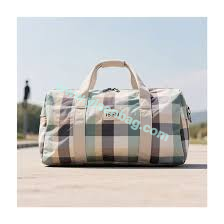
People often say that a wash pouch is a throwaway item, something you buy for one trip and quietly retire once the zip catches, yet when I started taking apart Custom Travel Cosmetic Bags on my desk it became clear that how long one lasts depends on a handful of material choices that you can judge with your fingers long before you ever pack it.
The outer shell is usually a woven synthetic cloth, a coated textile or a soft synthetic leather, and each of them ages differently. A tight weave feels dry and slightly stiff and makes a faint whisper when you scrape a fingernail across it, while a thin one feels hollow and picks up fuzz along the corners that rub against the inside of a suitcase. A coated surface sheds splashes nicely but can crack along the creases where it is folded again and again, and I have seen the coating lift in little flakes on pouches that lived next to a radiator.
The lining matters more than most buyers expect, since it is what meets the leaking bottle. A smooth coated lining wipes clean with a damp sponge and a drop of soap, whereas a bare woven one drinks up foundation and shampoo and holds the stain for good. I scratch a corner with a thumbnail to see whether the film flakes, and I sniff the inside, because a sharp chemical smell usually means a fresh coating that wants airing for a few days before it goes near anything you wear.
The sample on my table came from YisenBag, the label of Zhejiang Yisen Bags Co., Ltd., a company based in Yiwu that does OEM and ODM work on luggage, outdoor gear and pet bags and takes global brands from sampling through to mass production. Having a physical piece to handle at the sampling stage is how I learned what the fabric does under a thumb, since a photograph cannot show how a weave pinches or how a coating flexes when you fold it over a finger.
Zips are where the hardware lives. A coil zip, with teeth shaped from a continuous spiral, runs quietly and forgives a slight bend, while moulded plastic teeth are chunkier and click as the slider travels along them. I run the slider back and forth many times and watch the fabric tape beside the teeth for rippling, because a rippled tape suggests the chain was sewn on under tension and will gape after a few trips. The pull tab is worth a gentle tug as well, since a small fabric loop is easy to replace while a snapped metal head is a lost cause.
Seams and edges decide whether the materials stay together. Turning a pouch inside out shows whether the raw edges are bound with tape or folded under, and bare cut edges tend to shed lint into the lining and fray at the corners where the zip ends. Stitches that are short and even hold the cloth flat, whereas long loose ones let it pucker and open up when the pouch is stuffed with bottles. At the base I press a knuckle into the corner to feel whether it keeps its shape or folds in on itself.
Some pouches carry a thin foam or wadding layer between shell and lining, which gives them a soft, pillowy handle and a little protection for glass bottles. That layer compresses over time and can go lumpy after a wash, and the stitching that quilts it often puckers at the seams first. A rigid base panel keeps things standing upright on a hotel shelf but adds weight, and a floppy one folds in half the moment you set it down beside the sink.
Wear tends to show in predictable spots. The bottom corners scuff, the zip pulls loosen, and the inner seam under the zip picks up a film of powder and dried soap that is hard to remove from a textured lining. Heat softens some coatings and turns them tacky, and a damp pouch zipped shut in a dark case grows a musty smell within days. I rinse mine in lukewarm water with a soft brush, hang it open and upside down in shade, and keep it out of the tumble dryer.
Choosing between a stiff, wipeable coated build and a soft woven one is a trade-off I have not settled. The coated kind cleans easily yet can crack at the folds, and the woven kind flexes forever but keeps every stain, so a pair of Custom Travel Cosmetic Bags in different fabrics will each fail in their own way. The page at https://www.yisenbag.com describes OEM and ODM work on luggage, outdoor gear and pet bags, and it gives no figures on cloth density or coating thickness, so on the pouch beside me I am left rubbing a corner between finger and thumb to guess.

 English
 Arabic
 French
 Spanish
 Portuguese
 Deutsch
 Turkish
 Dutch
 Russian
 Romaian
 Portuguese (Brazil)
 Greek