


Double Process Color: Why Your Hair May Turn Brassy During a Blonde Transformation
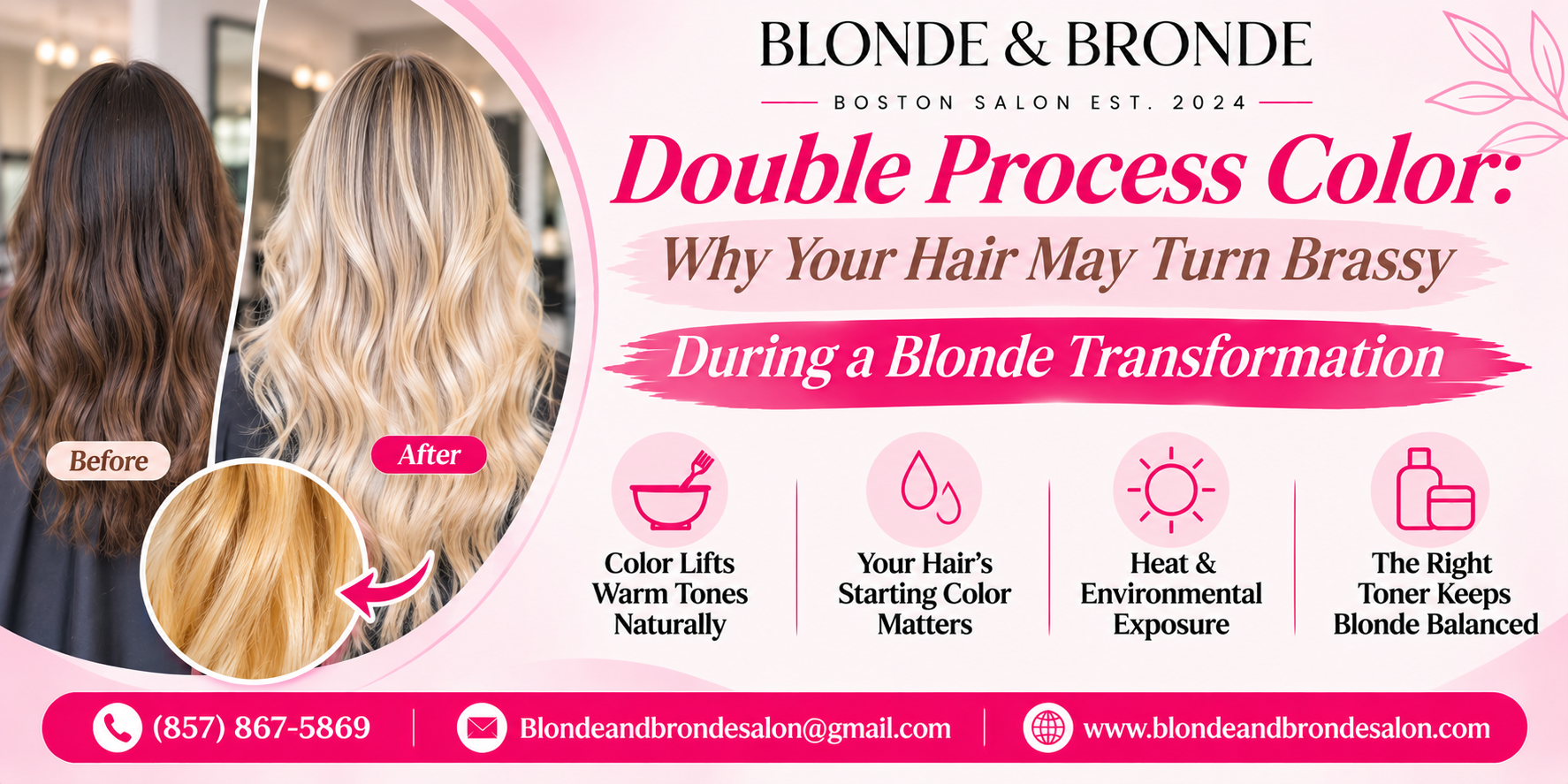
Transforming dark hair into a beautiful blonde shade can be exciting, but achieving the perfect result often takes more than one step. One common challenge during this process is brassiness, which appears as unwanted yellow, orange, or copper tones. These warm shades can make blonde hair look different from the cool, creamy, or neutral color you originally wanted.
Double process color is a professional technique that helps transform darker hair into lighter blonde shades through a two-step coloring process. The first step involves lifting the natural or artificial pigment, while the second uses a toner to refine the color and create the desired finish.
Understanding why brassiness develops, how professional colorists manage unwanted warmth, and what you can do to maintain your blonde can make your transformation more predictable and successful.
What Is Double Process Color?
Double process color is a two-step hair coloring technique commonly used to achieve lighter blonde shades, especially when the desired result cannot be achieved through a single coloring application.
The process involves two important stages:
Step 1: Lightening the Hair
A professional lightener is applied to remove or break down the existing pigment in the hair. This gradually lifts darker hair to a lighter level, exposing the underlying warm pigments.
Step 2: Toning the Hair
Once the hair reaches the appropriate level of lightness, a toner or gloss is applied to refine the shade. It helps neutralize unwanted warmth and creates the desired blonde finish, such as beige, ash, champagne, or creamy blonde.
For example, someone with naturally dark brown hair who wants a cool blonde result may need double process hair color to achieve the necessary level of lightness before toning.
The exact approach depends on the starting color, previous chemical treatments, hair condition, and desired outcome.
Why Does Hair Turn Brassy During Double Process Color?
Brassiness is one of the most common concerns during a blonde transformation. However, unwanted warmth is often a natural part of the lightening process rather than a sign that something has gone wrong.
Here are five common reasons blonde hair may develop brassy tones.
1. Natural Underlying Pigment Becomes Visible
Natural hair contains underlying pigments that become more noticeable as the hair is lightened.
When darker hair undergoes bleaching, it gradually moves through different stages of warmth. These stages can include red, orange, yellow-orange, and pale yellow.
For example, dark brown hair may reveal strong orange undertones before reaching a lighter blonde level.
This happens because lightening removes darker pigment progressively. The hair must reach the appropriate level before a colorist can create the desired blonde shade.
2. The Hair Has Not Been Lightened Enough
Another common reason for brassiness is insufficient lifting.
A toner can neutralize unwanted warmth, but it cannot make hair significantly lighter. If the hair is still orange, applying a pale blonde toner will not automatically create a clean platinum result.
The hair must first reach the correct level of lightness for the chosen toner to work effectively.
An experienced colorist evaluates the underlying pigment and determines whether the hair needs additional lightening or a different toning formula.
3. Previous Hair Color Affects the Transformation
Previously colored hair can be more difficult to lighten than virgin hair.
Permanent hair color, box dye, dark color applications, and repeated chemical treatments can leave artificial pigments inside the hair. These pigments may lift unevenly or resist lightening.
As a result, some sections may become blonde while others remain orange or darker.
This is why discussing your complete hair color history during a consultation is essential before starting a major blonde transformation.
4. The Wrong Toner Is Used
Toner plays an important role in achieving the final blonde shade. However, different underlying pigments require different toning formulas.
Colorists generally use complementary colors to neutralize unwanted warmth:
-
Purple helps neutralize yellow tones.
-
Blue helps neutralize orange tones.
-
Blue-violet can help balance certain yellow-orange tones.
Using an unsuitable toner may leave the hair looking too warm, overly cool, or muddy.
The correct formula depends on the hair's current level, underlying pigment, and desired result.
5. Uneven Lightening Creates Multiple Shades
Hair does not always lighten evenly from roots to ends.
Previous color applications, differences in porosity, hair density, and earlier chemical treatments can affect how quickly different sections lift.
This may result in darker roots, warmer mid-lengths, or lighter ends.
A professional colorist evaluates these differences and adjusts the lightening and toning approach to create a more balanced result.
How Professional Colorists Prevent Brassiness
Achieving a beautiful blonde requires more than selecting the right shade. It involves understanding the hair's history, condition, and ability to handle chemical lightening.
A professional colorist considers several factors before beginning the transformation.
Start With a Detailed Hair Consultation
A consultation helps establish whether your hair can safely achieve your desired blonde shade.
Your colorist should understand:
-
Your natural hair color.
-
Previous permanent or semi-permanent color.
-
Any history of box dye or at-home coloring.
-
Previous bleaching, highlighting, or balayage services.
-
Current hair texture and condition.
-
Your desired blonde shade and maintenance preferences.
Being honest about previous treatments helps your colorist select a suitable approach and avoid unexpected results.
Choose a Realistic Blonde Goal
Not every hair type can safely reach platinum blonde in one appointment.
For example, someone with naturally light brown hair may achieve a lighter blonde result more easily than someone with years of dark permanent color.
In some cases, a gradual transformation over multiple appointments is the better option. This allows the colorist to monitor the hair's condition while working toward the desired shade.
Use the Correct Lightening Technique
Professional lightening requires careful product selection, application, and monitoring.
The colorist considers the hair's starting level, porosity, and previous treatments when selecting the appropriate formula.
Monitoring the hair during processing helps prevent unnecessary chemical exposure and supports more even results.
Select the Right Toner
Once the hair reaches the required level, toner helps refine its appearance.
Depending on your preferences, the final result may be:
-
Cool ash blonde.
-
Neutral beige blonde.
-
Creamy blonde.
-
Champagne blonde.
-
Soft golden blonde.
-
Natural-looking honey blonde.
The goal is to create a shade that complements your starting color and desired appearance rather than removing every trace of warmth.
Double Process Hair Color vs. Single Process Color
Understanding the difference between these two techniques can help you decide which service is suitable for your hair goals.
| Feature | Single Process Color | Double Process Color |
|---|---|---|
| Application | One main color process | Two separate stages |
| Main purpose | Deposit or change color | Lighten and refine color |
| Blonde results | Depends on starting color and product | Suitable for more significant blonde transformations |
| Toner | May or may not be required | Commonly used |
| Best suited for | Suitable color changes without extensive lightening | Achieving lighter blonde shades |
For example, someone who wants to refresh a brunette shade or cover gray hair may benefit from single-process color.
However, someone with dark brown hair who wants a much lighter blonde result may require double process hair color.
A professional consultation helps determine which technique is appropriate.
How to Maintain Blonde Hair and Prevent Brassiness at Home
Your blonde transformation does not end when you leave the salon. Daily hair care and the right products help maintain your color, shine, and overall hair condition.
Consider these practical maintenance tips.
1. Use Purple Shampoo Correctly
Purple shampoo helps neutralize unwanted yellow tones in blonde hair.
However, using it too frequently can make certain blonde shades look dull or slightly purple. Follow your stylist's recommendations based on your hair color and condition.
2. Choose Blue Shampoo for Orange Tones
Blue shampoo helps neutralize orange undertones, while purple shampoo targets yellow tones.
Since they serve different purposes, choosing the right product is important. Ask your colorist which option is appropriate for your blonde shade.
3. Protect Hair From Heat Styling
Excessive heat styling can contribute to dryness and reduce shine.
To maintain healthier-looking blonde hair:
-
Apply a heat protectant before using hot tools.
-
Use moderate heat settings.
-
Avoid unnecessary daily heat styling.
-
Include moisturizing conditioners and treatments in your routine.
4. Schedule Regular Toner Refreshes
Toner gradually fades through regular washing, styling, and environmental exposure.
A toner or gloss refresh can help restore your desired blonde shade without repeating the entire lightening process.
Your maintenance schedule depends on your hair condition, color choice, and personal routine.
5. Protect Hair From Environmental Exposure
Sun exposure, chlorine, and mineral buildup from hard water can affect the appearance of blonde hair.
Wear a hat during prolonged sun exposure, rinse your hair after swimming, and consider using products designed to protect color-treated hair.
Common Mistakes to Avoid During a Blonde Transformation
Trying to achieve a blonde result too quickly can lead to unwanted warmth, uneven color, or unnecessary damage.
Avoid these common mistakes:
-
Expecting platinum blonde in one appointment: Dark or previously colored hair may require several sessions.
-
Using toner to fix insufficient lightening: Toner cannot replace the lightening needed to achieve a lighter level.
-
Overusing purple shampoo: Excessive use can affect the appearance of your blonde shade.
-
Bleaching already damaged hair: Repeated chemical processing can weaken the hair further.
-
Skipping a consultation: Previous color treatments can significantly affect the result.
-
Applying box dye between appointments: At-home color can complicate future blonde transformations.
-
Ignoring aftercare: Poor maintenance can cause your blonde to lose its desired appearance.
A carefully planned color service and consistent aftercare are essential for maintaining beautiful blonde hair.
When Should You Visit a Professional Hair Colorist?
If your hair looks orange, yellow, patchy, or uneven after lightening, applying additional bleach or toner at home may not solve the problem.
A professional colorist can assess the underlying pigment, determine why the warmth is appearing, and recommend the appropriate correction.
Consider booking a consultation if:
-
Your blonde hair has noticeable orange or copper tones.
-
Different sections of your hair have different shades.
-
Your roots are lighter or darker than your ends.
-
Your hair feels unusually dry, weak, or stretchy.
-
You want to transition from dark brown to a much lighter blonde.
-
Previous color treatments have created uneven results.
When searching for the best hair colorist Boston MA, consider experience with blonde transformations, color correction, lightening techniques, and personalized color formulations.
At Blonde and Bronde Salon, understanding your hair history and desired result is an important part of planning a customized color service.
Frequently Asked Questions
1. How long does double process color take?
The appointment length depends on your starting hair color, length, thickness, previous treatments, and desired result. A significant blonde transformation may take several hours or require multiple appointments.
2. Why does my hair look orange after bleaching?
Orange tones appear when dark hair is lightened and its underlying warm pigments become visible. Your hair may need additional controlled lightening or an appropriate toner, depending on its current level.
3. Can toner completely remove brassiness?
Toner can neutralize unwanted yellow, orange, or golden tones when the hair has reached the appropriate level of lightness. However, it cannot turn dark orange hair into pale blonde without further lightening.
4. Is double process color damaging to hair?
Chemical lightening can affect the hair's structure. The amount of damage depends on its starting condition, previous color history, lightening technique, and processing. Professional assessment and proper aftercare help manage these risks.
5. How often should I tone my blonde hair?
Toner maintenance depends on your hair's porosity, washing routine, products, and desired shade. Many people refresh their toner every several weeks, but your stylist can recommend a suitable schedule.
6. Can previously colored dark hair become blonde?
Yes, but the process can be challenging. Artificial pigments may resist lightening, and multiple sessions may be necessary to achieve a more even blonde result while protecting hair condition.
7. Is double process color better than balayage?
Neither technique is universally better. Double process color is suitable for achieving an overall lighter blonde result, while balayage creates softer, blended highlights with natural-looking dimension. The right choice depends on your desired appearance and maintenance preferences.
Conclusion: Achieve Your Desired Blonde With Professional Double Process Color
A successful double process color transformation requires careful planning, professional lightening, and the right toning technique. Understanding underlying pigments, previous color treatments, and hair condition helps explain why brassiness develops during the journey from dark hair to blonde.
Although unwanted warmth can be frustrating, it does not mean your blonde transformation has failed. With the right color formulation, realistic expectations, and consistent aftercare, you can work toward a beautiful blonde shade that suits your hair and personal style.
At Blonde and Bronde Salon, we believe every blonde transformation should begin with understanding your hair and creating a personalized color plan.

 English
 Arabic
 French
 Spanish
 Portuguese
 Deutsch
 Turkish
 Dutch
 Italiano
 Russian
 Romaian
 Greek