


How to Reduce Manufacturing Risks When Sourcing Products from Mexico
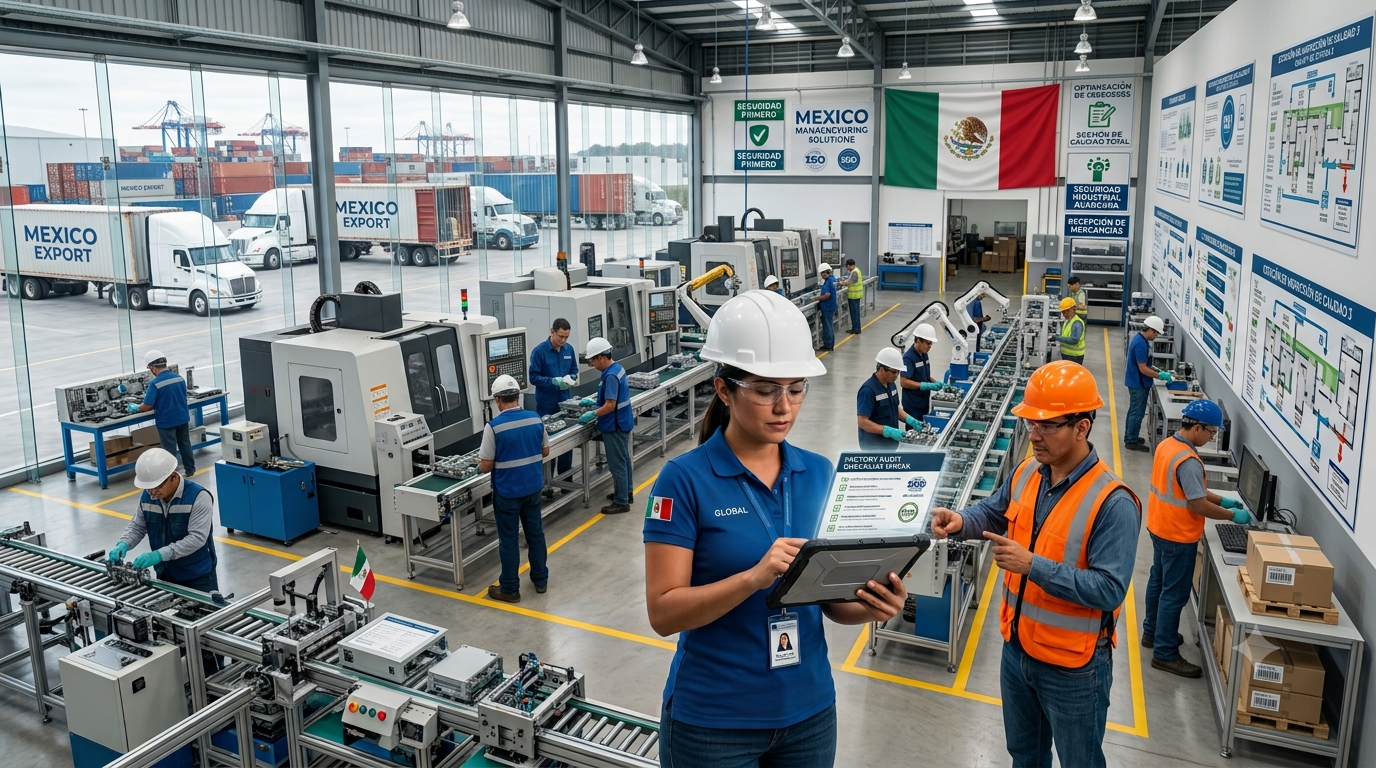
A consumer electronics company once shared a number that stuck with me: a single quality failure traced back to an unvetted component supplier cost them more than their entire annual sourcing budget for due diligence, combined, for the next three years. The defect wasn't catastrophic. It was a connector that failed under heat stress in roughly 4% of units, just enough to trigger a recall, a retail delisting, and a year of rebuilding trust with a key customer.
Stories like this rarely make headlines, but they happen constantly across companies sourcing from Mexico, and they're almost always preventable. Manufacturing risks in Mexico aren't unique to the country, every manufacturing relationship anywhere in the world carries risk, but the specific risks buyers face when sourcing from Mexico have their own patterns, and recognizing those patterns early is what separates resilient supply chains from fragile ones.
As nearshoring accelerates and more international buyers shift production toward Mexico for shorter shipping times and tariff advantages, the volume of new, less-established manufacturing relationships is climbing right alongside the opportunity. Understanding where the real risks live, and how to systematically reduce them, has become essential knowledge for anyone serious about sourcing from the region.
In this guide, you will learn:
-
The most significant categories of manufacturing risk buyers face in Mexico
-
Practical, proven strategies for reducing each type of risk
-
Common mistakes that quietly increase exposure without buyers realizing it
-
A real-world example of risk mitigation done well
-
Expert tips you can apply to your sourcing process starting today
Understanding the Real Categories of Manufacturing Risk
Manufacturing risk isn't one thing. Treating it as a single, vague concern, "what if something goes wrong," makes it nearly impossible to manage. Breaking it into specific categories makes it actionable.
Quality Risk
The risk that products don't meet your specifications, whether through inconsistent materials, inadequate quality control processes, or insufficient staff training. This is the most common risk buyers encounter and often the most expensive when it surfaces late in the process.
Capacity Risk
The risk that a manufacturer can't actually deliver the volume or timeline they've promised. This often stems from overstated equipment capacity, insufficient staffing, or overcommitting to multiple clients simultaneously.
Financial Risk
The risk that a manufacturer faces financial instability that leads to delays, reduced quality, or sudden shutdown. Financial distress is rarely visible from the outside until it directly affects your order.
Compliance and Regulatory Risk
The risk of working with a manufacturer that doesn't meet labor, environmental, or safety regulations, which can expose your business to reputational damage, retail partner violations, or legal liability depending on your industry and customer requirements.
Intellectual Property Risk
The risk that proprietary designs, formulations, or processes shared with a manufacturer are used without authorization, whether through direct misuse or insufficient contractual protection.
Supply Chain Dependency Risk
The risk of relying too heavily on a single manufacturer or region, leaving your business vulnerable to disruption from a localized issue, whether that's a labor dispute, natural event, or a single supplier's operational failure.
Actionable Takeaway
Create a simple risk register for every active or prospective manufacturing relationship, scoring each of these six categories on a 1-to-5 scale based on what you currently know. Categories you can't confidently score are exactly where your next round of due diligence should focus.
Proven Strategies for Reducing Manufacturing Risk
Each risk category responds to different mitigation strategies. Here's what experienced sourcing professionals actually do.
Reducing Quality Risk
Implement multi-stage inspection requirements rather than relying solely on final inspection before shipment. Request documented quality control processes during initial vetting, and consider third-party quality inspections for early production runs until trust is established through performance, not promises.
Reducing Capacity Risk
Verify claimed capacity against actual equipment count and staffing levels during a facility audit, rather than accepting verbal assurances. Start with a trial order scaled appropriately to confirmed capacity before committing to full-volume production.
Reducing Financial Risk
Ask about client diversification during vetting; a manufacturer dependent on one or two major clients carries more financial fragility than one with a broader client base. Watch for warning signs like delayed responses to invoices, sudden requests for unusual payment terms, or hesitation to discuss business stability.
Reducing Compliance Risk
Request documentation of relevant certifications and labor compliance records, and verify them directly with issuing bodies rather than taking documents at face value. For industries with strict retail partner requirements, consider a dedicated social compliance audit.
Reducing Intellectual Property Risk
Use clear, enforceable non-disclosure and non-use agreements before sharing proprietary information, and understand that IP protections, while improving in Mexico, still require careful contractual structuring. Consider limiting the amount of proprietary detail shared until trust is established.
Reducing Supply Chain Dependency Risk
Build redundancy intentionally by qualifying a secondary supplier for critical products, even if you don't actively use them, so you have a verified backup ready if your primary relationship faces disruption.
Actionable Takeaway
Pick the single highest-scoring risk category from your risk register and implement one mitigation strategy from this section this month, rather than attempting to address everything at once.
Risk Mitigation Approaches: A Comparison
|
Approach |
Strengths |
Best Used When |
|
Reactive risk management |
Low upfront cost, minimal process overhead |
Rarely advisable; mainly applies to very low-stakes, low-volume orders |
|
Periodic audits and reviews |
Catches changes over time, moderate cost |
Ongoing relationships with established suppliers |
|
Continuous monitoring with third-party inspection |
High visibility, early problem detection |
High-volume or high-risk product categories |
|
Diversified supplier network |
Reduces single-point-of-failure risk |
Mature sourcing operations with multiple qualified suppliers |
|
Insurance and contractual protections |
Financial backstop for losses that do occur |
All relationships, as a complement to other mitigation, not a replacement |
Most resilient sourcing operations layer several of these approaches rather than relying on just one. Diversification protects against systemic disruption, while continuous monitoring catches problems specific to an individual supplier relationship.
Common Mistakes That Quietly Increase Risk
-
Treating low price as evidence of efficiency rather than a red flag. A bid significantly below competitors often signals cut corners on materials, compliance, or labor, not genuine cost advantages.
-
Concentrating all production with a single supplier. Even an excellent manufacturer represents a single point of failure if they're your only source for a critical product.
-
Sharing proprietary designs before establishing trust. Some buyers share full specifications during early quoting conversations, before any contractual IP protection is in place.
-
Assuming risk decreases automatically over time. A supplier relationship that performed well for two years can still face new risks from ownership changes, leadership turnover, or financial pressure that wasn't present initially.
-
Skipping risk assessment for "small" orders. Buyers often apply rigorous vetting to large orders while treating smaller trial orders casually, missing the chance to catch problems before they scale.
These mistakes share a common thread: they all stem from treating risk management as a one-time gate at the start of a relationship rather than an ongoing discipline.
Real-Life Example: Building Resilience the Right Way
A mid-sized personal care products company sourced its packaging components entirely from a single manufacturer in Guadalajara for several years. The relationship performed well, and the company had no reason to suspect problems until a regional flooding event damaged the supplier's facility, halting production for nearly two months.
Without a backup supplier qualified and ready, the company faced stockouts that affected major retail accounts and took nearly a full quarter to fully resolve, even after their primary supplier resumed operations.
Rather than simply waiting out the disruption and returning to business as usual, the company's leadership used the experience to rebuild their risk management approach. They qualified a second packaging supplier in a different region, explicitly to avoid concentrated geographic risk, and began running both suppliers at a 70/30 volume split rather than reverting to full dependence on a single source once the crisis passed.
Eighteen months later, a labor dispute disrupted their original supplier again. This time, the company shifted volume to their secondary supplier within days, with minimal impact on retail commitments. The investment in redundancy, which had felt like unnecessary overhead during the good years, paid for itself many times over the moment it was needed.
Actionable Takeaway
Don't wait for a disruption to qualify a backup supplier. Identify and verify at least one secondary source for any product representing significant revenue, even if you don't actively split volume yet.
Expert Tips for Ongoing Risk Reduction
-
Review your risk register quarterly, not just when onboarding a new supplier. Risks evolve even in stable relationships.
-
Build penalty and remedy clauses into every contract, specifying exactly what happens if quality, timeline, or compliance commitments aren't met.
-
Maintain relationships with more than one qualified supplier for critical products, even if you're not actively splitting volume between them.
-
Stay current on regional risk factors, including labor market conditions, infrastructure developments, and regulatory changes in the specific Mexican states where your suppliers operate.
-
Document every audit, inspection, and performance issue in a centralized record, so institutional knowledge about supplier risk doesn't disappear when a team member leaves the company.
Frequently Asked Questions
What are the most common manufacturing risks when sourcing from Mexico? Quality inconsistency, overstated production capacity, financial instability of suppliers, and over-dependence on a single manufacturer or region are among the most common risks buyers encounter.
How can I reduce quality risk with a new manufacturer in Mexico? Implement multi-stage inspections rather than relying solely on final checks, request documented quality control processes during vetting, and consider third-party inspection for early production runs.
Is intellectual property protection a significant concern when manufacturing in Mexico? IP protections have improved significantly in Mexico, but buyers should still use strong contractual protections and limit proprietary information shared before trust and legal agreements are firmly established.
Should I rely on a single manufacturer or diversify across multiple suppliers? For products representing significant revenue, qualifying at least one backup supplier substantially reduces the risk of disruption from events like natural disasters, labor disputes, or financial instability at a single facility.
How often should I reassess manufacturing risk for an existing supplier relationship? At minimum, quarterly, and immediately after any significant change such as new ownership, leadership turnover, or a notable shift in order volume or production conditions.
Final Thoughts
Manufacturing risks in Mexico aren't a reason to avoid the region. Mexico offers genuine, well-earned advantages for international buyers, and the vast majority of manufacturing relationships there perform exactly as expected. But the companies that thrive long-term are the ones that treat risk management as an ongoing discipline rather than a one-time checkbox, building redundancy, verification, and contractual protection into their sourcing process from the start.
If you're sourcing products from Mexico, take the time to map your specific risks honestly and build a mitigation plan around them before problems force your hand. The investment in resilience rarely feels necessary until the moment it absolutely is, and by then, the companies who prepared are the ones still standing.

 English
 Arabic
 French
 Spanish
 Portuguese
 Deutsch
 Turkish
 Dutch
Dutch
 Italiano
 Russian
 Romaian
 Portuguese (Brazil)