


Insulated Ball Valve Design for Industrial Pipelines
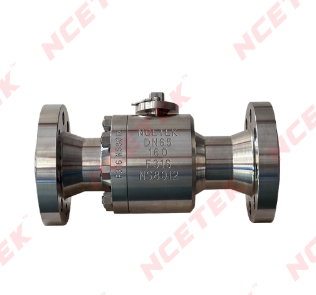
Industrial pipelines handling heated fluids, thermal oil, molten materials, or temperature-sensitive media often require additional measures to maintain stable operating conditions. In these systems, an Insulated Ball Valve can help reduce heat loss or temperature variation around the valve body, depending on its construction and insulation arrangement. By combining a ball valve's quarter-turn operation with thermal protection features, this type of valve can support process temperature management and help reduce unwanted heat transfer in suitable applications.
A conventional ball valve controls fluid flow through a spherical closure element with a central bore. When the valve is open, the bore aligns with the pipeline, allowing the medium to pass through. A quarter-turn movement rotates the ball to block the flow path and isolate the pipeline. The basic operating principle remains similar in insulated designs, but additional structural features are introduced to address heat retention and temperature requirements.
One common construction uses an external insulation jacket or covering around selected parts of the valve body. The insulation layer helps limit heat transfer between the valve and the surrounding environment. Depending on the design, the insulation may be removable to provide access for inspection and maintenance. The jacket material, thickness, and coverage area should be selected according to the operating temperature, ambient conditions, and process requirements. Not every insulated valve uses the same insulation structure.
Some industrial applications require a heating jacket rather than insulation alone. A jacketed valve may include a separate chamber around the body through which steam, hot oil, or another heating medium circulates. This arrangement can help maintain the process medium at a required temperature and reduce the risk of cooling or solidification inside the valve. Insulation and heating jackets serve different functions, so buyers should distinguish between passive thermal protection and active temperature control when preparing a specification.
The valve body is the main pressure-containing component. Depending on the process conditions, it may be manufactured from carbon steel, stainless steel, or other suitable materials. Material selection should consider operating pressure, temperature, corrosion exposure, and compatibility with the process medium. The body design must also accommodate the ball, seats, stem, packing, and any additional jacket or insulation components without compromising the required mechanical integrity.
The ball and seats determine the valve's shut-off performance. The ball contains a flow passage that aligns with the pipeline when the valve is open. When closed, its surface contacts the seats to restrict fluid flow. Seat materials may include engineered polymers or metal components, depending on the required temperature range and media compatibility. The selected material must remain suitable under actual operating conditions, including temperature changes and pressure fluctuations.
Thermal expansion is another important consideration. When a valve operates at elevated temperatures, its body and internal components may expand. Different materials can expand at different rates, affecting component clearances, sealing contact, and operating torque. The design should account for these changes to maintain suitable movement and sealing performance. Buyers should confirm the permitted temperature range and the manufacturer's recommended operating conditions for the selected configuration.
Stem packing and other sealing components also require attention. Packing helps control leakage around the stem, while body seals and gaskets maintain the integrity of the pressure-containing assembly. Their materials must be compatible with the process medium and operating temperature. In applications involving thermal cycling, repeated heating and cooling may influence sealing performance over time. Appropriate material selection, assembly procedures, and maintenance planning are therefore important.
Operating arrangements vary according to valve size and process requirements. Manual lever handles may be suitable for smaller valves, while larger valves may require gear operators. Pneumatic or electric actuators can be used when remote operation or integration with an automated control system is needed. For insulated configurations, the operating mechanism should remain accessible and have sufficient clearance from the insulation or jacket structure. Buyers should confirm actuator mounting, operating torque, and maintenance access before ordering.
These valves may be used in chemical processing, petrochemical facilities, thermal oil systems, heating installations, and other industrial processes involving temperature-sensitive media. In some applications, maintaining temperature helps prevent materials from becoming too viscous or solidifying during operation. However, the valve's suitability depends on the actual medium, pressure, temperature, and required insulation or heating method. A standard insulated body should not automatically be treated as a heated jacketed design.
Installation should follow the manufacturer's instructions and the pipeline engineering requirements. The valve must be correctly aligned and adequately supported to avoid unnecessary loads on the body and connected piping. Insulation coverage should not obstruct the operating mechanism, identification markings, or maintenance points. Where a heating jacket is used, its connections and operating conditions should be checked as part of the overall installation procedure.
Before purchasing, engineering teams should define the valve size, pressure rating, medium, operating temperature, body and trim materials, connection type, and insulation requirements. They should also clarify whether passive insulation or an active heating jacket is needed. Additional requirements may include actuator selection, inspection procedures, pressure testing, and project-specific documentation. Clear specifications help manufacturers recommend a configuration that matches the intended process.
Selecting an Insulated Ball Valve with suitable thermal construction and internal components can help maintain process conditions and support reliable pipeline isolation. Buyers should evaluate the complete valve assembly, including its insulation method, sealing materials, operating arrangement, and service limits. For available valve products and configuration information, visit https://www.ncevalve.com/product/ to explore solutions for industrial pipeline applications.

 English
 Arabic
 Spanish
 Portuguese
 Deutsch
 Turkish
 Dutch
 Italiano
 Russian
 Romaian
 Portuguese (Brazil)
 Greek