


Merchant Accounts: What Is It and How to Open One
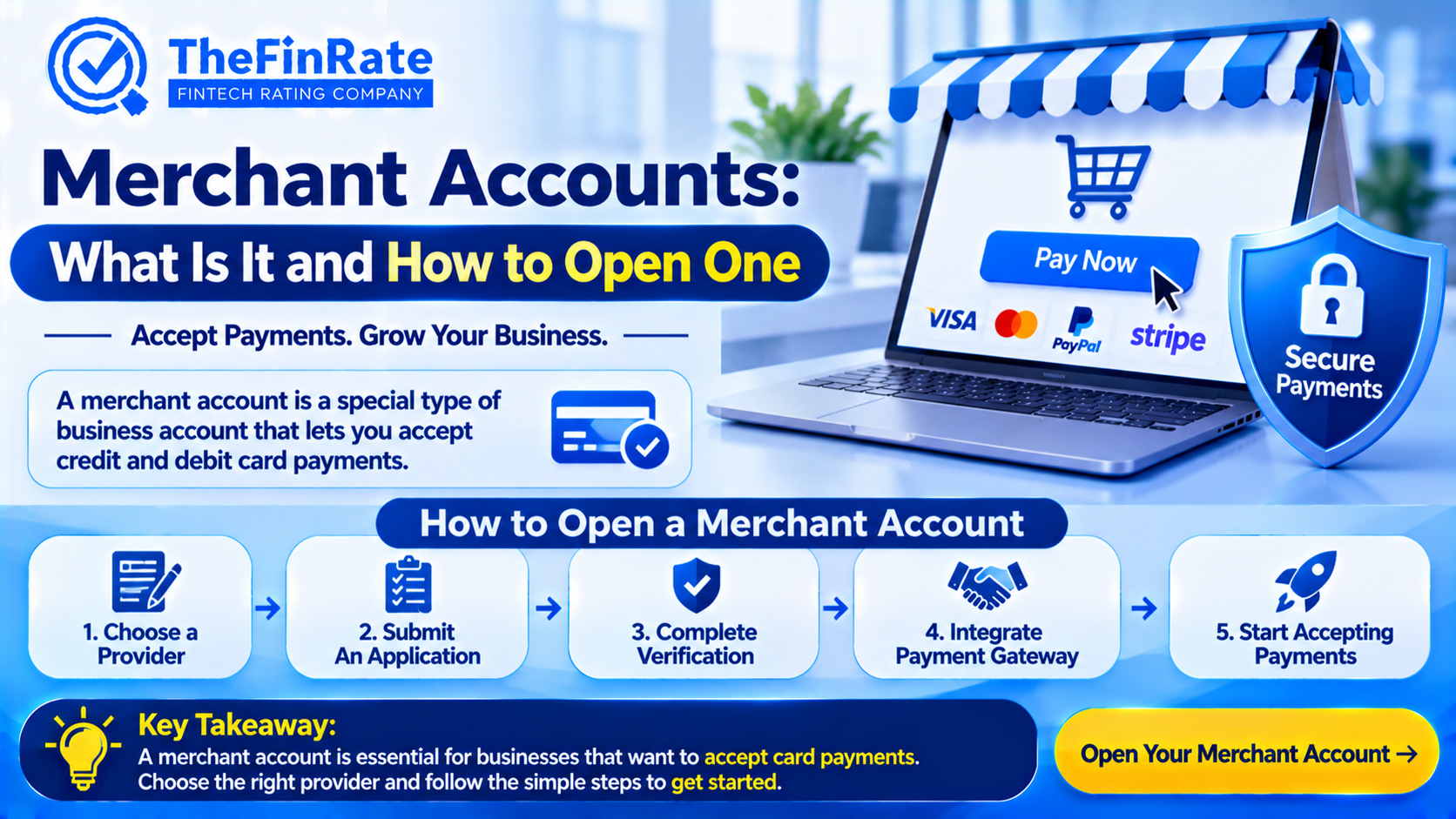
Every business that sells online needs a way to turn a customer's card payment into money in its own bank account. Online merchant accounts make that possible. They are the financial arrangement that allows a business to accept credit and debit card payments, receive settlements, and manage the transactions behind each sale.
However, many first-time sellers are unsure what a merchant account actually is, how it differs from a payment gateway, and what the application process involves. Choosing without that clarity can lead to unexpected fees, delayed payouts, or rejected applications.
In this guide, we explain what a merchant account is, how online merchant accounts work, the main types available, what they cost, and the steps to open one.
What Is a Merchant Account?
A merchant account is a type of business account that allows a company to accept card payments from customers. It is provided through an acquiring bank or a payment company that works with one.
When a customer pays by card, the money does not go straight into your regular business bank account. It first passes through the merchant account, which holds the approved transaction funds before they are settled to you.
Depending on the provider, a merchant account setup may include:
- Credit and debit card acceptance
- Payment gateway access or integration
- Multi-currency processing
- Fraud prevention tools
- Chargeback management
- Transaction reporting
- Settlement to your business bank account
- Recurring payment support
Businesses can get a merchant account through acquiring banks, independent sales organizations (ISOs), payment service providers (PSPs), and specialized payment companies.
What Are Online Merchant Accounts?
Online merchant accounts are merchant accounts designed for businesses that take payments without a physical card reader. This includes eCommerce stores, SaaS platforms, subscription services, digital product sellers, and businesses that accept payments through invoices or payment links.
These accounts are built for "card not present" transactions, where the customer enters card details on a website or app. For that reason, online merchant accounts usually focus on gateway integration, fraud screening, and dispute handling more than in-person payment hardware.
How Do Online Merchant Accounts Work?
Online merchant accounts connect your business to the card payment network. The process usually follows these stages.
1. Customer Places an Order
A customer enters card details at checkout on your website or app.
2. Payment Gateway Captures the Data
The payment gateway encrypts the card information and sends it for authorization.
3. Authorization Request
The request travels through the payment processor and card network to the customer's issuing bank.
4. Approval or Decline
The issuing bank checks the available funds and risk signals, then approves or declines the payment.
5. Clearing and Settlement
Approved transactions move through clearing and settlement, and the funds are routed to your merchant account.
6. Payout to Your Bank
The provider transfers the settled amount to your business bank account, minus applicable fees and any reserve held under your agreement.
Customers see this as a checkout that takes a few seconds, but several financial institutions work together behind the scenes.
Merchant Account vs Payment Gateway vs Payment Processor
These three terms are often mixed up, so a clear distinction is useful.
| Component | What It Does |
|---|---|
| Merchant Account | Holds approved card transaction funds and settles them to your business bank account |
| Payment Gateway | Securely captures and transmits card details from your website or app |
| Payment Processor | Handles communication between the merchant, card networks, and banks |
Some companies provide all three as one package. Others offer only one component, in which case you may need to combine services. Our guide to how a payment gateway works explains the gateway side in more detail.
Types of Online Merchant Accounts
Online merchant accounts are offered through different models. Understanding them helps you match the right setup to your business.
Dedicated Merchant Accounts
A dedicated merchant account is issued in your business's own name, with its own underwriting and processing terms.
These accounts can offer negotiated pricing and more control over settlement arrangements. They are often a fit for established businesses with steady transaction volumes.
Aggregated or Payment Facilitator Accounts
With this model, many merchants process payments under a shared master account run by a payment facilitator.
Onboarding is usually faster and simpler, which suits new or small businesses. The trade-off can be less flexibility on pricing and account stability, since your processing is tied to the facilitator's terms.
High-Risk Merchant Accounts
Some industries face extra underwriting because of higher chargeback rates, regulatory exposure, or business model risk. Examples include iGaming, forex, travel, adult entertainment, and certain subscription businesses.
Specialized providers support these businesses, usually with additional documentation and reserve requirements. See our ranked guide to high-risk merchant account providers for more.
International Merchant Accounts
Businesses that sell to customers in several countries may need multi-currency processing, cross-border acquiring, and settlement in different currencies. Supported countries and currencies vary by provider and acquiring relationship, so always confirm coverage before applying.
Key Features to Compare When Choosing Online Merchant Accounts
Selecting a provider involves more than comparing headline rates. Consider the following.
1. Pricing Structure
Compare transaction fees, monthly charges, setup fees, gateway fees, and any minimums. Ask whether pricing is flat, interchange-plus, or tiered.
2. Payment Gateway Compatibility
Confirm that the account works with your preferred gateway, shopping cart, or checkout platform. Look for APIs, plugins, hosted payment pages, and payment links.
3. Supported Countries and Currencies
If you serve international customers, check which countries, cards, and currencies are supported for both acceptance and settlement.
4. Settlement Speed and Terms
Understand the payout schedule, minimum payout amounts, settlement currencies, and any rolling reserve requirements.
5. Fraud Prevention
Review available fraud screening, authentication tools such as 3D Secure, and risk management features.
6. Chargeback Management
Check how disputes are monitored, what alerts or tools are available, and how support handles chargeback cases.
7. Security and Compliance
Look for support for PCI DSS compliance, encryption, and tokenization, and understand which obligations stay with your business.
8. Customer Support
Reliable support matters when a payment issue or settlement delay affects revenue.
How Much Do Online Merchant Accounts Cost?
Pricing varies by provider, industry, transaction volume, payment methods, and risk profile. Common costs include:
- Transaction Fees: A percentage, a fixed amount, or both, charged on each payment.
- Monthly Fees: Recurring account, platform, or statement charges.
- Setup Fees: One-time onboarding or account configuration costs.
- Gateway Fees: Charges for gateway access and usage.
- Chargeback Fees: Fees applied when a payment is disputed.
- Cross-Border Fees: Extra charges on international or currency-converted payments.
- Rolling Reserves: A portion of funds held for a period as protection against chargebacks and refunds.
Compare the total cost of accepting payments rather than choosing only on the advertised rate. A low transaction fee can be offset by high monthly or reserve costs.
Which Online Merchant Account Suits Which Business?
| Business Type | Important Requirements |
|---|---|
| eCommerce Stores | Online payments, fraud prevention, gateway integration |
| Small Businesses | Affordable pricing, quick onboarding, support |
| SaaS Companies | Recurring billing, APIs, automated payments |
| High-Risk Businesses | Specialized underwriting, chargeback management |
| International Merchants | Multi-currency processing, global coverage |
| Subscription Businesses | Recurring billing, payment retries |
| Enterprise Companies | Scalability, reporting, payment routing |
A provider that works well for a low-risk retail shop may not suit a high-risk online business. Prioritize providers with experience in your industry. Small businesses can also review our guide to merchant account providers for small business.
How to Open Online Merchant Accounts: Step by Step
Opening a merchant account is a structured process. Preparing in advance can shorten approval time.
1. Define Your Business Model
Decide whether you sell physical goods, digital products, subscriptions, or services, and whether you sell locally or internationally.
2. Estimate Your Processing Needs
Work out your expected monthly volume, average order value, and refund rate. Providers use these figures to assess risk and set pricing.
3. Shortlist Suitable Providers
Compare providers based on your industry, target markets, pricing, and integration needs. You can browse options in the Merchant Account Providers Directory.
4. Gather Your Documents
Prepare business registration documents, ownership details, identification, bank statements, and website information. Some providers ask for processing history as well.
5. Submit Your Application
Complete the application with accurate details. Inconsistent or incomplete information is a common cause of delays.
6. Complete Underwriting
The provider reviews your business, website, products, policies, and risk profile. Higher-risk industries may face extra checks.
7. Review and Sign the Agreement
Read the pricing, reserve terms, settlement schedule, and termination conditions carefully before signing.
8. Integrate and Test
Connect the account to your payment gateway or checkout, then run test transactions before going live.
What Factors Affect Merchant Account Approval?
During underwriting, providers commonly evaluate:
- Business registration documents
- Ownership information
- Business website and policies
- Products and services offered
- Expected monthly transaction volume
- Average transaction value
- Processing and chargeback history
- Refund and cancellation policies
- Target countries
- Business banking information
- Compliance documentation
Approval timelines and conditions depend on the provider and your business circumstances. A clear website, transparent refund policy, and complete documentation can help the process run more smoothly.
Common Mistakes to Avoid When Opening a Merchant Account
- Choosing a provider based only on low transaction fees.
- Overlooking monthly fees and additional charges.
- Failing to check supported countries and currencies.
- Ignoring rolling reserve requirements.
- Not reviewing chargeback policies.
- Selecting an account that does not work with your gateway or platform.
- Submitting incomplete or inconsistent application details.
- Skipping the review of contract length and termination terms.
- Not planning for future growth or international expansion.
Reviewing these points before signing can help you avoid avoidable payment disruptions.
Frequently Asked Questions
1. What is a merchant account?
A merchant account is a business account that lets a company accept card payments. Approved transaction funds pass through it before they are settled to the business's bank account.
2. What are online merchant accounts?
Online merchant accounts are merchant accounts built for businesses that take card payments over the internet, such as eCommerce stores, SaaS companies, and subscription services.
3. How do I open an online merchant account?
Define your business needs, compare providers, prepare your documents, submit an application, complete underwriting, and review the agreement before going live.
4. What is the difference between a merchant account and a payment gateway?
A merchant account holds and settles card transaction funds, while a payment gateway securely captures and transmits card details from your website or app.
5. Do I need a merchant account to accept online payments?
Businesses accepting card payments need merchant account infrastructure, either through a dedicated merchant account or through a payment service provider that provides one under its own arrangement.
6. How much does a merchant account cost?
Costs vary by provider and business profile. Common charges include transaction fees, monthly fees, setup fees, gateway fees, chargeback fees, and possible reserves.
7. How long does approval take?
Approval times depend on the provider, business model, documentation, and risk assessment. Specialized or higher-risk businesses may need more time.
8. What documents are needed to open a merchant account?
Common requirements include business registration documents, ownership details, identification, bank statements, website details, and processing history. Providers may request more.
9. Can high-risk businesses open merchant accounts?
Yes. Some specialized providers support eligible high-risk businesses, subject to underwriting, documentation, and compliance requirements.
10. Can I switch merchant account providers?
Generally yes, subject to your contract terms. Review termination conditions, outstanding reserves, settlement arrangements, and integration requirements before switching.
Conclusion
Online merchant accounts are a core part of selling online. They connect your checkout to the card networks and your bank account, so the right setup supports reliable payments and healthy cash flow.
The best choice depends on your business model, transaction volume, target markets, industry, and growth plans. Rather than focusing only on advertised rates, compare the full offering, including settlement terms, fraud prevention, chargeback support, integration options, security, and customer service.
Explore TheFinRate's Merchant Account Providers Directory to compare merchant account companies and find options that fit your business requirements.
Make informed payment decisions with TheFinRate and find solutions that support your business growth.
About TheFinRate
TheFinRate is a fintech information and provider discovery platform that helps businesses explore, compare, and evaluate payment gateways, merchant account providers, payment processors, acquiring services, and other financial technology solutions.
Through provider listings, industry insights, comparisons, and reviews, TheFinRate helps businesses make more informed decisions about their payment infrastructure.

 English
 Arabic
 French
 Spanish
 Portuguese
 Deutsch
 Turkish
 Dutch
 Italiano
 Russian
 Romaian
 Portuguese (Brazil)