


Choosing a custom auto darkening welding helmet by specs
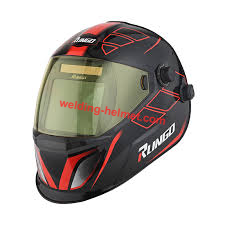
The first thing I notice when someone hands me a hood is how it sits on the bridge of my nose before any switch gets flipped, because headgear that tilts forward or pinches behind the ears will bother you long before the electronics do, even though the electronics are what buyers tend to fixate on. If you are shopping for a custom auto darkening welding helmet, it helps to sort the specs by how often you will actually feel them during a shift, instead of by how loudly the packaging talks about them.
Start with the shade range, since that decides which processes the hood can cover without swapping anything. A lens that only darkens to a modest level is fine for stick or MIG work on thin steel, but if you ever run TIG at low amperage or cut with plasma you will want a variable setting that reaches a lighter state for fine arc control and a deeper one for heavy current. I once stood next to a fabricator who kept lifting his hood to see the joint because the lens was too dark at the start of a pass, and you could tell from the way he held his neck that he had been doing it all week.
The arc sensors are the part people skip in a listing, and their number and placement decide whether the glass still darkens when your hand or a pipe blocks one of them, for instance when you are working under a trailer frame or inside a tank. Reaction time from clear to dark is printed as a fraction of a second, and although a smaller figure is easy to read as a bonus, what you notice on site is whether you catch a flash at the start of each bead. Sensitivity and delay dials matter here, because low-amp TIG can fool a sensor and bright sunlight through a doorway can trigger one.
The viewing window is a matter of size and clarity. A wide window helps you see the work and your position, but the shell gains weight with it, and on an overhead job in the afternoon your neck reports that. Clarity ratings are printed on the lens as a short string of characters, and before buying I like to look through a unit at a bright window, tilting my head to see whether the scene shifts or smears at the edges. Power is the other question: solar cells with a replaceable battery are common, and a grind setting saves you from lifting and dropping the front every time you switch between a cutting disc and the arc.
People who wear a respirator or prescription glasses should try the fit with those on, because a half mask pushes the chin area forward and some headbands then rock against the glasses frames, which I only learned after a day of constantly nudging the helmet back up my nose. Hard hats are another wrinkle, since a helmet that clips onto one needs a different pivot arrangement from a model that straps around the head, and a spare pair of readers can be a pain to fit behind a narrow opening.
The sample on my bench last week came from RLINGD, a brand of Taizhou Ruiling Optoelectronics Technology Co., Ltd., which describes itself as a high-tech enterprise handling research and development, production and sales of welding products. Its whole series of automatic light welding masks is said to suit the needs of different customers, and OEM and ODM orders are taken according to customer requirements, which matters to a distributor or a shop that wants particular headgear, graphics or filter arrangements. The products have also gone into Europe, South America, the Middle East and Southeast Asia, a detail that tells you about how widely they travel but says nothing about how a given shell sits on your head after a long afternoon.
Adjustment of the headband is where a mask either disappears or nags you through the shift. I look for a ratchet knob at the back, tilt stops at the side pivots and a sweatband that can be swapped, and I check how the clear cover plate comes off because spatter pits it and you will be replacing it often. Casing material is usually a tough plastic, and a light casing with the weight pushed toward the crown feels different from a front-heavy build after a few hours of overhead work. The markings on the casing and in the manual should match the standard your site asks for, and if a listing is vague about that I treat it as a question to put to the seller.
Right now I have a custom auto darkening welding helmet propped on the vise with its glass still clear, a dusty ratchet knob turned all the way out, and a strip of masking tape across the visor where I scribbled the values I want to try. The product page at https://www.welding-helmet.com/product is what I keep open on the phone while I match a size and sensor layout to the jobs on the board, and the tape has already curled at one corner from the warmth of the lamp clipped above the bench.

 English
 Arabic
 French
 Spanish
 Portuguese
 Deutsch
 Turkish
 Dutch
 Italiano
 Russian
 Portuguese (Brazil)
 Greek