


UAV Payload Subsystems Market: Technology Trends Transforming Aviation
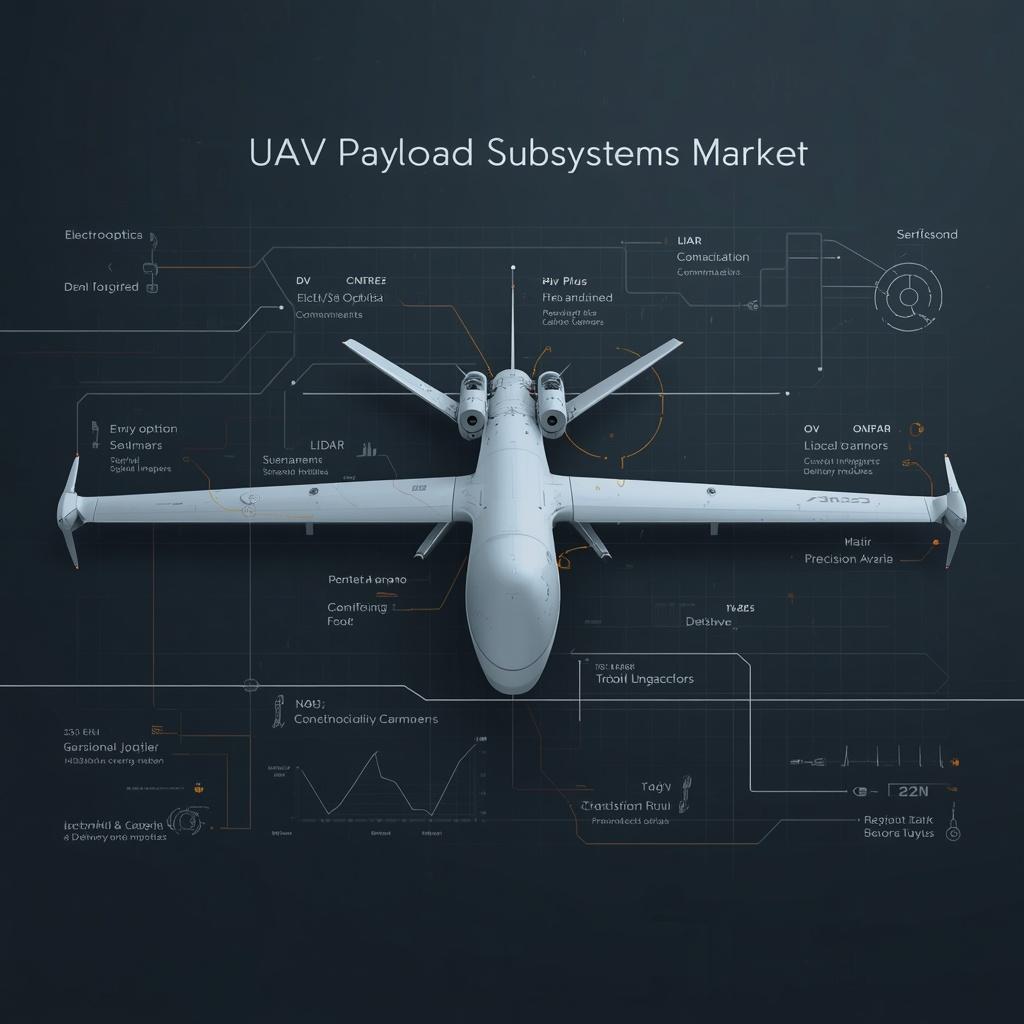
Technology Trends Shaping the UAV Payload Subsystems Market
The UAV Payload Subsystems Market is evolving alongside advancements in aerospace engineering, electronics, communication technologies, and intelligent software. Unmanned aerial vehicles are being developed for an increasingly diverse range of applications, creating demand for equipment that can support different operational requirements.
Payload subsystems are essential because they determine the additional functions an aircraft can perform. These components include imaging equipment, sensors, communication modules, navigation-related technologies, and specialized mission equipment. Their design and integration influence the overall functionality of UAV platforms.
A significant development area is modular UAV payload architecture. Modular architecture allows compatible payload components to be configured according to the intended application. Instead of depending on a single fixed equipment arrangement, manufacturers can develop adaptable systems that support different operational requirements. This approach can simplify equipment customization, encourage compatibility, and provide greater flexibility for commercial and industrial UAV users.
Modular Payload Architecture
Modular design is becoming an important consideration for UAV manufacturers. Different applications require different payload configurations, and a modular approach can make equipment adaptation more practical.
For example, an agricultural UAV may require imaging and environmental sensing equipment, while an infrastructure inspection platform may need specialized cameras and thermal imaging capabilities.
Modular payload arrangements can support the replacement or adaptation of compatible equipment without requiring an entirely different aircraft configuration.
However, successful integration requires careful attention to physical compatibility, electrical connections, software communication, and aircraft performance.
Lightweight Components and Efficient Design
Payload weight is an important factor in UAV engineering. Additional equipment contributes to the total aircraft load and can influence flight characteristics and endurance.
Manufacturers are therefore exploring lightweight materials, compact electronics, and efficient component arrangements.
Miniaturized sensors and integrated electronic assemblies can help reduce unnecessary bulk while maintaining useful functionality.
Efficient thermal management and power consumption are also important considerations. Payload equipment must operate within the electrical and environmental capabilities of the aircraft.
These design priorities encourage collaboration between aerospace engineers, electronics manufacturers, and payload system developers.
Intelligent Data Processing
Modern UAV platforms can collect information through multiple sensors and imaging systems. Managing this information effectively is becoming an important part of payload development.
Onboard processing technologies can assist with organizing and interpreting collected data. Artificial intelligence can support applications such as image classification, object recognition, and environmental assessment.
These technologies can help operators understand information more efficiently, particularly during activities involving extensive aerial observation.
However, intelligent processing depends on reliable hardware, suitable software, and accurate input information. Effective integration is therefore essential to achieving useful results.
Communication and Connectivity
Communication technologies remain central to unmanned aircraft operations. UAVs need suitable systems to exchange information with ground-based operators and supporting infrastructure.
Communication subsystems help transfer operational information and payload data. Their design must account for compatibility, reliability, and the requirements of the intended operating environment.
As UAV applications become more sophisticated, manufacturers are paying greater attention to coordinated communication and payload architectures.
Improved connectivity can support more efficient information management and help integrate unmanned aircraft into broader operational systems.
Sustainability and Operational Efficiency
Environmental considerations are also influencing UAV development. Efficient component design can help reduce unnecessary energy consumption and improve the practicality of aircraft operations.
Manufacturers are considering efficient power management, lightweight materials, durable components, and designs that support equipment maintenance.
Long-term reliability is particularly important for commercial and industrial users. Payload equipment must be suitable for its operating environment and should be designed with maintenance and compatibility in mind.
Future Opportunities for the Industry
The future of the UAV Payload Subsystems Market will be influenced by continued innovation in electronics, sensing technologies, communication equipment, and onboard computing.
Manufacturers may increasingly focus on customizable payload solutions that can support a broad range of applications. The relationship between hardware, software, and aircraft integration will remain an important development consideration.
As UAV adoption expands, demand for practical, adaptable, and reliable payload equipment is likely to remain an important industry theme.
Conclusion
Technology innovation is changing how UAV payload subsystems are designed, integrated, and used. Modular architecture, lightweight components, intelligent processing, and communication improvements are contributing to more versatile unmanned aircraft.
The continued development of these technologies will support the evolution of commercial and industrial UAV applications and strengthen the importance of payload subsystems within the broader aerospace industry.
Frequently Asked Questions
Q1. What is modular UAV payload architecture?
Modular UAV payload architecture is a design approach that allows compatible equipment components to be configured or adapted according to different mission requirements.
Q2. Why is lightweight design important for UAV payloads?
Lightweight payload equipment can help manage aircraft load, support efficient operation, and maintain compatibility with the aircraft's performance requirements.

 English
 Arabic
 French
 Spanish
 Portuguese
 Deutsch
 Turkish
 Dutch
 Italiano
 Russian
 Romaian
 Greek