


What Cleanroom And Environmental Requirements Should Be Considered For IVF Lab Design In India?
Introduction
An IVF laboratory requires careful planning of its cleanroom arrangement and environmental conditions. Air quality, temperature, humidity, ventilation, filtration, and chemical contamination are among the factors that should be considered during design. The requirements may vary according to laboratory activities, equipment, and applicable technical guidance.
A well-planned IVF Lab Design In India should consider these environmental requirements alongside room layout, workflow, and maintenance access. The aim is to create a facility that can be monitored and maintained according to its operating needs.
Understanding Cleanroom Requirements
Cleanroom requirements should be established according to the laboratory's intended activities and the applicable project criteria.
The design team should identify the required environmental conditions for each area and determine how ventilation, filtration, room finishes, and operational procedures will support them.
Room classification, where applicable, should be established by the relevant project specialists rather than assumed to be identical across all IVF laboratories.
Planning Laboratory Zones
Different IVF laboratory activities may require designated areas. The layout should consider procedures, equipment, staff movement, material transfer, and storage.
Depending on the facility, planning may include:
-
Embryology work areas.
-
Andrology or sperm preparation areas.
-
Cryopreservation areas.
-
Preparation and support spaces.
-
Storage and equipment areas.
-
Changing and access spaces.
The final layout should be reviewed with laboratory specialists.
Air Quality and Filtration
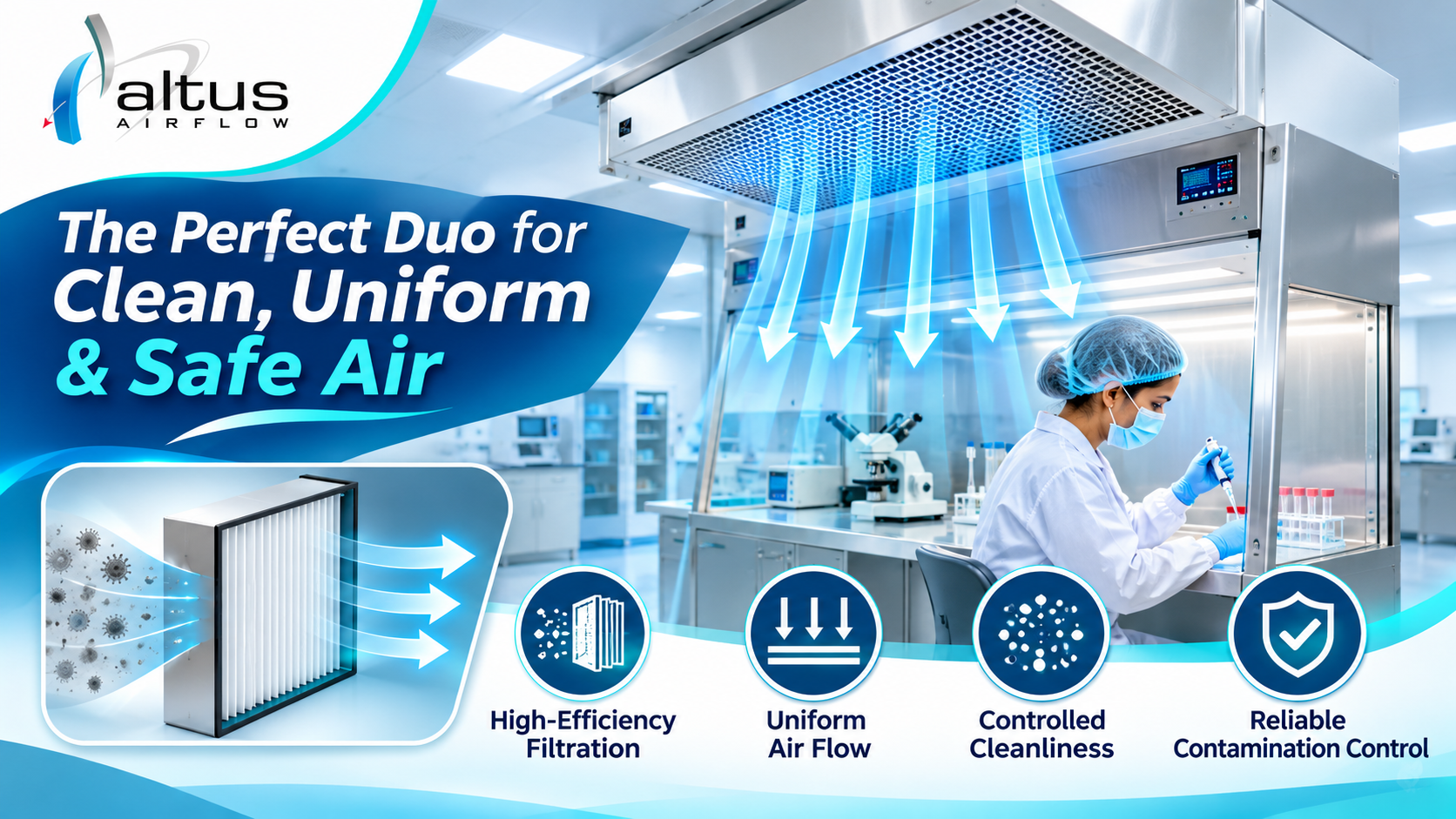
Air quality is an important part of environmental control. The HVAC design should consider ventilation, filtration, air supply locations, return air arrangements, and maintenance requirements.
Filter selection should match the approved technical specification. The design should also provide access for filter inspection and replacement.
Temperature Stability
Temperature requirements may vary between rooms and equipment. The laboratory team should identify the operating conditions required for each activity and device.
The HVAC system should be selected according to the identified cooling loads and control requirements. Monitoring arrangements may be included where specified.
Humidity Management
Humidity can influence room conditions, equipment operation, and condensation risk. The required operating range should be determined according to laboratory procedures and relevant technical guidance.
The design team should consider moisture loads, ventilation, and the control strategy needed to maintain the intended conditions.
Chemical Contamination and Material Selection
Construction materials, adhesives, sealants, cleaning products, and laboratory supplies may contribute to chemical emissions.
During IVF Lab Design In India, material finishes and furniture should be reviewed for suitability in the intended environment. Low-emission materials may be considered where appropriate to the project requirements.
Pressure Relationships and Airflow
Some laboratory areas may require defined pressure relationships with adjoining spaces. These should be identified during HVAC planning.
The design should consider supply and return airflow, door positions, room connections, and monitoring requirements. The final arrangement should follow the approved environmental control strategy.
Environmental Monitoring
Monitoring helps the laboratory assess whether environmental conditions remain within established operating ranges.
Depending on the design, monitoring may include temperature, humidity, pressure, and other selected parameters. Sensor locations and response procedures should be defined during planning.
Cleaning and Maintenance Planning
Environmental control depends on ongoing inspection and maintenance. Filters, sensors, HVAC equipment, and monitoring devices need suitable access for servicing.
The facility should maintain records of inspections, calibration, filter replacement, and corrective actions.
Conclusion
IVF laboratory design in India should consider cleanroom planning, air quality, temperature, humidity, chemical contamination, pressure relationships, monitoring, and maintenance. These factors should be evaluated together according to laboratory activities and applicable requirements. Altus Airflow offers IVF laboratory design and airflow-related solutions for controlled healthcare environments.
Frequently Asked Questions
1. Which environmental factors are important in an IVF laboratory?
Common considerations include air quality, temperature, humidity, ventilation, filtration, chemical contamination, and pressure relationships.
2. Does every IVF laboratory require the same cleanroom classification?
No. Requirements should be established according to laboratory activities, applicable guidance, and the approved project design.
3. Why is temperature stability important?
It helps maintain the operating conditions required by laboratory procedures and equipment.
4. How can chemical contamination be considered during design?
Material selection, ventilation planning, cleaning product review, and suitable storage arrangements can be evaluated.
5. What environmental parameters may be monitored?
Depending on the design, temperature, humidity, room pressure, and other selected conditions may be monitored.

 English
 Arabic
 Spanish
 Portuguese
 Deutsch
 Turkish
 Dutch
 Italiano
 Russian
 Romaian
 Portuguese (Brazil)
 Greek