


Wheeled All-Terrain Vehicles for Outdoor Applications
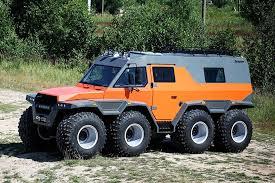
Access to remote working areas is an important requirement in agriculture, forestry, infrastructure maintenance, and outdoor industrial operations. A Wheeled All-Terrain Vehicle provides a practical transportation option for environments where conventional passenger vehicles may not offer sufficient ground clearance, traction, or maneuverability. Designed to travel across different types of terrain, these vehicles combine specialized tires, suspension systems, chassis structures, and drivetrain configurations to support movement beyond paved roads.
The construction of a wheeled all-terrain vehicle typically includes a supporting chassis, power unit, transmission, steering mechanism, suspension, wheels, tires, and braking system. The chassis provides structural support for the vehicle and its occupants or cargo. The drivetrain transfers engine or motor power to the wheels, while the suspension manages movement between the wheels and chassis. Each system contributes to the vehicle's overall handling and ability to operate on irregular ground.
Tire construction is particularly important because tires establish direct contact with the operating surface. Their width, diameter, tread pattern, and material characteristics influence traction, rolling resistance, and handling. Off-road tires commonly feature tread blocks or grooves designed to interact with loose surfaces such as soil, gravel, and mud. The appropriate pattern depends on the intended working environment. A configuration suitable for agricultural fields may not provide the same characteristics required for rocky terrain or sandy areas.
The drivetrain determines how available power is distributed to the wheels. Two-wheel drive configurations can be appropriate for certain relatively moderate operating conditions, while four-wheel drive systems can provide additional traction when more than one axle needs to contribute to vehicle movement. Some designs offer selectable drive modes to accommodate changing surface conditions. Buyers should evaluate drivetrain characteristics together with vehicle weight, transmission design, maintenance requirements, and intended usage.
Suspension systems help manage the movement generated when wheels encounter obstacles and uneven ground. Depending on the vehicle design, the suspension may use different combinations of springs, dampers, control arms, and related components. Its purpose is to support controlled wheel movement while maintaining suitable vehicle handling. Suspension geometry, travel, and load characteristics should be considered when selecting a vehicle for regular field operations.
Ground clearance is another relevant design factor. Vehicles operating on uneven surfaces may encounter stones, roots, ruts, and other obstacles that can contact the underside of the chassis. Adequate clearance can help reduce the risk of interference with important mechanical components. However, clearance should be assessed alongside vehicle stability, suspension design, and center of gravity. A higher vehicle configuration is not automatically better for every working environment.
Cargo and passenger requirements influence the appropriate vehicle category. Some all-terrain vehicles are designed primarily for individual operation, while utility-oriented configurations may provide additional seating or cargo-carrying arrangements. Agricultural users may transport tools and supplies, while maintenance teams may carry inspection equipment and materials. Procurement teams should confirm the manufacturer's specified payload limits and consider how cargo will be distributed. Excessive loading can affect braking, steering, tire performance, and suspension durability.
Different industries have distinct transportation requirements. Agricultural operators may need access to fields and irrigation areas where ground conditions change with weather and seasonal activity. Forestry teams may travel along narrow routes and uneven tracks while carrying tools and supplies. Infrastructure maintenance organizations may use off-road vehicles to reach remote installations, while outdoor service providers may prioritize a combination of transportation and equipment accessibility. The correct vehicle configuration depends on the tasks performed and the terrain encountered.
Environmental exposure should also be considered during vehicle evaluation. Dust and sand can affect filters and moving components, while moisture and mud may contribute to corrosion and contamination. Repeated operation on rocky surfaces can increase the mechanical loading experienced by tires, suspension components, and chassis connections. Regular cleaning and inspection help identify damage and reduce the accumulation of material around important systems.
Maintenance planning is particularly relevant for commercial fleets. Tires should be checked for wear, damage, and appropriate inflation according to manufacturer guidance. Braking components, steering connections, suspension assemblies, and drivetrain parts should be inspected at the recommended intervals. Abnormal vibration, unusual noise, or changes in handling may indicate that a component requires attention. Keeping maintenance records also helps fleet managers organize spare-parts purchasing and reduce unexpected interruptions.
For international importers and distributors, evaluating vehicle suppliers requires both technical and commercial consideration. Buyers should review available configurations, technical documentation, replacement component arrangements, packaging, shipping requirements, and destination-market regulations. It is important to distinguish between vehicles intended for recreational use and those designed for specific utility applications. Similar external appearances do not necessarily indicate equivalent payload capacity, drivetrain performance, or operational suitability.
A comparison between wheeled and tracked transportation systems can also help buyers determine the appropriate equipment category. Wheeled platforms may offer practical maneuverability on relatively firm surfaces and established off-road routes. Tracked vehicles use continuous contact systems that can distribute weight across a larger ground area, making them relevant to certain soft-ground applications. The decision should consider terrain, vehicle weight, travel requirements, maintenance, and the intended transportation task.
When evaluating a Wheeled All-Terrain Vehicle, buyers should examine the complete vehicle configuration, including drivetrain, tire design, suspension, ground clearance, load capacity, and service requirements. Clear communication about the intended working environment allows suppliers to identify the most appropriate available configuration. Organizations comparing alternative off-road transportation platforms can explore HAISHIDA's tracked utility vehicle products at https://www.chinahaishida.com/product/tracked-utility-terrain-vehicle/tracked-utility-terrain-vehicle.html.

 English
 Arabic
 Spanish
 Portuguese
 Deutsch
 Turkish
 Dutch
 Italiano
 Russian
 Romaian
 Portuguese (Brazil)
 Greek