


Glycine Market Forecast: Reaching USD 9,209.91 Million by 2035 at 5.22% CAGR
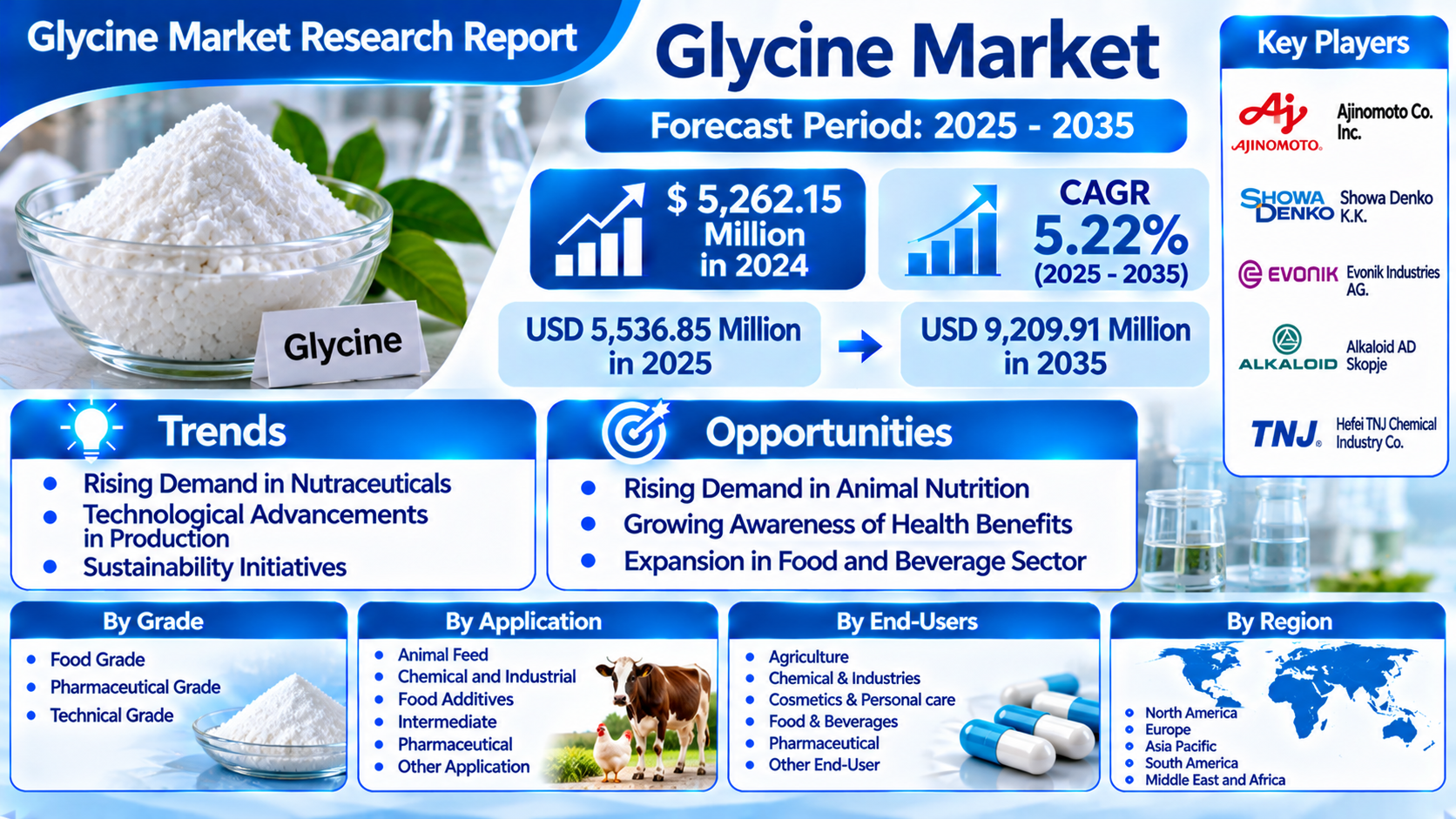
According to Market Research Future® (MRFR), the Glycine Market is projected to grow from USD 5,536.85 million in 2025 to USD 9,209.91 million by 2035, registering a compound annual growth rate (CAGR) of 5.22% during the forecast period from 2025 to 2035. The market was valued at USD 5,262.15 million in 2024. Glycine serves a broad range of applications across animal nutrition, food additives, chemical and industrial uses, and pharmaceuticals. Demand for nutraceuticals, technological advancements in production and sustainability initiatives are shaping the industry's development, while opportunities in animal nutrition, health awareness and food and beverages provide further avenues for growth.
Market Overview and Growth Outlook
Glycine is assessed across several grades, applications and end-user industries, reflecting its versatility as an ingredient and chemical input. The market's segmentation includes food grade, pharmaceutical grade and technical grade products. Its application base extends from animal feed and food additives to chemical and industrial uses, intermediates and pharmaceutical applications. This range gives the market exposure to multiple industries with different product requirements.
The projected increase from USD 5,536.85 million in 2025 to USD 9,209.91 million in 2035 indicates continued expansion over the forecast period. At a CAGR of 5.22%, the market is expected to grow steadily from its 2024 valuation of USD 5,262.15 million. Demand across food, healthcare, agriculture and industrial activities contributes to the broad commercial relevance of glycine.
The market's structure also reflects the importance of matching product grade to end use. Food-grade products serve requirements associated with food-related applications, while pharmaceutical-grade glycine addresses pharmaceutical uses. Technical-grade products form another category within the market. These distinctions are relevant to manufacturers and buyers evaluating product suitability for different applications.
Market Segmentation by Grade
The glycine market is divided into food grade, pharmaceutical grade and technical grade. Each grade represents a distinct category within the industry's product structure. The selection of a grade depends on the intended application and the requirements of the end user.
Food grade glycine is relevant to food additives and the broader food and beverage sector. Its role in this segment connects with the opportunity created by expansion in food and beverage applications. As companies respond to changing product requirements, food-grade ingredients remain an important part of the market's overall supply landscape.
Pharmaceutical grade glycine serves the pharmaceutical application and pharmaceutical end-user segments. This category is associated with requirements in which product quality and suitability are important considerations. The technical grade segment adds an industrial dimension, supporting the market's coverage of chemical and industrial applications and other uses.
The presence of three grades broadens the potential customer base. Suppliers must consider the needs of each target industry when developing and positioning their products. Grade segmentation therefore plays an important role in understanding the market's commercial structure.
Application Areas and Demand Sources
The application segmentation includes animal feed, chemical and industrial, food additives, intermediate, pharmaceutical and other application categories. Animal feed is an important area because animal nutrition is specifically identified as an opportunity for market growth. Demand from this segment is connected with the broader requirement for nutritional inputs in livestock and animal-related applications.
Food additives represent another significant application category. This segment links the glycine market with food and beverage production, where ingredient requirements influence purchasing decisions. Expansion in the food and beverage sector is identified as an opportunity, providing an additional avenue for market development.
Chemical and industrial applications and intermediate uses extend demand beyond food and nutrition. These categories reflect glycine's role in broader chemical-related activities. Pharmaceutical applications provide another source of demand, connecting the market with healthcare-related product requirements. The other application category accounts for uses beyond the specifically listed segments.
This diversity of applications means that market development is not dependent on a single end-use sector. Different applications can respond to distinct industrial, nutritional and consumer trends, giving suppliers multiple areas in which to serve customers.
End-User Industry Structure
The market's end-user segmentation comprises agriculture, chemical and industries, cosmetics and personal care, food and beverages, pharmaceutical and other end-user categories. Agriculture is linked to the market's animal nutrition opportunity, while chemical and industries represent demand from broader industrial activities.
Cosmetics and personal care adds another consumer-facing category to the market's scope. Food and beverages is connected with the use of glycine in food additive applications and the opportunity created by sector expansion. Pharmaceutical end users represent a separate area in which grade requirements and application suitability are important.
The presence of these end-user groups demonstrates the breadth of the market's commercial reach. Suppliers must understand the requirements of different industries, including their preferred grades and application needs. This broad end-user base can provide resilience by distributing demand across multiple sectors.
Key Trends Shaping the Market
Rising demand in nutraceuticals is a key trend influencing the glycine market. Growing attention to health-related products and nutritional applications can increase interest in ingredients used in this area. This trend is closely connected with the opportunity associated with growing awareness of health benefits, which may influence consumer and industry demand.
Technological advancements in production are another important factor. Improvements in production technology can help manufacturers address product requirements and operational priorities. As the market serves multiple grades and applications, production capabilities that support consistent supply and product suitability are relevant to industry participants.
Sustainability initiatives also shape market development. Environmental considerations are becoming part of business decisions across chemical and ingredient supply chains. For glycine producers, sustainability can influence production strategies and broader operational priorities. The trend complements technological development by encouraging companies to consider how manufacturing processes align with changing expectations.
Growth Opportunities and Competitive Landscape
The market identifies three major opportunities: rising demand in animal nutrition, growing awareness of health benefits and expansion in the food and beverage sector. Animal nutrition provides a potential source of demand through the animal feed application. Health awareness supports interest in nutraceutical-related uses, while food and beverage expansion creates opportunities for food-grade glycine and associated applications.
Key players identified in the market include Ajinomoto Co., Inc., Showa Denko K.K., Evonik Industries AG, Alkaloid AD Skopje and Hefei TNJ Chemical Industry Co. These companies form the competitive landscape outlined in the market assessment. Competition takes place across different grades, applications and end-user industries, making product suitability and the ability to serve varied customer requirements important considerations.
Global Outlook Through 2035
The global Glycine Market is forecast to reach USD 9,209.91 million by 2035, growing at a CAGR of 5.22% from 2025. Its expansion is supported by demand across animal nutrition, food additives, chemical and industrial uses, intermediates and pharmaceutical applications. The market's three grade categories and diverse end-user base provide a broad structure for future development.
Nutraceutical demand, production technology and sustainability initiatives are expected to remain relevant trends. Opportunities in animal nutrition, health awareness and food and beverage expansion further strengthen the market's outlook. As glycine continues to serve multiple industries, manufacturers that address grade-specific requirements and changing customer needs will remain important participants in the global market.

 Arabic
 French
 Spanish
 Portuguese
 Deutsch
 Turkish
 Dutch
 Italiano
 Russian
 Romaian
 Portuguese (Brazil)
 Greek