


How Do Different Religious Texts Describe Maa Baglamukhi?
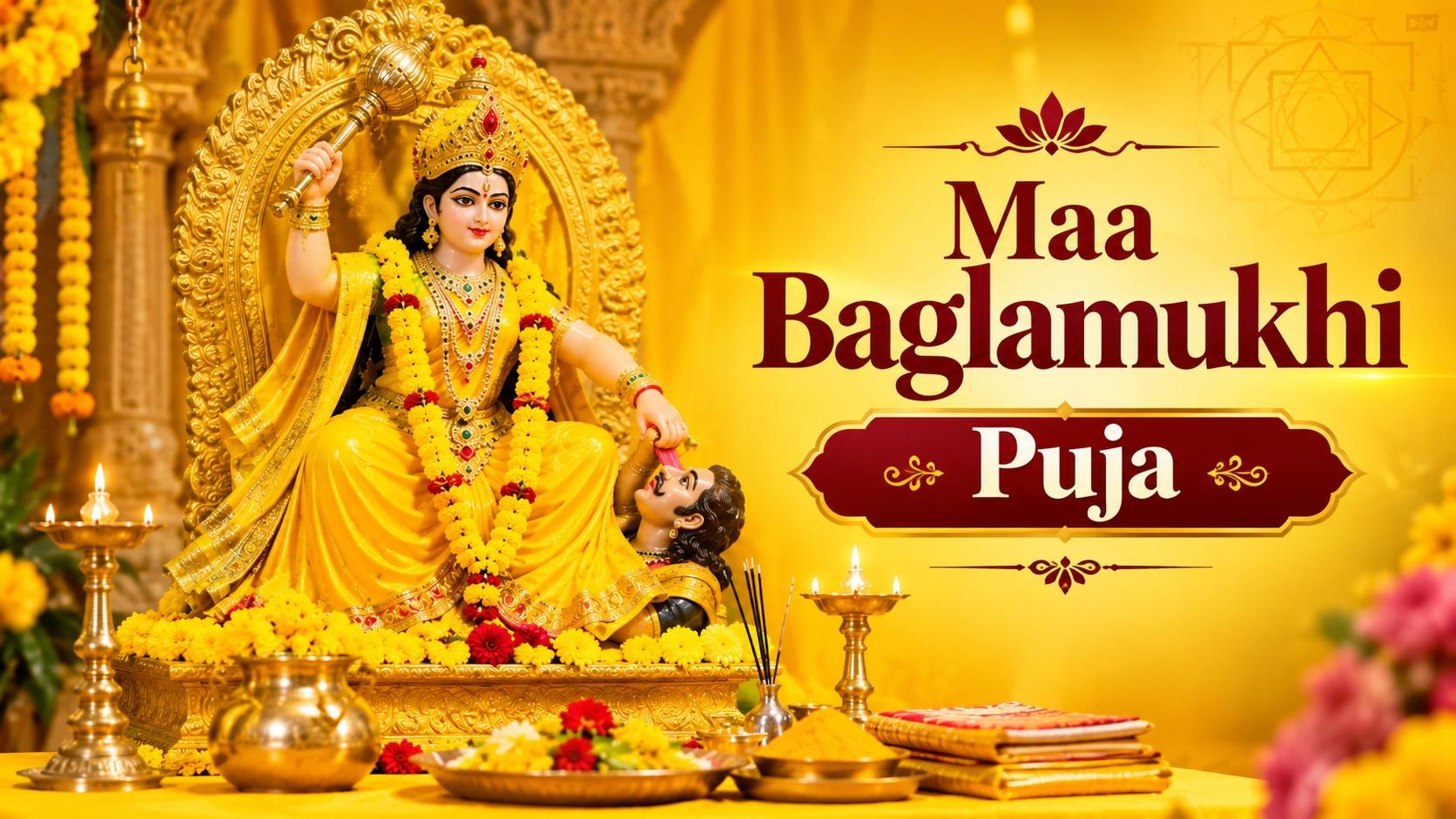
Maa Baglamukhi holds a distinctive place in Shakta traditions, where she is worshipped as one of the ten Mahavidyas. Her religious identity is described through different forms of sacred literature, including Tantric texts, devotional hymns, mantra collections, and traditional descriptions of Goddess iconography. These sources explore her divine appearance, spiritual qualities, association with stambhana, and role within the wider Mahavidya tradition.
Studying Maa Baglamukhi religious texts helps readers understand how different traditions explain her significance. However, not every text describes her in exactly the same way. Some focus on her appearance, others explain her divine powers, while devotional compositions emphasise prayer and worship.
Maa Baglamukhi in Shakta Scriptures
Shakta scriptures and Tantric literature provide an important foundation for understanding Maa Baglamukhi Puja. She is recognised as one of the ten Mahavidyas, a group of powerful Goddess forms associated with different aspects of divine feminine energy.
The ten Mahavidyas are generally identified as Kali, Tara, Tripura Sundari, Bhuvaneshwari, Bhairavi, Chhinnamasta, Dhumavati, Bagalamukhi, Matangi, and Kamala. Their descriptions and order can vary between textual traditions.
References in the Mundamala Tantra
The Mundamala Tantra is among the Tantric sources associated with the Mahavidya tradition. A passage cited by scholar Alexis Sanderson lists Bagalamukhi among the ten Mahavidyas and identifies her as a siddhavidya, a term associated with spiritual accomplishment.
This reference is useful because it places Maa Baglamukhi within a wider group of Goddess forms rather than treating her as an isolated religious figure. It also demonstrates the importance of Tantric literature in the development of the Mahavidya tradition. <Cite refs={["turn113813search21","turn113813search23"]}/>
The Wider Tantric Tradition
Other Tantric works, including the Todala Tantra, Shaktisangama Tantra, and Shakta Pramoda, are discussed in studies of the Mahavidyas. These sources belong to a broader religious literature concerned with Goddess worship, ritual practices, and the spiritual significance of different divine forms.
It is important to remember that these works do not necessarily provide one identical description of Maa Baglamukhi. Their focus, structure, and religious practices may differ.
How Religious Texts Describe Maa Baglamukhi's Appearance
One of the most recognisable features of Maa Baglamukhi is her yellow appearance. Traditional descriptions often present her wearing yellow garments and ornaments, with a golden or yellow complexion.
Some devotional and Tantric descriptions also show her holding the tongue of an opponent in one hand and raising a club or mace in the other. These features are central to her familiar iconography.
Yellow Clothing and Divine Appearance
Yellow is an important visual feature in Maa Baglamukhi worship. Traditional descriptions connect her with yellow garments, ornaments, and garlands.
The colour is also reflected in devotional practices through yellow flowers, turmeric, and other offerings. In religious interpretation, it is commonly associated with auspiciousness and the distinctive identity of the Goddess.
However, descriptions may differ according to the text, region, and artistic tradition. Not every image or written account includes exactly the same details.
The Tongue and the Raised Mace
A well-known traditional description presents Maa Baglamukhi holding an opponent's tongue while raising a club or mace. This imagery is commonly interpreted through her association with stambhana, meaning restraint or the stopping of disruptive forces.
The tongue is connected with speech, while the raised weapon communicates divine authority and strength. Together, these features express the Goddess's power to restrain harmful expression and disruptive activity.
A detailed description of this form appears in the devotional and iconographic material discussed by scholar David Kinsley in Tantric Visions of the Divine Feminine. <Cite refs={["turn113813search1","turn113813search0"]}/>
What Devotional Hymns Explain About Maa Baglamukhi
Devotional hymns, commonly known as stotras, offer another way to understand Maa Baglamukhi. Unlike a general description of the Goddess, a stotra uses praise, sacred names, and devotional expressions to communicate her qualities.
These compositions are important parts of sacred literature because they preserve religious ideas in a form that devotees can read, recite, and study.
The Role of the Rudrayamala Tradition
Maa Baglamukhi is associated with hymns and descriptions attributed to the Rudrayamala tradition. Scholarship discussing these materials refers to her hundred-name and thousand-name hymns, which contain different epithets describing her powers and attributes.
Such names present the Goddess through several dimensions, including her association with restraint, divine authority, spiritual accomplishment, and the granting of blessings.
The meaning of individual names should be understood within the context of the particular composition. Different versions and recensions may contain variations. <Cite refs={["turn113813search0","turn113813search3"]}/>
Understanding the Baglamukhi Stavaraja
The Shri Bagalamukhi Stavaraja is another devotional composition available in Sanskrit. Its verses include traditional descriptions and expressions associated with Baglamukhi worship.
The text refers to her yellow radiance and includes language connected with restraining harmful speech and controlling the tongue. These themes reflect the Goddess's familiar association with stambhana.
When studying such a hymn, readers should consider its actual wording and source rather than assuming that every circulating version is identical. <Cite refs={["turn113813search22"]}/>
How Tantric Texts Explain Maa Baglamukhi's Divine Powers
Tantric literature often gives particular attention to the spiritual powers associated with Maa Baglamukhi. One of the most important concepts connected with her is stambhana.
Understanding Stambhana
Stambhana is generally understood as stopping, restraining, or bringing an activity under control. In the context of Maa Baglamukhi, it is associated with the restraint of harmful speech, hostile actions, and disruptive influences.
This concept helps explain why her traditional iconography includes the image of holding an opponent's tongue. It also explains why many devotional descriptions connect her with the control of speech and the ability to overcome opposition.
Some Tantric sources discuss specialised ritual applications of these ideas. Such descriptions belong to particular religious and ritual contexts and should not be treated as universal instructions for devotees.
The Association With Brahmastra
Certain traditional descriptions associate Maa Baglamukhi with the Brahmastra, a powerful divine weapon in Hindu religious literature. The Sankhyayana Tantra is discussed in scholarly writing in connection with this association.
The epithet Brahmastra-rupini is also linked with her in these discussions. It communicates an understanding of the Goddess as a powerful divine force capable of restraining opposition.
This association is one example of how Tantric literature uses powerful religious imagery to explain the distinctive qualities of Maa Baglamukhi. <Cite refs={["turn113813search0","turn113813search25"]}/>
Why Different Texts May Describe Maa Baglamukhi Differently
Readers may notice differences when comparing Shakta scriptures, Tantric descriptions, devotional hymns, and temple traditions. These differences do not necessarily mean that one description is incorrect.
Each source may have a different purpose:
· Shakta scriptures: Place Maa Baglamukhi within the wider tradition of Goddess worship and the Mahavidyas.
· Tantric texts: Discuss her spiritual attributes, ritual associations, mantras, and concepts such as stambhana.
· Stotras and devotional hymns: Praise her through sacred names, verses, and descriptions of divine qualities.
· Iconographic descriptions: Explain her appearance, posture, clothing, and symbolic objects.
· Temple traditions: Preserve regional practices, local interpretations, and forms of worship.
Understanding these differences helps prevent readers from treating one particular description as the only accepted representation of the Goddess.
How to Study Maa Baglamukhi Religious Texts Responsibly
Anyone exploring Maa Baglamukhi religious texts should pay attention to the source, version, and purpose of each composition. A devotional hymn, a Tantric ritual manual, and a scholarly explanation do not serve the same purpose.
A careful approach includes:
1. Identify the source: Check the title and tradition associated with the text.
2. Read the original context: Avoid relying only on isolated verses or translated quotations.
3. Compare different descriptions: Notice where texts agree and where their details differ.
4. Check translations: Sanskrit terms can carry meanings that are not fully explained by a single English word.
5. Respect traditional guidance: Specialised Tantric practices should be studied with appropriate guidance rather than through incomplete online instructions.
These steps make the study of sacred literature more accurate and meaningful.
Conclusion
Different religious texts describe Maa Baglamukhi through her place among the ten Mahavidyas, her distinctive yellow appearance, her association with stambhana, and her divine attributes. Shakta scriptures establish her wider religious identity, Tantric literature explores her spiritual and ritual significance, and devotional hymns express praise through sacred names and verses.
Studying these sources together provides a broader understanding of Maa Baglamukhi and the traditions surrounding her worship. It also helps readers appreciate the variety of Goddess descriptions preserved in Shakta scriptures and other forms of sacred literature.

 English
 Arabic
 Spanish
 Portuguese
 Deutsch
 Turkish
 Dutch
 Italiano
 Russian
 Romaian
 Portuguese (Brazil)
 Greek