


CNC Machined Parts in Sharjah for Industrial Applications
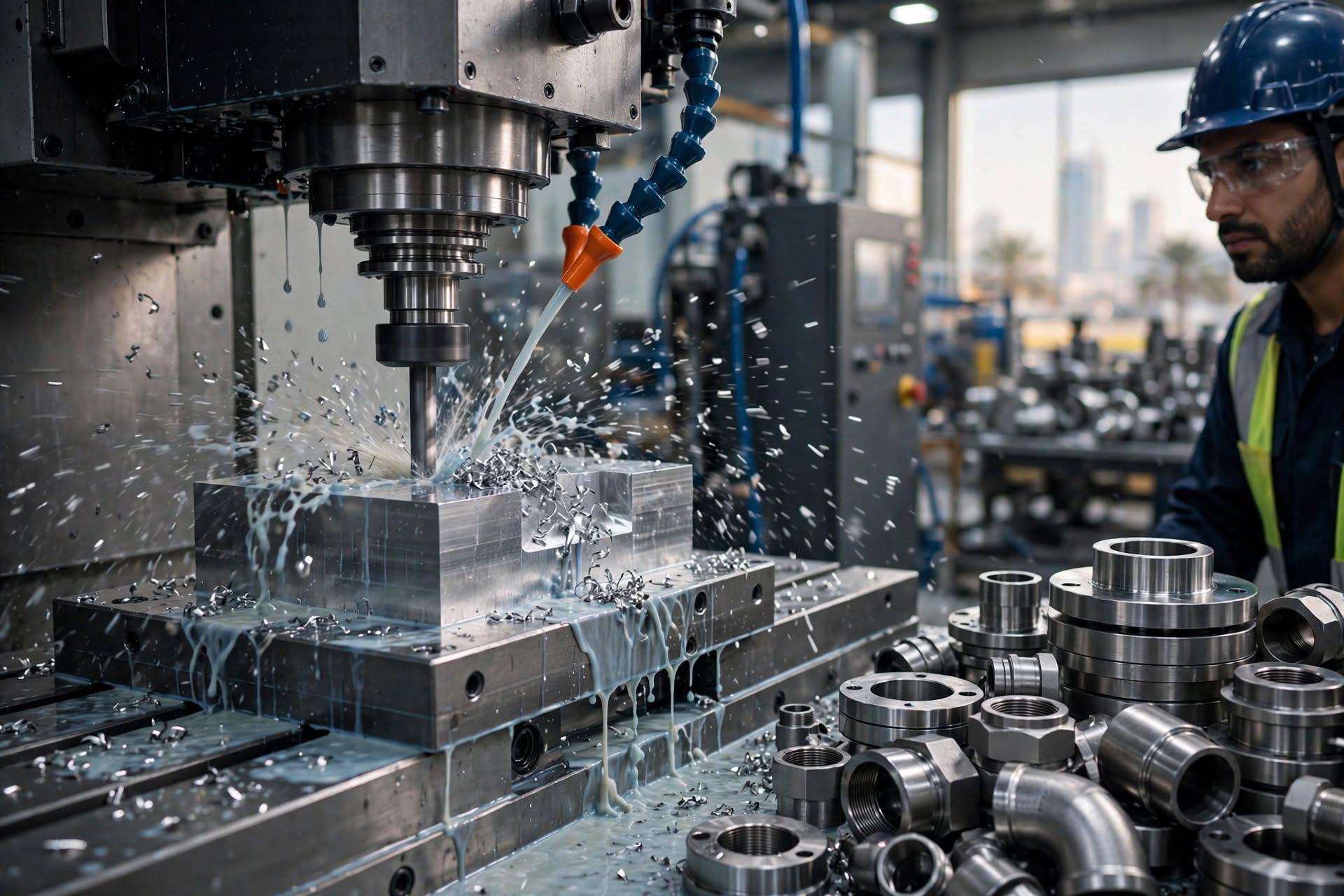
Industrial businesses need components that match their machinery, technical drawings and operating requirements. When standard replacement parts are unavailable or unsuitable, cnc machined parts in sharjah offer a practical manufacturing option. Custom machining allows businesses to produce components according to specific dimensions, materials and functional requirements instead of depending entirely on catalogue products.
Sharjah has an established industrial environment where manufacturing, engineering, construction and energy-related businesses require dependable components. Production equipment often includes specialised assemblies that cannot always be maintained using standard parts. A replacement component must fit the existing system and perform according to its intended purpose. This makes technical understanding and accurate manufacturing important from the beginning of a project.
CNC machining uses computer-controlled instructions to guide cutting tools and shape raw materials. The process can produce different component designs while maintaining repeatability. It is useful for individual replacement parts, prototypes and larger production requirements.
CNC Processes for Different Component Designs
The manufacturing method depends on the geometry of the component. CNC milling and CNC turning are two commonly used processes, each serving different production requirements.
cnc machined parts in sharjah uses rotating cutting tools to remove material from a workpiece. It can produce flat surfaces, pockets, slots, holes and complex profiles. Industrial applications include mounting plates, brackets, housings, manifolds and valve bodies.
CNC turning works differently because the material rotates while a cutting tool shapes its surface. This process is suitable for cylindrical components such as shafts, sleeves, pins, bushings and threaded connectors.
Some engineering components require both milling and turning operations. In these cases, manufacturers must plan the machining sequence carefully so that different features remain aligned. Multi-axis machining can also help produce complex geometries with fewer setups.
Genesis-MFG provides 3-axis and 5-axis CNC milling and turning capabilities. Its manufacturing operations support projects ranging from single prototypes to full production runs. This flexibility is useful when businesses need different quantities without changing their fundamental design requirements.
Material Selection and Component Performance
Choosing the correct material is just as important as selecting the machining process. A component used in a general factory environment may have different material requirements from one exposed to pressure, temperature changes, corrosion or continuous mechanical movement.
Aluminium is often selected for applications where weight and machinability matter. Stainless steel is useful in environments where corrosion resistance is important. Carbon steel, titanium, brass, copper and Inconel provide additional options for specific engineering applications.
Engineering plastics can also be used for selected industrial components. Materials such as nylon, POM, HDPE and PTFE may be appropriate for guides, spacers, bushings and other parts depending on their operating conditions.
Before production begins, the manufacturer should consider:
-
Mechanical loads and expected operating conditions.
-
Temperature and environmental exposure.
-
Required dimensions and tolerances.
-
Surface finish and contact requirements.
-
Material availability and overall production cost.
Businesses working with oilfield equipment suppliers in uae may also require components that meet particular documentation and material requirements. Clear technical specifications help manufacturers understand these expectations before starting production.
Quality Control and Manufacturing Support
A machined component should be inspected against its approved drawing before it is accepted for use. Even a small dimensional difference can affect the installation or operation of a component within an assembly.
Inspection may include checking diameters, lengths, hole positions, surface conditions and other critical measurements. Documentation can also be important when components are intended for regulated industrial applications.
Genesis-MFG operates from Hamriyah Free Zone, Sharjah, and holds ISO 9001 and API Spec Q1 certifications. Its manufacturing capabilities include custom machining, prototype development and replacement part production.
When comparing suppliers, businesses should examine their machine capabilities, technical experience and inspection procedures. A supplier should also be able to review drawings and clarify manufacturing requirements before providing a quotation.
A dependable manufacturing process normally follows these stages:
-
Reviewing customer drawings, CAD files or physical samples.
-
Selecting suitable material for the application.
-
Planning the machining operations.
-
Producing the component according to approved specifications.
-
Inspecting the finished part before completion.
Final Thoughts
Industrial manufacturing requires components that fit correctly and perform according to their intended specifications. Proper material selection, suitable machining methods and dimensional inspection all contribute to dependable production. Businesses should consider technical capabilities and quality management before selecting a manufacturing partner. Working with experienced oilfield equipment suppliers in uae can also help companies coordinate equipment procurement and related component requirements. Genesis-MFG combines custom manufacturing and equipment sourcing support from its Sharjah facility, helping industrial customers address different project needs.
FAQs
1. What types of components can CNC machining produce?
CNC machining can produce shafts, brackets, housings, plates, fittings, bushings, manifolds and other custom industrial components.
2. Is CNC machining suitable for one replacement part?
Yes. Manufacturing can begin with a single replacement component, provided the technical requirements and material specifications are clear.
3. Which materials can be used for CNC machining?
Common options include aluminium, stainless steel, carbon steel, titanium, brass, copper and engineering plastics.
4. Why should manufacturers inspect finished components?
Inspection helps confirm that the finished part matches the approved drawing and is suitable for its intended application.
5. Where is Genesis-MFG located?
Genesis-MFG operates from Hamriyah Free Zone, Sharjah, UAE, and provides manufacturing services for industrial customers.

 English
 Arabic
 French
 Spanish
 Deutsch
 Turkish
 Dutch
 Italiano
 Russian
 Romaian
 Portuguese (Brazil)
 Greek