


Types of 3D Printer Resin: Which One Should You Use for Which Project?
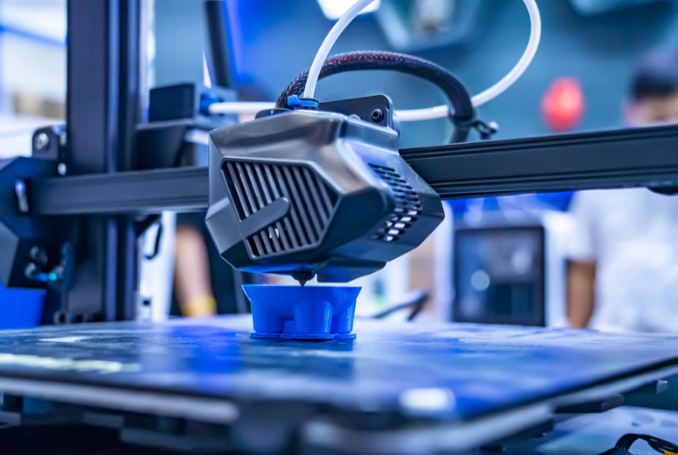
Choosing the right 3D printer resin can matter more than choosing the right machine. The same printer can produce a glossy display figurine, a flexible gasket or a castable jewellery pattern, depending entirely on the liquid in the vat. Yet many beginners buy whatever bottle is cheapest and then wonder why prints crack, warp or fail. This guide explains the main resin families, what each is good at, and how to choose without wasting money.
What resin actually is
Printing resin is a photopolymer: a liquid mixture of monomers, oligomers and a photoinitiator that hardens when exposed to UV light, usually around 405 nm for desktop machines. Pigments add colour, and additives adjust flexibility, strength, temperature resistance and viscosity. Different recipes produce very different behaviour, which is why one bottle behaves like brittle glass and another like rubber.
If you are new to the technology itself, a quick primer on how a Resin 3D printer cures each layer will make the properties below easier to understand.
The main resin types
|
Resin type |
Key traits |
Best for |
Watch out for |
|---|---|---|---|
|
Standard |
Sharp detail, easy to print, wide colour choice |
Miniatures, display models, prototypes |
Brittle under impact |
|
Water-washable |
Cleans with water instead of solvents |
Beginners, home use, classrooms |
Can absorb moisture if left wet; still needs care |
|
ABS-like |
Better impact resistance, slightly flexible |
Functional prototypes, snap fits |
Slightly lower detail than standard |
|
Tough / engineering |
High strength and durability |
Mechanical parts, jigs, housings |
Costs more; needs correct exposure |
|
Flexible / elastic |
Rubber-like, bendable |
Gaskets, grips, wearable props |
Tricky to print; softer detail |
|
Castable |
Burns out with little ash |
Jewellery and metal casting patterns |
Needs proper burnout schedule |
|
High-temperature |
Resists heat after post-cure |
Moulds, heat-exposed prototypes |
Specialist and expensive |
|
Transparent / clear |
Light-transmitting |
Lenses, light pipes, fluid models |
Needs careful finishing for clarity |
|
Dental / biocompatible |
Validated for specific uses |
Dental models, guides, devices |
Regulated; use only as specified |
Standard resin: the starting point
Standard resin is the default for good reason. It captures fine detail, cures quickly and costs the least. For painted miniatures, architectural scale models and visual prototypes, it is hard to beat. The downside is brittleness: thin parts such as swords, antennas or pegs can snap, so design with slightly thicker sections or choose a tougher resin where parts must flex or survive handling.
Water-washable resin: easier cleanup
This variety can be rinsed with water rather than isopropyl alcohol. It reduces the need to buy and store large volumes of solvent, which is appealing for classrooms and home workshops. However, it does not remove the need for gloves, ventilation and proper curing. Wash water should never go down the drain; collect it, cure the residue in sunlight or UV, and dispose of the solid.
Tough and ABS-like resins: for parts that must work
If your prints will be handled, clipped, screwed or dropped, move beyond standard resin. ABS-like and tough resins trade a little surface crispness for dramatically better impact behaviour. Many designers print them for product housings, hinges and test fixtures. Always follow the manufacturer’s post-curing instructions, because under-cured parts stay weak while over-cured parts become brittle.
Flexible resins: soft and bendy
Elastic resins mimic rubber and silicone. They suit gaskets, grips, soft-touch prototypes and wearable props. Printing them demands patience: supports must be placed carefully, models may sag when wet, and exposure windows are narrower. Treat them as a second-step material after you have mastered standard resin.
Castable resins: for jewellers and foundries
These resins are formulated to burn out cleanly in investment casting, leaving minimal residue. Success depends on following the exact burnout temperature profile recommended by the resin maker and your casting supplier. For intricate rings and pendants, high-resolution machines and castable resin together replace much of the traditional wax-carving workflow.
Specialty and application-specific resins
High-temperature, transparent, dental and engineering resins exist for narrow uses. They are usually more expensive and less forgiving, so buy them only when a project demands their properties, and start with a small bottle.
How to choose: a simple decision path
- Define the job. Display, functional, flexible, castable or specialised?
- Check printer compatibility. Confirm wavelength and recommended settings for your machine.
- Pick the lowest-grade resin that works. Do not pay for properties you will never use.
- Buy a small bottle first. Test exposure and fit before committing to a litre.
- Record your settings. Keep notes for each resin and batch.
Factors to compare before buying
|
Factor |
What to look for |
|---|---|
|
Wavelength |
405 nm for most desktop machines |
|
Viscosity |
Thick resins may need warming or slower lifts |
|
Shrinkage |
Lower shrinkage gives better dimensional accuracy |
|
Colour and opacity |
Dark pigments can affect fine detail |
|
Shelf life |
Check manufacturing date and storage guidance |
|
Brand profiles |
Recommended exposure times for your printer |
|
Price per bottle |
Compare per kilogram, but weigh against failure rates |
Cost and smart buying
Resin is a recurring expense, so a good habit is to estimate material use before printing: your slicer shows volume, which you can convert into cost per part. Hollowing large models (with drain holes) saves material and reduces failed prints. For a broader sense of ongoing budgeting, read about the full 3D printer cost of owning a machine, including consumables.
Storage and handling basics
Proper storage extends shelf life and keeps print quality consistent:
- Store bottles tightly closed, away from sunlight, in a cool place.
- Shake or stir pigmented resins before pouring; pigments settle over time.
- Strain resin after failed prints to remove cured fragments.
- Do not return contaminated resin to the original bottle.
- Label bottles with the date opened and settings used.
Troubleshooting resin problems
|
Problem |
Likely cause |
Fix |
|---|---|---|
|
Prints will not stick to the plate |
Under-exposed first layers, poor levelling |
Increase bottom exposure; re-level |
|
Layer separation |
Insufficient exposure or cold resin |
Raise exposure; warm the room |
|
Brittle parts |
Over-curing or wrong resin |
Shorten cure time; switch to tough resin |
|
Soft or tacky surfaces |
Under-cure or poor washing |
Rewash; cure fully |
|
Loss of fine detail |
Over-exposure |
Calibrate exposure with a test print |
|
Warped thin parts |
Wrong orientation or support density |
Reorient; add supports |
Final thoughts
The best resin is the one that matches your project, your printer and your skill level. Begin with standard or water-washable types to build confidence, then move to tough, flexible or castable materials when a specific need arises. Buy small, calibrate carefully and keep notes, and you will cut failures dramatically.
Frequently asked questions
1. Can I use any resin in my printer? Most 405 nm resins work in most desktop machines, but exposure settings differ, so calibrate each new resin.
2. What is the difference between standard and tough resin? Standard resin gives sharper detail but is brittle. Tough resin sacrifices a little detail for better strength.
3. Is water-washable resin safer? It makes cleaning easier, but uncured resin is still a skin irritant. Gloves and ventilation remain essential.
4. How long does resin last? Usually many months to a year or more when stored sealed and away from light, but check the manufacturer’s guidance.
5. Can I mix two resins? It is possible with compatible types, but results are unpredictable. Test on small prints first.
6. Why are my prints sticky? Usually under-washing or under-curing. Rewash and cure fully.
7. Do different colours print differently? Yes. Pigments change light absorption, so darker or opaque resins may need different exposure times.

 English
 Arabic
 French
 Spanish
 Portuguese
 Turkish
 Dutch
 Italiano
 Russian
 Romaian
 Portuguese (Brazil)
 Greek