


Which Product Details Should Buyers Review with mcwiper?
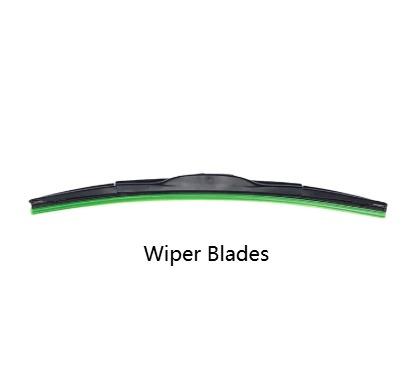
Windshield Wiper Blade Supplier selection involves several factors that directly affect product compatibility, customer satisfaction, and purchasing costs. For importers, wholesalers, and automotive distributors, comparing quotations alone is not enough. Buyers should also examine product construction, material specifications, manufacturing capabilities, customization options, and delivery arrangements. A structured evaluation helps businesses make informed purchasing decisions and reduce potential sourcing problems.
Review Product Types and Vehicle Applications
Different vehicle models and market segments may require different product structures. Common options include conventional framed designs, frameless models, and rear-window products. Each type has distinct construction features and application requirements.
Before placing an order, buyers should review the available product range and confirm whether it covers their target vehicle categories. Important details include product length, installation position, connector type, and applicable vehicle models.
Distributors serving multiple regions may need several specifications to meet local demand. A detailed catalog and application list can help purchasing teams identify suitable models and organize inventory more efficiently.
Examine Rubber Materials and Structural Details
The rubber strip plays an important role in wiping performance because it maintains contact with the glass surface. Its flexibility, surface finish, and resistance to environmental changes can influence operating results and service life.
Buyers should ask about available rubber compounds and whether material options can be adjusted for different climates. They should also examine supporting components, including metal frames, spring elements, plastic covers, and connecting parts.
Sample evaluation is a practical way to understand these details. During testing, buyers can observe wiping consistency, operating noise, contact quality, and visible wear. These checks provide useful information before approving a large production order.
Confirm Connector Compatibility
A product with the correct dimensions may still be unsuitable if its attachment system does not match the vehicle arm. Different vehicle models can use different locking structures, making connector verification an important purchasing step.
Ask for connector specifications, installation references, and available adapter options. If the buyer has an existing sample, drawing, or reference code, sharing it during the inquiry stage can make technical communication more accurate.
For distributors, organized compatibility records also help sales teams respond to customer questions. Clear application information can reduce incorrect selections and unnecessary returns.
Understand Quality Inspection Procedures
Quality management should cover the entire production process rather than relying only on a final visual check. Buyers can ask how incoming materials are inspected, how important dimensions are controlled, and how finished products are evaluated before packing.
Relevant inspection points may include rubber surface condition, structural assembly, connector fit, product dimensions, and wiping performance. It is also useful to understand how production issues are recorded and corrected.
Before confirming an order, buyers can request applicable inspection documents and agree on acceptance criteria. Written requirements give both parties a shared reference and make later quality reviews more straightforward.
Discuss OEM and Customization Services
Some businesses purchase standard products for regular distribution, while others need customized specifications for private-label projects or particular vehicle applications. In these situations, engineering support and clear communication are important.
Prepare relevant drawings, samples, dimensions, logo files, and packaging instructions before requesting a quotation. Ask the manufacturer to review the information and clarify whether tooling, sample development, or additional testing will be necessary.
A practical development process should include requirement confirmation, sample preparation, buyer evaluation, final approval, and mass production. This sequence helps avoid misunderstandings and keeps project expectations clear.
Compare Production Capacity and Delivery Arrangements
Unit price is only one part of the purchasing decision. Buyers should also understand production capacity, order quantities, lead times, and the ability to handle repeat orders.
Ask whether sample orders, trial batches, and larger quantities can be arranged according to the purchasing schedule. Packaging methods, shipping arrangements, and procedures for communicating delays should also be discussed in advance.
For businesses managing seasonal demand or several sales channels, realistic production planning supports better inventory control. Regular progress updates can help purchasing teams coordinate their own distribution schedules.
Build Long-Term Cooperation Through Communication
Stable business cooperation depends on more than product specifications. Buyers should evaluate how inquiries are handled, whether technical questions receive clear answers, and how changes in requirements are managed.
mcwiper provides product options and manufacturing support for different automotive purchasing needs. Buyers can discuss specifications, sample arrangements, packaging requirements, and production schedules before confirming an order.For distributors and automotive businesses reviewing their sourcing plans, careful product evaluation and clear project communication can support more predictable purchasing decisions. Visit https://www.mcwiper.com/product/ to review available options and discuss requirements for your next order.

 English
 Arabic
 French
 Spanish
 Portuguese
 Deutsch
 Turkish
 Italiano
 Russian
 Romaian
 Portuguese (Brazil)
 Greek