


Fleet Preventive Maintenance for Long-Term Cost Savings
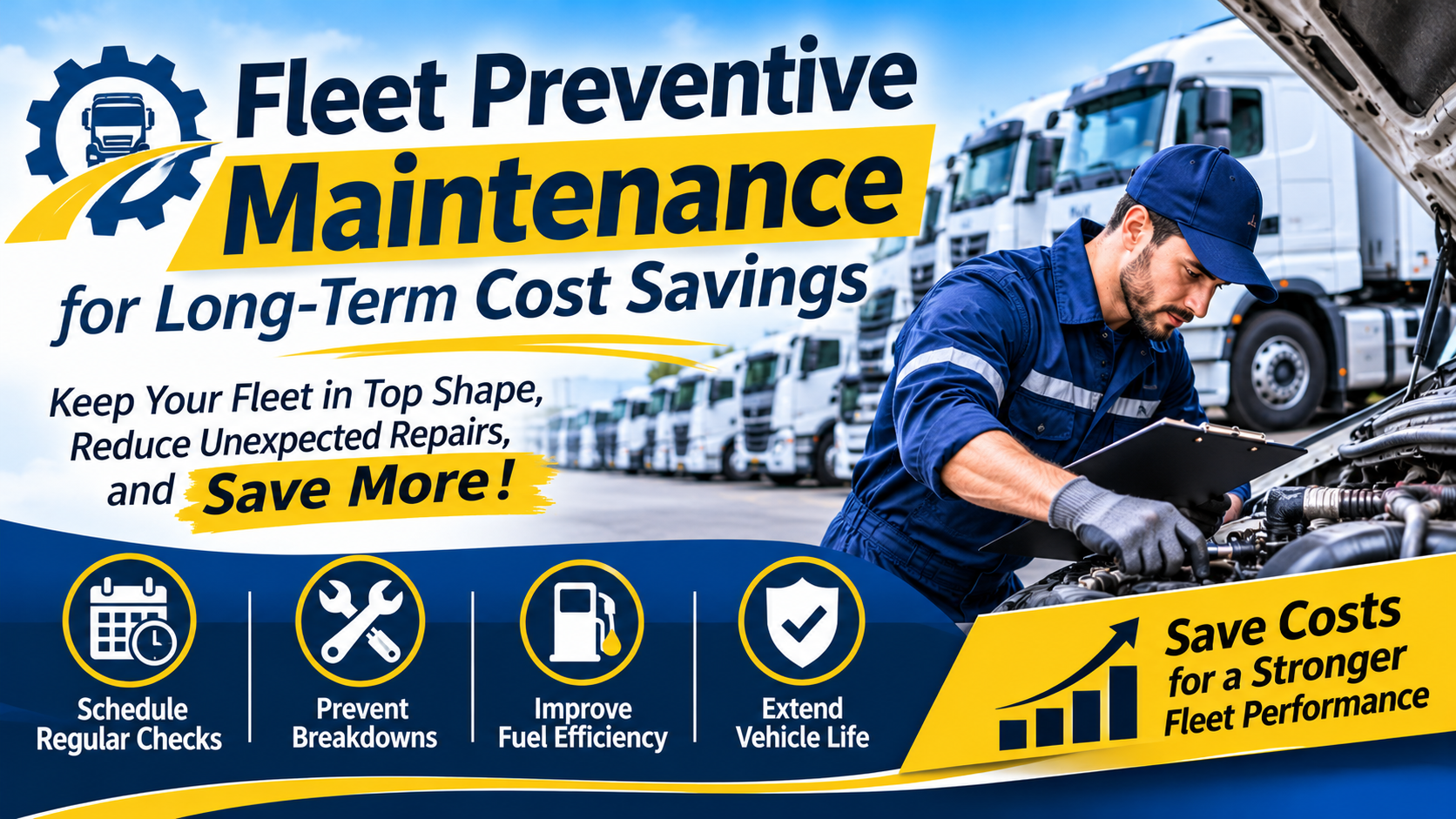
Unexpected vehicle repairs can quickly affect a company's budget, productivity, and daily operations. Businesses that depend on trucks, delivery vans, and commercial vehicles need a reliable maintenance plan to keep their fleets running without unnecessary interruptions. Waiting until a vehicle breaks down often leads to higher repair expenses and lost working hours. Regular inspections and scheduled servicing help identify problems early and keep vehicles in better condition. This is why Fleet Preventive Maintenance is an important part of controlling long-term expenses and improving fleet performance.
What Is Fleet Preventive Maintenance?
Fleet preventive maintenance is a planned approach to inspecting, servicing, and maintaining vehicles before major mechanical problems occur. Instead of waiting for a breakdown, businesses follow scheduled maintenance activities based on mileage, operating hours, time intervals, and manufacturer recommendations.
These activities may include oil changes, tire inspections, brake checks, filter replacements, fluid checks, and engine servicing.
For example, a delivery company can schedule regular inspections for its vehicles based on their daily mileage. This helps maintenance teams identify worn components and arrange repairs before they create larger problems.
Why Is Preventive Maintenance Important for Cost Savings?
Vehicle maintenance is a regular operating expense, but unexpected repairs can make it difficult to manage a business budget. A damaged engine, worn braking system, or neglected tire problem may require expensive repairs if the issue is not identified early.
Preventive maintenance helps businesses manage these expenses through planned servicing and regular inspections.
Some important financial benefits include:
-
Reduced emergency repair expenses.
-
Fewer unexpected vehicle breakdowns.
-
Better control over maintenance budgets.
-
Improved vehicle reliability.
-
Longer useful vehicle life.
-
Reduced operational downtime.
According to the US Department of Energy, properly tuned engines, correctly inflated tires, regular air filter replacement, and using the recommended motor oil can help improve vehicle fuel economy. These basic maintenance activities can also support better control over fleet operating costs.
Key Fleet Preventive Maintenance Tasks
An effective maintenance program should cover the major vehicle components that affect performance, safety, and operating expenses.
1. Regular Oil and Filter Changes
Engine oil reduces friction between moving components and helps manage engine heat. Over time, oil becomes contaminated and loses its effectiveness.
Businesses should follow the manufacturer's recommended oil and filter replacement intervals. Regular servicing helps protect engine components and reduces the risk of avoidable engine damage.
2. Tire Inspection and Maintenance
Tires affect fuel efficiency, braking performance, and vehicle handling. Incorrect tire pressure and uneven tread wear can increase operating expenses and create safety risks.
Fleet managers should monitor tire pressure, inspect tread depth, and check for visible damage. Proper inflation according to manufacturer recommendations helps reduce unnecessary tire wear and support fuel efficiency.
3. Brake System Inspection
Brakes are essential for safe vehicle operation. Worn brake pads, damaged discs, and low brake fluid can affect stopping performance.
Regular inspections help identify problems before they require more extensive repairs. Maintenance teams should check brake components according to vehicle requirements and replace worn parts when necessary.
4. Engine and Fluid Checks
Engine performance depends on several systems working together. Coolant, transmission fluid, brake fluid, and other essential fluids should be checked regularly.
Leaks, low fluid levels, and contaminated fluids can cause mechanical problems. Identifying these issues early helps prevent additional damage and repair expenses.
5. Battery and Electrical System Maintenance
Battery problems can leave vehicles unable to start and interrupt planned routes. Regular checks of battery condition, electrical connections, lights, and charging systems help identify potential failures.
How Technology Improves Preventive Maintenance
Fleet management software makes it easier to organize maintenance schedules and monitor vehicle conditions. Managers can use digital systems to record service history, schedule inspections, track repair expenses, and receive maintenance reminders.
Some advanced systems also use telematics to collect information about mileage, engine performance, and vehicle usage. This information helps businesses plan maintenance according to actual operating conditions.
Companies researching useful online information and resources can also explore bayanatss as part of their online research.
Technology does not replace professional inspections, but it helps maintenance teams organize information and make better decisions.
Best Practices for Reducing Long-Term Fleet Costs
Businesses can improve maintenance planning by following a consistent process.
-
Create a maintenance schedule for every vehicle.
-
Follow manufacturer-recommended service intervals.
-
Train drivers to report unusual sounds and warning lights.
-
Maintain accurate digital maintenance records.
-
Monitor fuel consumption and repair expenses.
-
Inspect tires, brakes, and essential fluids regularly.
-
Review recurring mechanical problems and address their causes.
Managers should also compare scheduled maintenance expenses with unexpected repair costs. This helps identify gaps in the maintenance program and determine where improvements are needed.
Common Preventive Maintenance Mistakes to Avoid
Even businesses with maintenance schedules can make mistakes that increase expenses. Delaying inspections, ignoring driver complaints, using unsuitable replacement parts, and maintaining incomplete service records can reduce the effectiveness of a maintenance program.
Another common mistake is following the same maintenance schedule for every vehicle. Different vehicles have different operating conditions. A delivery van used in heavy city traffic may require more frequent attention than a vehicle used occasionally on longer routes.
Maintenance intervals should reflect vehicle specifications, mileage, workload, and actual operating conditions.
Conclusion
Long-term fleet cost savings depend on consistent maintenance planning and timely vehicle inspections. Businesses that identify mechanical problems early can reduce avoidable repair expenses, improve fuel efficiency, and minimize operational interruptions.
By combining scheduled servicing, driver inspections, accurate records, and suitable fleet management technology, companies can maintain reliable vehicles and manage their operating budgets more effectively. Preventive maintenance is not simply an expense; it is a practical investment in the long-term performance of a business fleet.
Frequently Asked Questions
1. What is fleet preventive maintenance?
It is a planned process of inspecting and servicing fleet vehicles to identify potential problems before they cause breakdowns.
2. How does preventive maintenance save money?
It helps reduce emergency repairs, control vehicle wear, and avoid unnecessary operational downtime.
3. How often should fleet vehicles receive maintenance?
Maintenance frequency depends on manufacturer recommendations, mileage, vehicle type, and operating conditions.
4. What are the most important preventive maintenance tasks?
Oil changes, tire inspections, brake checks, fluid monitoring, battery testing, and engine inspections are essential tasks.
5. Can preventive maintenance improve fuel efficiency?
Yes. Proper tire pressure, engine tuning, clean air filters, and recommended motor oil can help improve fuel economy.

 English
 Arabic
 French
 Spanish
 Deutsch
 Turkish
 Dutch
 Italiano
 Russian
 Romaian
 Portuguese (Brazil)
 Greek