


Groundworks in Guildford and Surrey: Building an Extension on a Sloping Site
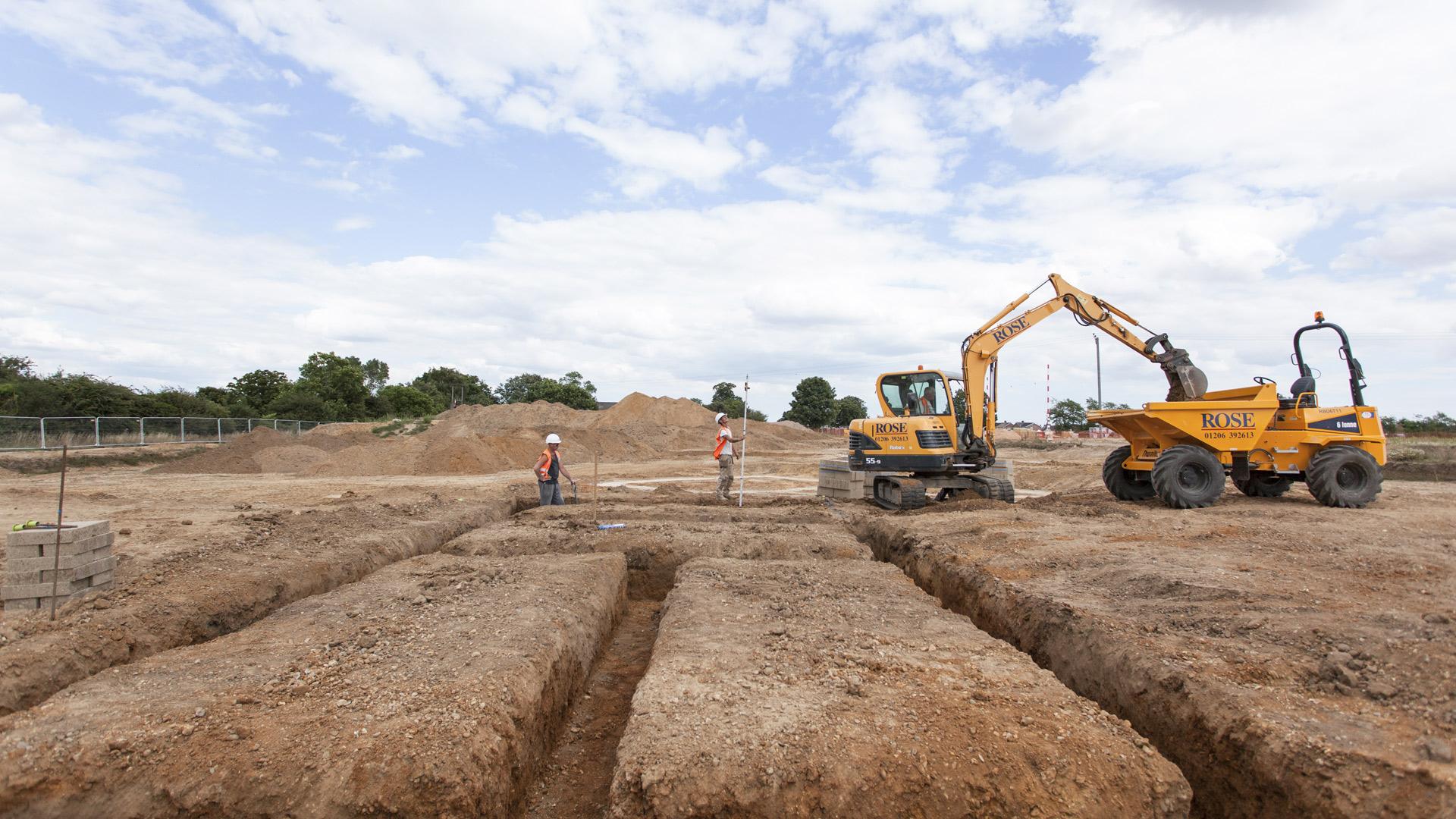
Many homes across Surrey sit on gently or steeply sloping land, from hillside streets in Guildford to rural plots near the North Downs. A slope can add character to a home, but it makes building an extension more complex. The ground needs to be shaped, supported and drained before anything goes up. If you are planning work on uneven ground, this guide explains how Groundworks in Guildford and Surrey deal with sloping sites.
Why Slopes Need Extra Planning
On a flat site, foundations are dug to a similar depth all the way round. On a slope, the ground level changes along the building, so the design has to account for:
- different foundation depths
- soil that needs to be dug out or held back
- rainwater running towards the building
- access for machinery and materials
Reduced-Level Digs
What They Are
A reduced-level dig means lowering the ground across an area to create a flat platform for the extension. It is common where a garden slopes up away from the house.
Dealing With the Spoil
Lowering the ground creates a lot of excavated soil. Plan early whether it will be removed from site or reused elsewhere in the garden. Removal must be handled by a licensed waste carrier.
Stepped Foundations
Instead of digging the whole foundation to the deepest level, foundations on a slope are often stepped. The concrete drops in stages to follow the ground, with each step overlapping the one below. This keeps the foundation on firm ground all the way along while avoiding unnecessary digging. The structural engineer and building control will confirm the design and depth.
Holding Back the Ground
Retaining Walls
When the ground is cut away, the soil left behind needs support. Retaining walls hold it in place. They need proper foundations and drainage behind them, because wet soil puts a lot of pressure on a wall.
Engineer Design
Taller retaining walls, or walls close to the house or a boundary, should be designed by a structural engineer. This is one of the most important safety points in Groundworks in Guildford and Surrey on sloping land.
Managing Water on a Slope
Water always runs downhill. If your extension sits at the bottom of a slope, rainwater from higher ground can collect against the new walls.
Land Drains
Perforated pipes laid in gravel-filled trenches, often called French drains, can intercept water before it reaches the building and carry it away.
Drainage Behind Retaining Walls
Gravel backfill and drainage pipes behind retaining walls relieve water pressure and help prevent damp.
Surface Falls
Patios and paths around the extension should slope away from the building. Planning drainage carefully is what makes Groundworks in Guildford and Surrey on a slope work over the long term.
Ground Conditions and Soil Checks
Slopes can hide variable ground, with firm soil at one end and softer material at the other. On larger projects, trial pits or boreholes help confirm what is below ground. Trees on or near the slope can also affect foundation depth, especially on clay.
Access on Sloping Sites
Steep driveways, steps and narrow paths make it harder to get machinery and materials to the work area. Smaller diggers, conveyor belts or concrete pumps may be needed. Discussing access at the survey stage helps the builder plan the right equipment for Groundworks in Guildford and Surrey on your site.
Safety During Excavation
Deep excavations on slopes can be unstable, especially after rain. Trench sides may need support, and water may need pumping out. Keep children and pets well away from open trenches, and never enter an excavation yourself.
Frequently Asked Questions
Can I build an extension on a steep garden?
Usually, yes. Reduced-level digs, stepped foundations and retaining walls are common solutions. A site visit will show what is practical.
Do retaining walls need planning permission?
It depends on their height, location and whether they form a boundary. Check with your local council before building taller walls.
What happens to all the soil that is dug out?
It is either removed by a licensed waste carrier or reused on site, for example to level another part of the garden.
Will water run into my new extension?
Not if the drainage is designed properly. Land drains, gravel backfill and good surface falls keep water away from the building.
Final Thoughts
Building on a slope takes more planning than a flat site, but it's very achievable. Shape the ground with care, use stepped foundations and engineered retaining walls where needed, and design drainage to keep water away. For expert advice on Groundworks in Guildford and Surrey for a sloping site, Woodhill Building Contractors Ltd offers free, no-obligation site visits across Guildford, Godalming, Cranleigh, Farnham, Haslemere, Woking and the surrounding areas.

 English
 Arabic
 French
 Spanish
 Portuguese
 Deutsch
 Turkish
 Dutch
 Russian
 Romaian
 Portuguese (Brazil)
 Greek