


How Do Traditional Religious Calendars Explain Baglamukhi Jayanti?
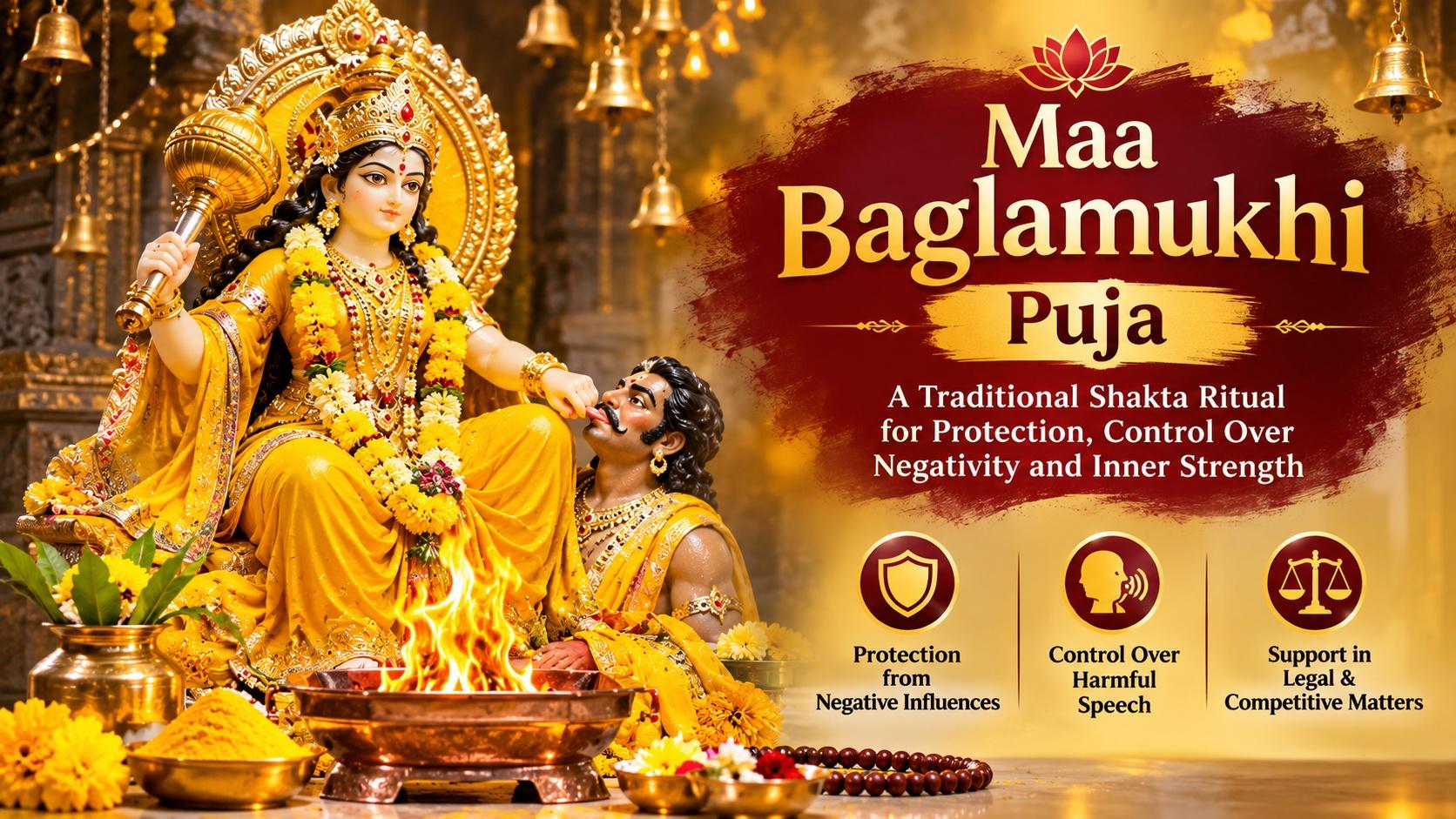
Baglamukhi Jayanti is an important religious observance dedicated to Maa Baglamukhi, the eighth of the ten Mahavidyas in Hindu Shakta traditions. It is traditionally observed on Vaishakha Shukla Ashtami, the eighth lunar day during the bright fortnight of the Hindu month of Vaishakha. Traditional religious calendars use the lunar tithi to determine the observance rather than following a fixed date on the Gregorian calendar.
Understanding the Baglamukhi Jayanti significance requires looking at the Hindu Panchang, the meaning of the Ashtami tithi, and the devotional traditions associated with the Goddess. These calendar references help devotees understand when the festival is observed and why the day holds religious importance.
What Is Baglamukhi Jayanti?
Baglamukhi Jayanti is traditionally regarded as the appearance day of Maa Baglamukhi. Devotees observe the occasion through prayers, puja, mantra recitation, and other religious activities according to their family, temple, or regional traditions.
Maa Baglamukhi Puja is associated with stambhana, a Sanskrit concept generally understood as restraining, stopping, or bringing disruptive forces under control. Her traditional symbolism is connected with controlling harmful speech, overcoming negative influences, and maintaining spiritual discipline.
As one of the ten Mahavidyas, she holds a distinctive position in Shakta worship. Baglamukhi Jayanti provides devotees with an annual occasion to remember her religious significance and participate in traditional forms of Goddess worship.
Which Tithi Is Associated With Baglamukhi Jayanti?
According to the traditional Hindu lunar calendar, Baglamukhi Jayanti is observed on Vaishakha Shukla Ashtami.
This date can be understood through three important calendar terms:
· Vaishakha: A month in the Hindu lunar calendar, generally falling during April and May.
· Shukla Paksha: The bright fortnight when the Moon appears to grow from new moon towards full moon.
· Ashtami: The eighth lunar day of a fortnight.
The combination of these three elements identifies the traditional festival observance.
Unlike festivals that are always associated with a fixed Gregorian date, Baglamukhi Jayanti changes dates each year because the Hindu lunar calendar follows the movements and phases of the Moon.
How Does the Hindu Religious Calendar Determine the Festival Date?
The Hindu Panchang is a traditional calendar system used to identify religious dates, auspicious periods, and festival observances. It considers several astronomical and calendrical elements, including tithi, nakshatra, yoga, karana, and weekday.
For Baglamukhi Jayanti, the Ashtami tithi is particularly important.
Understanding the Lunar Tithi
A tithi is a lunar day calculated through the angular relationship between the Sun and the Moon. Unlike a conventional 24-hour day, a tithi does not always begin at midnight or last exactly 24 hours.
This is why Ashtami may begin on one Gregorian date and end on the next. The festival date is determined by applying the relevant traditional observance rules to the local Panchang.
Why Sunrise Matters
For many Hindu festivals, the tithi present at local sunrise plays an important role in deciding the observance date. However, the exact rule can depend on the festival and its religious tradition.
Devotees should therefore check a reliable Panchang for their city instead of assuming that the festival will always fall on the same calendar date throughout India.
Why Does Baglamukhi Jayanti Fall on Vaishakha Shukla Ashtami?
The traditional observance connects the Goddess's Jayanti with a specific lunar date. Religious calendars preserve this association so that devotees can observe the occasion according to the established festival tradition.
The importance of the date is primarily religious and devotional. It gives communities a common annual occasion to honour Maa Baglamukhi through prayers and worship.
Some religious narratives describe the divine appearance of the Goddess during a period of cosmic disturbance. In these stories, her intervention restores balance by stopping destructive forces. Such narratives are traditionally used to explain her symbolic association with stambhana.
It is useful to distinguish the mythological accounts of her appearance from the calendar rule followed for the annual Jayanti observance. They are related parts of devotional tradition, but they do not necessarily describe the same date or event.
Understanding the Religious Significance of Baglamukhi Jayanti
The Baglamukhi Jayanti significance is connected with the Goddess's position among the Mahavidyas and her traditional association with restraint and protection.
1. Importance in Mahavidya Worship
Maa Baglamukhi is the eighth of the ten Mahavidyas. These Goddess forms represent different aspects of divine wisdom and power in Shakta traditions.
Her Jayanti is an opportunity for devotees to remember her place within this wider tradition of Goddess worship. Religious ceremonies may include prayers, devotional hymns, and traditional offerings.
2. Association With Stambhana
Stambhana is one of the central concepts connected with Maa Baglamukhi. It refers to the power of restraint or stopping disruptive influences.
In devotional interpretation, this quality may represent control over harmful speech, unnecessary conflict, and negative actions. Devotees may reflect on these ideas during Jayanti prayers.
3. Yellow Symbolism
Maa Baglamukhi is also known as Pitambara Devi because of her traditional association with yellow garments. Yellow is commonly used in her worship through flowers, clothing, turmeric, and decorative arrangements.
This association is visible in temple representations and traditional Jayanti observances. The use of yellow is a devotional custom, although specific offerings may differ between regions.
Common Jayanti Traditions and Festival Observance
The way Baglamukhi Jayanti is celebrated can vary according to temple customs, family traditions, and regional practices. Some devotees observe the day through simple home worship, while others participate in organised temple ceremonies.
Common Jayanti traditions include:
Traditional Puja
Devotees may offer flowers, turmeric, incense, lamps, and other customary items to Maa Baglamukhi. The puja generally includes prayers and expressions of devotion.
Mantra Recitation
Mantra recitation is an important part of Baglamukhi worship. Devotees may recite traditional prayers associated with the Goddess. Specialised Tantric practices should be followed under appropriate guidance rather than through unverified instructions.
Fasting and Personal Discipline
Some devotees observe a fast or follow dietary restrictions according to family customs. Others focus on prayer, meditation, and maintaining discipline throughout the day. Fasting is not necessarily followed in the same way by every community.
Havan and Temple Ceremonies
Some temples and religious groups organise havan, devotional gatherings, and special puja ceremonies. A havan involves offerings into a sacred fire while prescribed mantras are recited.
The ritual procedure and materials depend on the tradition followed by the priest or temple.
How to Check the Correct Baglamukhi Jayanti Date
Because the festival follows a lunar tithi, checking the local Panchang is important before planning the observance.
Use these practical steps:
1. Check the Hindu month: Look for Vaishakha in the lunar calendar.
2. Confirm the Paksha: Identify the Shukla Paksha, or bright fortnight.
3. Check Ashtami: Find the beginning and ending times of the eighth tithi.
4. Select your location: Use the Panchang for your city because local sunrise and tithi timings can differ.
5. Confirm the observance rule: Follow a recognised Panchang or consult a knowledgeable priest if the tithi overlaps two dates.
For example, in 2026, Drik Panchang listed Baglamukhi Jayanti on 24 April for New Delhi, with Ashtami beginning on the evening of 23 April and ending on the evening of 24 April. This illustrates why the lunar tithi and local calendar calculations matter. <Cite refs={["turn906213search2","turn906213search3"]}/>
Why Traditional Religious Calendars Matter
Traditional religious calendars help preserve the timing and structure of Hindu festivals. They connect annual observances with lunar cycles, seasonal months, and established religious customs.
For Baglamukhi Jayanti, the Panchang helps devotees:
· Identify the correct Ashtami tithi.
· Plan puja and temple visits.
· Understand the connection with Vaishakha Shukla Paksha.
· Follow family and regional festival traditions.
· Coordinate religious ceremonies with local temple schedules.
Using a location-specific calendar also helps avoid confusion when the lunar tithi extends across two Gregorian dates.
Conclusion
Traditional religious calendars explain Baglamukhi Jayanti through its association with Vaishakha Shukla Ashtami. The Hindu Panchang uses lunar calculations and local observance rules to determine the festival date each year. This makes the occasion different from festivals that follow a fixed Gregorian date.
Understanding the Baglamukhi Jayanti significance involves recognising the importance of the Ashtami tithi, the Goddess's place among the ten Mahavidyas, and the devotional customs connected with her worship. Checking a reliable local Panchang helps devotees observe the festival according to traditional calendar practices.

 English
 Arabic
 French
 Spanish
 Portuguese
 Deutsch
 Turkish
 Dutch
 Italiano
 Russian
 Romaian
 Portuguese (Brazil)