


International Calling Trends in 2026-What’s Changing and What Saves Money
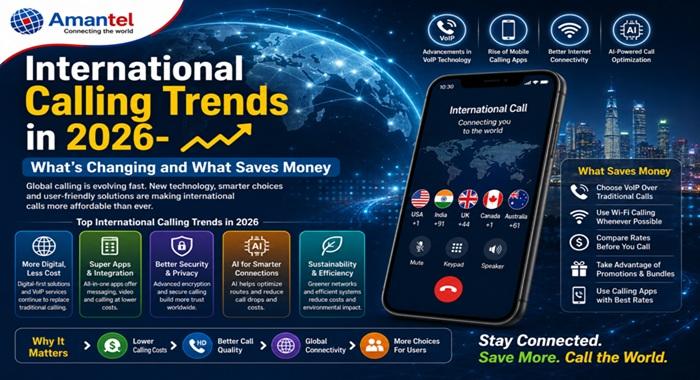
International calling has changed more in the last few years than in the previous decade. In 2026, people are moving away from traditional carrier-based calls and embracing smarter, cheaper digital solutions. If you’re still paying high per‑minute charges to call abroad, you’re missing out on simple ways to save money without sacrificing call quality.
Shift from Traditional Carriers to Apps
One of the biggest trends in 2026 is the steady move from standard mobile operator international calling plans to VoIP and app‑based calling. Instead of relying on expensive international packs, users now prefer apps that use data or Wi‑Fi to connect calls. These apps often charge just a fraction of carrier rates, and many allow completely free calls between app users.
For everyday users, this means you can call family in another country for minutes—or even hours—without worrying about a huge bill. As long as both sides have a smartphone and internet access, app‑to‑app calls are now the default option in many households.
Rise of Hybrid Calling: App to Phone Numbers
Another important trend is hybrid calling, where apps allow you to dial regular mobile or landline numbers abroad using low‑cost VoIP. This is perfect when the person you’re calling doesn’t use calling apps or doesn’t have stable internet.
Instead of paying your carrier’s international tariff, you load a small amount of credit into a calling app and call directly to their phone. Per‑minute charges are usually much lower than traditional international rates, and you can see clear pricing before calling. This transparency makes budgeting easier and avoids bill shock.
Unlimited and Country‑Specific Plans
In 2026, more providers offer unlimited or country‑specific bundles for people who call abroad frequently. These plans are especially popular among expats, remote workers, and families with relatives overseas.
You can subscribe to a monthly plan that includes unlimited or high‑minute allowances to specific destinations like India, Pakistan, Ghana, Nigeria, Ethiopia, the USA, or the UK. For heavy users, these bundles can cut overall costs dramatically compared to paying per minute. The trend is moving away from “one plan fits all” to customized packs based on your actual call patterns.
Wi‑Fi Calling Built into Phones
Wi‑Fi calling has become more mainstream, and many smartphones now support it by default. This lets you make calls using Wi‑Fi instead of mobile networks, which can be a big cost‑saver when you’re traveling or living in areas with good internet but weak cellular signal.
While not every country treats Wi‑Fi calling the same way in terms of charges, the general movement is toward making it easier and cheaper to call internationally without needing separate SIM cards or complicated plans.
Growing Focus on Quality and Reliability
In the past, cheap international calls often meant poor audio and dropped connections. In 2026, improved infrastructure and better codecs have raised expectations. Users now look for a balance of low price and solid quality, and they’re willing to switch providers if calls sound bad or fail often.
As a result, services that invest in strong networks, clear routing, and user‑friendly interfaces are gaining more trust. Good quality at a fair price is now the benchmark, not an exception.
Practical Ways to Save Money in 2026
If you want to benefit from these trends, here are simple steps:
· Use app‑to‑app calls (like common messaging or calling apps) whenever both sides have internet.
· Choose hybrid VoIP apps with transparent per‑minute rates for calling regular numbers abroad.
· Consider unlimited or country‑specific plans if you call the same destinations frequently.
· Take advantage of Wi‑Fi calling at home and while traveling to avoid roaming and high tariffs.
· Compare rates and test call quality with two or three services before settling on one.
Conclusion
International calling in 2026 is no longer about choosing the “least expensive carrier pack.” It’s about combining smart tools: apps, VoIP, Wi‑Fi calling, and tailored plans that match your real usage. When you mix these options well, staying in touch across borders becomes both affordable and effortless.
FAQs: International Calling Trends in 2026
1. Why are traditional international calls declining in 2026?
Traditional carrier-based international calls are declining because users prefer cheaper, flexible options like VoIP apps and OTT calling services that work over data or Wi‑Fi.
2. What is VoIP and how does it save money?
VoIP (Voice over Internet Protocol) sends voice calls over the internet instead of regular phone lines, letting providers offer much lower per‑minute rates and even free app‑to‑app calls.
3. Are app‑to‑app international calls really free?
Yes, most OTT apps offer free calls between users on the same app, as long as both sides have internet access and a compatible device.
4. How do hybrid VoIP apps work for landline and mobile numbers?
Hybrid VoIP apps let you call regular phone numbers abroad using app credit, often cutting calling costs by 60–80% compared to standard carrier tariffs.
5. What’s new about international calling plans in 2026?
2026 plans focus on country‑specific bundles, unlimited minutes to select destinations, and transparent pricing that matches actual calling patterns instead of generic global packs.
7. Is call quality worse when using cheap or free calling options?
Modern VoIP services use better codecs and improved global infrastructure, so users now expect both low prices and stable, clear call quality from reputable providers.
Read More Blog: https://www.amantel.com/blog/

 English
 French
 Spanish
 Portuguese
 Deutsch
 Turkish
 Dutch
Dutch
 Italiano
 Russian
 Romaian
 Portuguese (Brazil)
 Greek
Greek