


Master Lithium Battery Transport: Online DOT, IATA & IMDG Training for Shippers
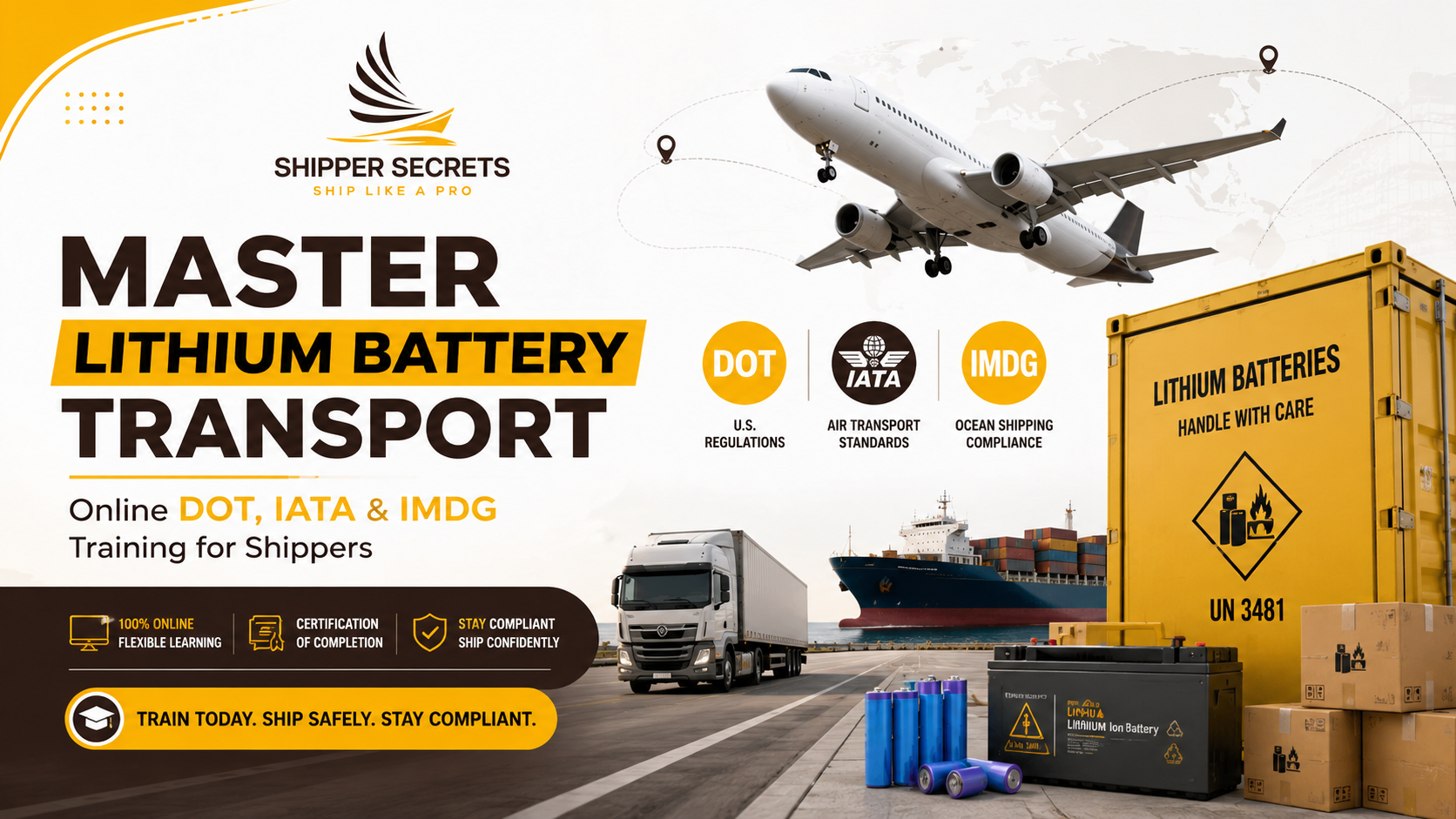
Shipping lithium batteries is one of the most high-risk, tightly regulated activities in modern logistics. A single mistake, a missing label, an incorrect declaration, an unrecognized exemption can mean a rejected shipment, a costly fine, or in worst-case scenarios, a fire in transit. As e-commerce, electronics, and EV-adjacent industries continue to grow, more shippers than ever are moving lithium cells and batteries every day, often without realizing just how much regulatory detail stands between "packed and shipped" and "compliant and safe."
Our Online DOT, IATA & IMDG Lithium Battery Training Course was built to close that gap. It gives shippers, warehouse teams, freight forwarders, and logistics professionals the up-to-date, practical knowledge required to prepare, mark, and move lithium batteries safely by air, road, and sea all from a self-paced online format that fits around a busy shipping schedule.
Why This Training Matters
Lithium batteries classified under UN3480/UN3481 for lithium-ion cells and batteries, and UN3090/UN3091 for lithium metal cells and batteries present unique hazards that don't apply to most other dangerous goods. Thermal runaway, short-circuiting, and fire risk mean that regulators treat these shipments with a level of scrutiny that catches many shippers off guard. Anyone involved in preparing, packing, offering, or accepting these shipments for transport including packers, couriers, and freight forwarders has a direct stake in getting the rules right.
The challenge is that these rules don't sit still. DOT, IATA, and IMDG requirements are revised on a recurring basis, and each mode of transport has its own nuances, exemptions, and documentation standards. Regulatory bodies require that employers provide initial and recurrent training that is function-specific to the employee's role; a generic "dangerous goods overview" isn't enough. Our course is built around this requirement: it covers the current rules for air, road, and sea in one place, with practical, real-world examples baked into every module, and it issues a certificate on completion so your compliance records stay current.
Because the course is self-paced, teams don't need to pull a whole shift off the floor for a day-long seminar. Learners can work through modules online, complete assessments at their own speed, and download a certificate the moment they pass a format designed for busy operations where time is always the scarcest resource.
👉https://shippersecrets.com/courses/
What You'll Learn
The course walks learners through the full lifecycle of a compliant lithium battery shipment:
-
How to identify lithium battery types lithium-ion versus lithium metal and match them to the correct UN numbers.
-
Which shipments qualify for exemptions, which require full Dangerous Goods handling, and how to correctly apply special provisions and IATA's Section IA, IB, and II distinctions (a common source of costly errors).
-
Packing, marking, labeling, and documentation requirements as they differ across DOT, IATA, and IMDG modes.
-
How to complete a Shipper's Declaration for air transport and the equivalent multimodal paperwork for road and sea, along with record-keeping and incident-reporting obligations.
-
Acceptance procedures, the basics of battery testing under the UN Manual of Tests and Criteria, and emergency response and segregation requirements.
Course Format and Benefits
The course is structured as a series of self-paced online modules combining short video lessons, interactive worked examples, and end-of-module quizzes, so knowledge sticks without requiring a single long classroom sitting. Learners work through practical exercises drawn from real shipping scenarios, sample consignment preparation, correct label placement, and side-by-side comparisons of common cases like batteries shipped as spares, batteries packed with equipment, and batteries contained in equipment.
At the end of the course, each learner receives an individual Certificate of Completion. That certificate supports your company's compliance documentation and satisfies the recurrent training cycle regulators expect from anyone handling these shipments on an ongoing basis.
Who Should Take This Course
This training is built for shippers, QA teams, warehouse staff, couriers, freight forwarders, and purchasing or operations managers essentially, anyone responsible for preparing, offering, or accepting lithium battery shipments for transport. If lithium batteries pass through any part of your supply chain, this course is relevant to your team.
A Real-World Example
Consider a company shipping replacement laptop batteries that assumed a Section II exemption applied to their shipment. It didn't and the consignment was rejected at the air carrier's acceptance point, creating a costly delay right when the customer needed the part most. After completing our course, the team understood exactly where the line falls between Section II exemptions and fully regulated shipments, adjusted their packaging and documentation accordingly, and haven't had a shipment rejected since. That's the kind of practical, applied knowledge this course is designed to deliver not just theory, but the specific judgment calls shippers face every day.
Frequently Asked Questions
-
How long until I get the certificate?
Immediately after passing the course assessment.
-
Is the course valid for all modes of transport?
Yes, it covers air (IATA), road and rail (DOT/ADR), and sea (IMDG) requirements in a single course.
-
Does this meet employer training obligations?
The course is designed to meet initial and recurrent dangerous goods training requirements for staff who prepare, pack, or handle lithium battery shipments.
Ready to Get Certified?
Mistakes with lithium battery shipments are expensive in rejected freight, in delays, and in the safety risk they carry. The fastest way to protect your team and your shipments is proper, up-to-date training that covers every mode you actually use.
Enroll now in the DOT, IATA & IMDG Lithium Battery Training Course and get your team certified, compliant, and shipping with confidence.
Learn More About Lithium Battery Transport

 English
 Arabic
 French
 Spanish
 Portuguese
 Deutsch
 Turkish
 Dutch
Dutch
 Italiano
 Russian
 Romaian
 Greek
Greek