


Which Features Matter in Ergenergy Maintenance-Free Energy Storage System Projects
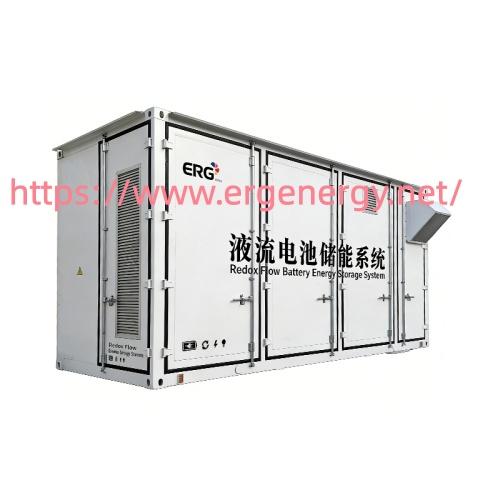
Maintenance-Free Energy Storage System selection requires more than checking a capacity number on a product sheet. Buyers should look at the complete system architecture, expected operating schedule, environmental conditions, monitoring functions, service requirements, and future expansion plans. A project may operate for many years, so the equipment needs to match the real conditions rather than only the initial installation target.
One important point is the meaning of maintenance expectations. No industrial energy equipment should be treated as something that requires no attention under every operating condition. Pumps, electrical connections, control equipment, sensors, cooling components, and other supporting parts can still require inspection according to the system design. A realistic purchasing decision should therefore focus on reducing routine service requirements while keeping appropriate inspection procedures in place.
Flow battery technology provides an interesting option for projects where extended operation and repeated cycling are important. The energy medium is held separately from the electrochemical stack. This architecture allows engineers to consider power output and capacity as related but distinct design factors. The stack influences the electrical output, while the amount of electrolyte influences available capacity.
For buyers, this structure creates several questions. How many hours should the equipment operate during each discharge period? How frequently will charging and discharging occur? What power level is required? Will the system work with solar generation, industrial loads, grid services, or backup applications? These questions should be answered before a final configuration is selected.
Site conditions deserve equal attention. Available floor area, outdoor or indoor installation, ambient temperature, electrical connection points, access for inspection, and local environmental requirements can affect the equipment arrangement. A solution intended for an industrial facility may need a different layout from equipment installed beside a renewable generation site.
Monitoring is another factor worth checking. Modern battery installations can use sensors and control platforms to track operating conditions and provide information about system status. Digital monitoring can help operators observe operating data and plan inspections according to actual equipment conditions.
The quality of the supporting components also matters. Pumps, pipes, valves, electrical connections, control systems, and electrolyte circulation equipment work together during normal operation. Buyers should ask how these parts are integrated, tested, monitored, and accessed when inspection is required.
Ergenergy offers vanadium redox flow battery stacks, integrated battery systems, battery components, and laboratory products. Its product range includes 5kW stacks, 32kW and 42kW stack configurations, 5kW, 10kWh, 20kWh, and 30kWh systems, an 82kW/300kWh system, and a 500kW/2000kWh containerized configuration. The company also supports customized design and production based on customer drawings, samples, site conditions, and operating requirements.
Another consideration is scalability. Electricity demand can change after installation. A commercial facility may add production equipment, while a renewable project may increase generation capacity. A modular architecture can make future adjustments easier when the original design has considered expansion from the beginning.
Buyers should also examine testing procedures before placing an order. Laboratory testing, component inspection, stack evaluation, system commissioning, and operational verification can provide useful information before equipment enters regular service. A manufacturer with testing and production capabilities can coordinate these stages during development and manufacturing.
Documentation should not be overlooked. Product specifications, installation requirements, operating procedures, monitoring information, inspection schedules, and replacement recommendations can make daily management easier for the project owner. Clear technical documentation is particularly useful when equipment will be operated by different teams over its service period.
Cost evaluation should also extend beyond the purchase price. Electricity usage, expected cycling, site preparation, installation work, service requirements, component replacement, and future expansion can all influence the overall project budget. Comparing these factors gives buyers a more complete view of the equipment choice.
For renewable applications, the relationship between generation and demand should be reviewed carefully. Solar output changes during the day, while wind generation can vary according to weather conditions. A suitable battery configuration can store available electricity and release it according to the planned operating schedule.
For industrial and commercial users, the same principle applies to peak demand management and load shifting. The right configuration depends on actual electricity patterns rather than a generic specification. Buyers can review stack options, integrated systems, battery components, and available configurations at https://www.ergenergy.net/product/ before discussing their site conditions, operating schedule, capacity requirements, and system integration needs.

 English
 Arabic
 French
 Spanish
 Portuguese
 Deutsch
 Turkish
 Dutch
Dutch
 Russian
 Romaian
 Portuguese (Brazil)
 Greek
Greek