


Hair Transplant in Al Ain for Severe Hair Loss and Baldness
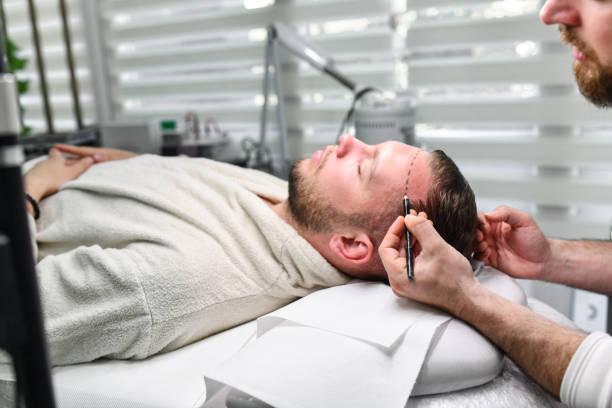
Advanced baldness requires a different restoration strategy from early recession. Hair Transplant in Al Ain may help suitable patients with extensive hair loss when enough healthy donor follicles remain and treatment is planned around realistic coverage rather than trying to recreate the original density.
When a large portion of the scalp has lost hair, donor resources become especially important. The available follicles must be distributed carefully between the frontal region, mid-scalp, and crown.
Assessing Advanced Hair Loss
Understanding the Remaining Hair
Severe baldness does not mean every area of the scalp has the same restoration potential. Some patients retain strong donor hair at the back and sides, while others have limited density.
A clinical assessment may review:
- Extent of frontal recession
- Mid-scalp density
- Crown involvement
- Donor density
- Hair shaft thickness
- Follicular-unit quality
- Future hair-loss pattern
Why Donor Supply Sets the Limit
The donor area contains a finite number of usable follicles. A transplant cannot create new donor hair, so coverage has to be planned according to what is actually available.
This often means prioritizing areas that have the greatest effect on the overall appearance.
Creating Coverage With Limited Grafts
The Frontal Region
The frontal scalp usually plays a major role in facial framing. Rebuilding this area can therefore be an important part of an advanced restoration plan.
However, the hairline should not be designed too aggressively simply because the patient wants maximum coverage.
Mid-Scalp and Crown
The mid-scalp can connect the restored frontal region with remaining hair farther back. Crown restoration may require substantial grafts because the area is broad and follows a natural whorl.
The clinician may need to determine which areas should receive priority when donor availability is limited.
Natural Density Versus Maximum Coverage
Why More Grafts Are Not Always Better
Using every available graft in one procedure can leave little flexibility for future needs.
A balanced plan may focus on creating useful visual density while preserving part of the donor supply.
Building a Natural Transition
The front edge generally requires finer grafts and careful placement. Greater density can then be introduced gradually behind it.
This creates a transition rather than an abrupt line of transplanted hair.
FUE and DHI Considerations
FUE Hair Transplant
FUE involves individual follicular-unit extraction. For advanced hair loss, careful extraction planning is particularly important because the donor area needs to support a larger restoration strategy.
DHI Hair Transplant
DHI allows prepared grafts to be implanted with detailed control over position and direction. It may be considered for selected recipient areas depending on the patient's anatomy and treatment objectives.
Technique selection should follow clinical assessment rather than the severity of baldness alone.
Patients exploring advanced hair restoration in Al Ain can discuss how donor resources should be allocated across the scalp.
Questions Patients With Advanced Baldness Ask
“Can Severe Baldness Be Fully Covered?”
Not always. The achievable coverage depends heavily on donor density, graft quality, scalp characteristics, and the size of the bald area.
“Should the Entire Scalp Be Treated at Once?”
Not necessarily. Some patients may benefit from prioritizing the frontal region or another high-visibility area rather than attempting maximum coverage everywhere.
“Can a Transplant Restore My Original Hair Density?”
Usually, the goal is not to reproduce the density of the scalp before hair loss. The objective is to create a natural-looking improvement within the available donor supply.
Planning an Advanced Restoration
A detailed plan may involve:
- Mapping the current areas of baldness.
- Measuring donor density and follicular quality.
- Evaluating the expected future pattern.
- Establishing a conservative hairline.
- Prioritizing recipient zones.
- Calculating a realistic graft distribution.
- Protecting remaining donor capacity.
This approach allows the treatment to be planned around long-term restoration rather than a single visual target.
Recovery After Extensive Hair Restoration
The recovery period depends on the size of the treatment area and the number of grafts involved. Temporary redness, swelling, crusting, and sensitivity may occur.
Transplanted hairs can shed during the early growth cycle. New growth then develops gradually, so the final appearance should be assessed over a longer period rather than immediately after surgery.
Managing Expectations With Advanced Baldness
Patients with extensive loss often want the same density they had before hair loss. That expectation may not match the biological limitations of transplantation.
A realistic consultation should explain:
- How much donor hair is available
- Which areas can be prioritized
- What density may be achievable
- Whether staged treatment could be considered
- How future native hair loss may affect the result
Final Thoughts
Severe baldness does not automatically rule out transplantation, but it makes donor management and graft distribution more important. The treatment should focus on strategic coverage, natural proportions, and preserving options for the future.
For patients considering Hair Transplant in Al Ain, Tajmeels Clinic provides individualized assessment and restoration planning based on donor capacity, scalp characteristics, and long-term goals.

 Arabic
 French
 Spanish
 Portuguese
 Deutsch
 Turkish
 Dutch
Dutch
 Italiano
 Russian
 Romaian
 Portuguese (Brazil)
 Greek
Greek