


Efficient Switching Components for Water Delivery Systems
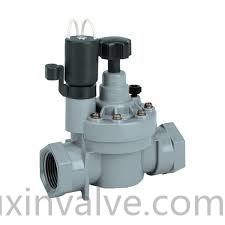
Modern faucet systems increasingly incorporate electronic components to improve convenience, hygiene, and water management. At the center of many automated designs, a Faucet Solenoid Valve controls water flow through electromagnetic actuation, allowing the faucet to respond to sensor signals, switches, or electronic controllers. This technology is used in commercial washrooms, hospitality facilities, residential smart bathrooms, and other environments where controlled water delivery and convenient operation are important. For equipment manufacturers, selecting a suitable valve requires attention to electrical performance, hydraulic structure, sealing reliability, and installation compatibility.
The operating principle is based on converting electrical energy into mechanical movement. When the coil receives a control signal, it generates a magnetic field that moves an internal armature or related mechanism. This movement changes the position of the valve element, opening or closing the water passage according to the design. Normally closed configurations are commonly considered when water should remain shut off until the system activates the valve, while other operating arrangements may be appropriate for specific applications.
Coil construction has a direct influence on actuation performance. Copper winding quality, insulation materials, magnetic circuit geometry, and heat dissipation all affect the valve's ability to respond consistently. The magnetic force must be sufficient to move the internal components under the intended operating conditions. Precise control of the air gap and armature alignment helps reduce mechanical resistance and supports repeatable switching. These details become particularly important in faucets used frequently throughout the day.
The hydraulic structure must also match the requirements of the finished faucet. Internal channels, flow openings, valve seats, and connection passages determine how water moves through the component. Accurate machining helps maintain consistent dimensions, while suitable surface finishes support effective sealing. The selected design should provide the required flow without creating excessive pressure loss. Installation space and connection orientation should also be considered because faucet assemblies often have limited room for internal components.
Sealing reliability is essential for preventing water leakage. O-rings, diaphragms, gaskets, and valve seats must withstand repeated opening and closing, pressure changes, and prolonged contact with water. Material selection should be based on the intended working environment and compatibility requirements. Properly selected sealing components help maintain shutoff performance and reduce maintenance needs. For sanitary equipment manufacturers, stable sealing quality also contributes to a more consistent finished product.
Electronic integration allows faucets to operate according to user activity or programmed settings. In a sensor-controlled faucet, the detection system sends a signal to the controller, which activates the valve and permits water to flow. When the operating condition ends, the controller stops the signal and the valve closes according to its design. Reliable coordination among the sensor, control board, power supply, and valve helps prevent unintended activation and inconsistent water delivery.
Manufacturing consistency plays an important role in product reliability. Coil winding, machining, component cleaning, assembly, and inspection must be controlled to reduce variation between units. Electrical checks can verify coil continuity and insulation, while functional testing evaluates actuation response and water-flow behavior. Leakage testing and repeated-cycle evaluation can help identify potential problems before the valves are installed in finished faucet products. Consistent quality procedures are especially valuable for OEM projects requiring repeatable production.
For B2B buyers, important selection factors include operating voltage, current requirements, flow capacity, working pressure, connection dimensions, valve operating mode, and compatibility with the faucet's electronic control system. Buyers should also consider the installation environment, expected operating frequency, and maintenance accessibility. Sharing these details with the supplier helps determine whether a standard configuration is appropriate or whether project-specific evaluation is necessary.
Zhejiang Fuxin Electrical Technology Co., Ltd. provides electromagnetic valve solutions for sanitary ware and water-control equipment. Manufacturers, wholesalers, and distributors sourcing a Faucet Solenoid Valve can explore the company's product range at https://www.fuxinvalve.com/product/sanitary-ware-solenoid-valves/ to evaluate options for their faucet designs and OEM requirements.

 English
 Arabic
 French
 Spanish
 Portuguese
 Deutsch
 Turkish
 Dutch
 Italiano
 Russian
 Portuguese (Brazil)
 Greek