


Essential Japanese Phrases Every Beginner Should Know
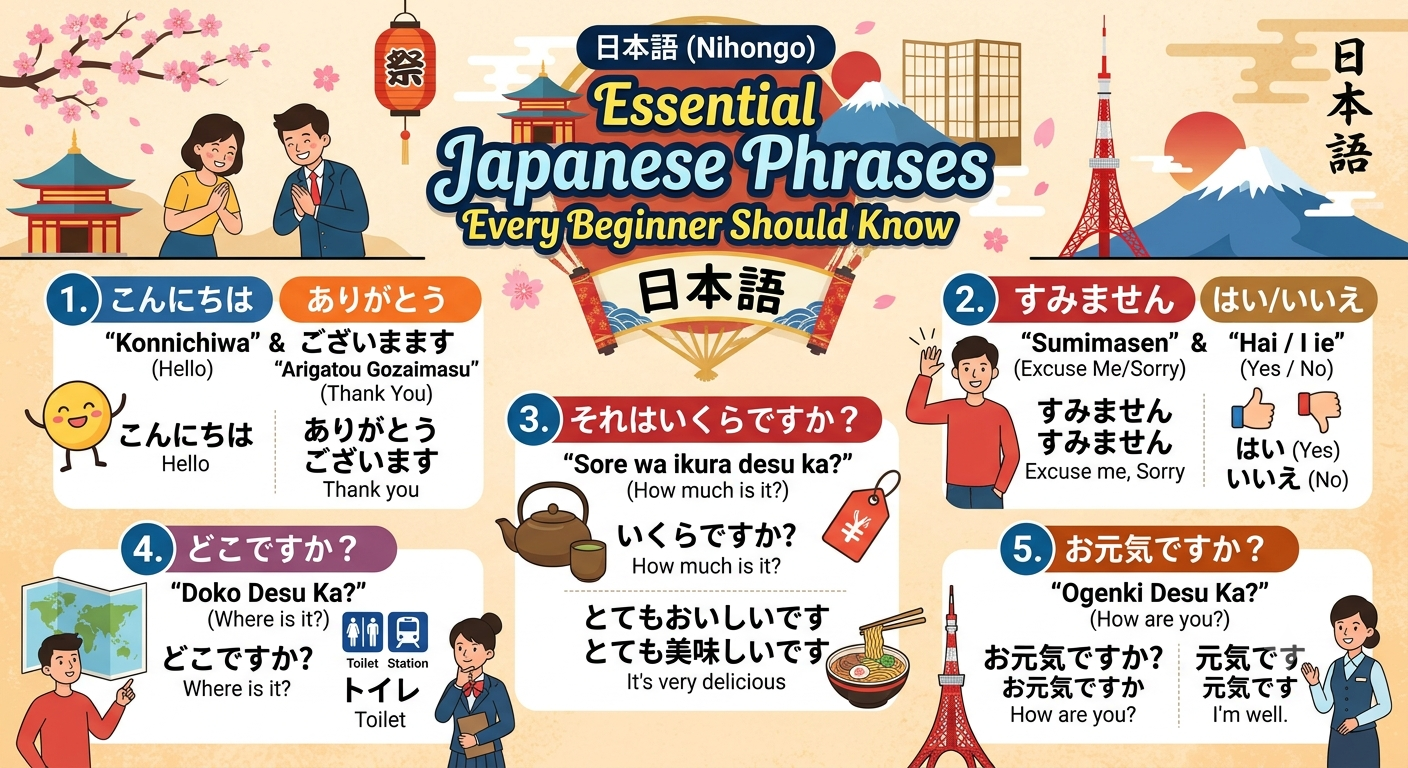
Introduction
Learning Japanese becomes easier when you start with simple, everyday phrases that you can use in real conversations. Whether you want to travel to Japan, understand Japanese culture, prepare for the Japanese-Language Proficiency Test (JLPT), or develop a new skill, learning common expressions is a practical first step.
If you want to Learn Japanese in Delhi, begin with greetings, polite expressions, questions, and useful phrases for everyday situations. These expressions will help you become familiar with Japanese pronunciation and sentence patterns while building confidence in communication.
1. Basic Japanese Greetings
Greetings are among the first expressions every Japanese beginner should learn. They help you start conversations politely and interact comfortably with others.
|
Japanese Phrase |
Pronunciation |
English Meaning |
|---|---|---|
|
こんにちは |
Konnichiwa |
Hello / Good afternoon |
|
おはようございます |
Ohayou gozaimasu |
Good morning |
|
こんばんは |
Konbanwa |
Good evening |
|
おやすみなさい |
Oyasuminasai |
Good night |
|
さようなら |
Sayounara |
Goodbye |
|
またね |
Mata ne |
See you later |
Some greetings are more formal than others. For example, ohayou gozaimasu is a polite way to say good morning, while mata ne is more casual and is commonly used with friends.
2. Polite Expressions You Should Know
Politeness is an important part of Japanese communication. Learning a few essential expressions can help you show respect and communicate naturally in everyday situations.
|
Japanese Phrase |
Pronunciation |
English Meaning |
|---|---|---|
|
ありがとうございます |
Arigatou gozaimasu |
Thank you very much |
|
すみません |
Sumimasen |
Excuse me / Sorry |
|
ごめんなさい |
Gomen nasai |
I'm sorry |
|
お願いします |
Onegaishimasu |
Please / I request you |
|
はい |
Hai |
Yes |
|
いいえ |
Iie |
No |
|
どういたしまして |
Dou itashimashite |
You're welcome |
For beginners, it is helpful to practise these expressions aloud and understand when to use polite or casual language.
3. Introducing Yourself in Japanese
Self-introductions are useful when meeting new people, joining a language class, or participating in a cultural exchange.
|
Japanese Phrase |
Pronunciation |
English Meaning |
|---|---|---|
|
はじめまして |
Hajimemashite |
Nice to meet you |
|
私はミーナです |
Watashi wa Miina desu |
I am Meena |
|
インドから来ました |
Indo kara kimashita |
I am from India |
|
よろしくお願いします |
Yoroshiku onegaishimasu |
A polite expression used when beginning a relationship |
|
お名前は何ですか |
Onamae wa nan desu ka |
What is your name? |
You can replace Miina with your own name when introducing yourself. Practising a short introduction regularly can help you remember sentence structures and improve your confidence.
4. Useful Japanese Phrases for Asking Questions
Asking questions is essential when you are learning a new language. These phrases can help you request information or clarify something you do not understand.
|
Japanese Phrase |
Pronunciation |
English Meaning |
|---|---|---|
|
これは何ですか |
Kore wa nan desu ka |
What is this? |
|
どこですか |
Doko desu ka |
Where is it? |
|
いくらですか |
Ikura desu ka |
How much is it? |
|
いつですか |
Itsu desu ka |
When is it? |
|
なぜですか |
Naze desu ka |
Why is it? |
|
もう一度お願いします |
Mou ichido onegaishimasu |
One more time, please |
These expressions are particularly useful in classrooms, shops, restaurants, and travel situations. Try creating your own questions using the same patterns.
5. Japanese Phrases for Daily Conversations
Everyday expressions make it easier to participate in simple conversations and respond appropriately.
|
Japanese Phrase |
Pronunciation |
English Meaning |
|---|---|---|
|
元気ですか |
Genki desu ka |
How are you? |
|
元気です |
Genki desu |
I am fine |
|
わかりました |
Wakarimashita |
I understand |
|
わかりません |
Wakarimasen |
I don't understand |
|
大丈夫です |
Daijoubu desu |
It's okay / I'm alright |
|
ちょっと待ってください |
Chotto matte kudasai |
Please wait a moment |
If you are speaking with a Japanese teacher or someone you have just met, polite expressions are generally a safe starting point.
6. Japanese Phrases for Restaurants and Shopping
If you plan to visit Japan, restaurant and shopping expressions can be especially helpful.
|
Japanese Phrase |
Pronunciation |
English Meaning |
|---|---|---|
|
メニューをお願いします |
Menyuu o onegaishimasu |
The menu, please |
|
これをください |
Kore o kudasai |
This one, please |
|
水をお願いします |
Mizu o onegaishimasu |
Water, please |
|
おいしいです |
Oishii desu |
It is delicious |
|
お会計をお願いします |
Okaikei o onegaishimasu |
The bill, please |
|
カードは使えますか |
Kaado wa tsukaemasu ka |
Can I use a card? |
Practising these expressions can help you recognise common sentence patterns. You can also substitute different food or product names to create additional phrases.
7. Japanese Phrases for Asking for Help
When travelling or communicating in an unfamiliar environment, knowing how to ask for assistance is useful.
|
Japanese Phrase |
Pronunciation |
English Meaning |
|---|---|---|
|
助けてください |
Tasukete kudasai |
Please help me |
|
英語を話せますか |
Eigo o hanasemasu ka |
Can you speak English? |
|
駅はどこですか |
Eki wa doko desu ka |
Where is the station? |
|
トイレはどこですか |
Toire wa doko desu ka |
Where is the restroom? |
|
ゆっくり話してください |
Yukkuri hanashite kudasai |
Please speak slowly |
These expressions can help beginners communicate basic needs even when they cannot yet form longer sentences.
8. Tips to Remember Japanese Phrases Faster
Memorising phrases is only the beginning. To use them confidently, you need regular revision and practice.
-
Practise aloud: Repeat each phrase several times and focus on clear pronunciation.
-
Learn in groups: Study greetings, introductions, shopping expressions, and questions separately.
-
Use flashcards: Write the Japanese phrase on one side and its meaning on the other.
-
Listen to native speakers: Use reliable Japanese learning resources to become familiar with natural pronunciation.
-
Create short dialogues: Combine two or three phrases to practise real-life situations.
-
Review regularly: Revisit previously learned expressions instead of learning new phrases every day without revision.
If you plan to Learn Japanese in Delhi, consider choosing a course that includes speaking practice, listening exercises, grammar basics, and regular revision. A structured learning routine can help you progress beyond memorising individual phrases.
9. How Japanese Classes Can Help Beginners
Learning independently can be useful, but beginners sometimes struggle with pronunciation, grammar, sentence order, and choosing the right level of politeness.
A structured Japanese course can help learners understand these concepts step by step. Look for classes that provide opportunities to ask questions, practise conversations, review vocabulary, and receive feedback from an instructor.
You can also set a clear learning goal, such as becoming comfortable with basic introductions or preparing for JLPT N5. Remember that the JLPT assesses language knowledge, reading, and listening; speaking and writing require separate practice.
Conclusion
Learning essential Japanese phrases is a practical way to begin your Japanese language journey. Greetings, polite expressions, introductions, everyday questions, and shopping phrases can help you communicate in common situations while building your vocabulary.
Practise a few expressions each day, listen carefully to pronunciation, and use the phrases in short conversations. If you want to Learn Japanese in Delhi, combining structured lessons with regular practice can help you develop a stronger foundation and gradually move towards more advanced Japanese.
Frequently Asked Questions (FAQs)
1. What Japanese phrases should beginners learn first?
Beginners should start with greetings, thank-you expressions, apologies, self-introductions, and simple questions such as asking for directions or requesting help.
2. Is Japanese difficult for beginners to learn?
The level of difficulty depends on your learning habits and previous language experience. Starting with common phrases, basic grammar, and the Japanese writing systems can make learning more manageable.
3. How can I improve my Japanese pronunciation?
Listen to reliable audio resources, repeat phrases aloud, practise short dialogues, and ask a teacher for feedback on your pronunciation.
4. Can I learn basic Japanese phrases without joining a class?
Yes. You can begin with books, online lessons, flashcards, and listening resources. A class may provide additional structure, feedback, and conversation practice.
5. What should I look for when choosing Japanese classes in Delhi?
Check the course structure, teaching approach, instructor support, speaking and listening practice, class timings, and whether the course matches your learning goals.

 Arabic
 French
 Spanish
 Portuguese
 Deutsch
 Turkish
 Dutch
 Italiano
 Russian
 Romaian
 Portuguese (Brazil)
 Greek